
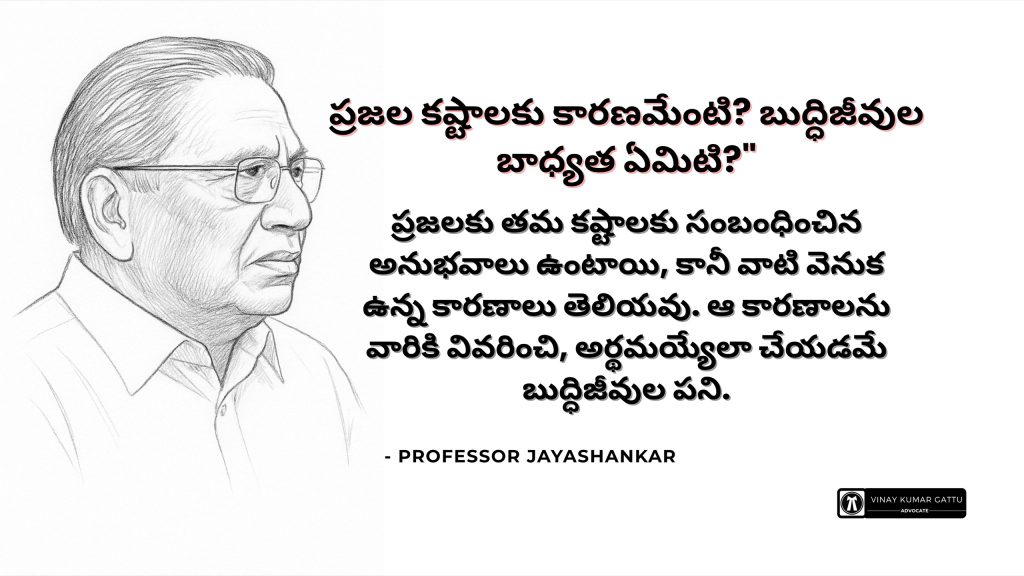
What Causes People’s Suffering? And What is the Intellectual’s Responsibility?
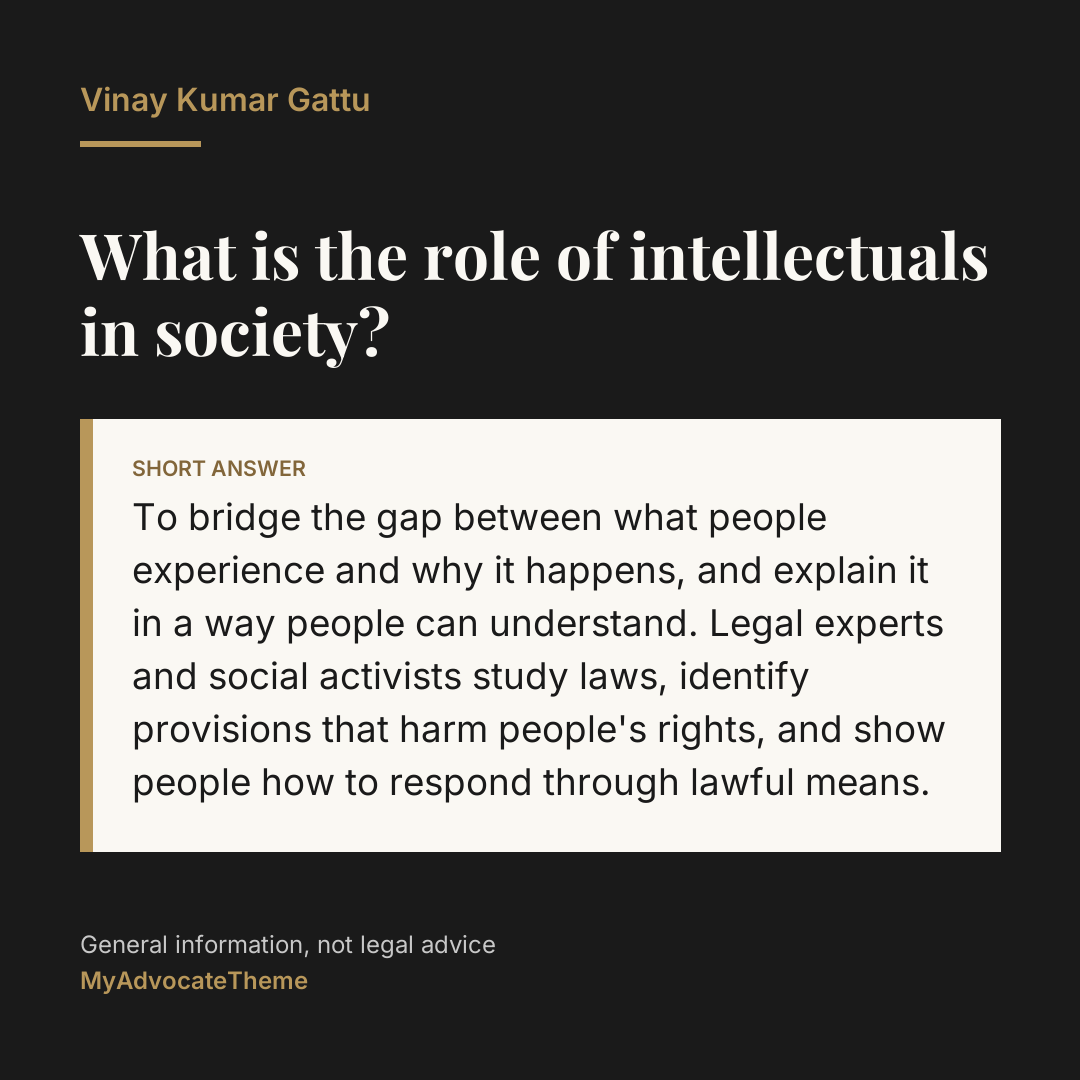
People experience their hardships firsthand, but they may not fully understand the root causes behind them. The primary duty of intellectuals in a society is to bridge this chasm between experience and cause, explaining the reality to the people in a way they can comprehend.
Let’s understand this with an example. Suppose the government introduces a new land acquisition law. Due to loopholes in this law, common farmers are easily losing their lands for very little compensation. They receive legal notices and, unable to navigate the court system, find themselves collapsing financially and mentally. This is the hardship they experience directly.
But if you ask them the reason for their plight, you might get different answers. Some might resign themselves to “fate,” while others might express anger at the local revenue officer or blame the company acquiring the land. They may fail to recognize that the real problem overturning their lives lies within the government’s policy and that new law.
The Role of Intellectuals and Journalists
This is where the role of intellectuals begins. Legal experts and social activists study the law thoroughly, identifying the dangerous elements that infringe upon people’s rights. They show people how to fight legally and how to oppose government policies.
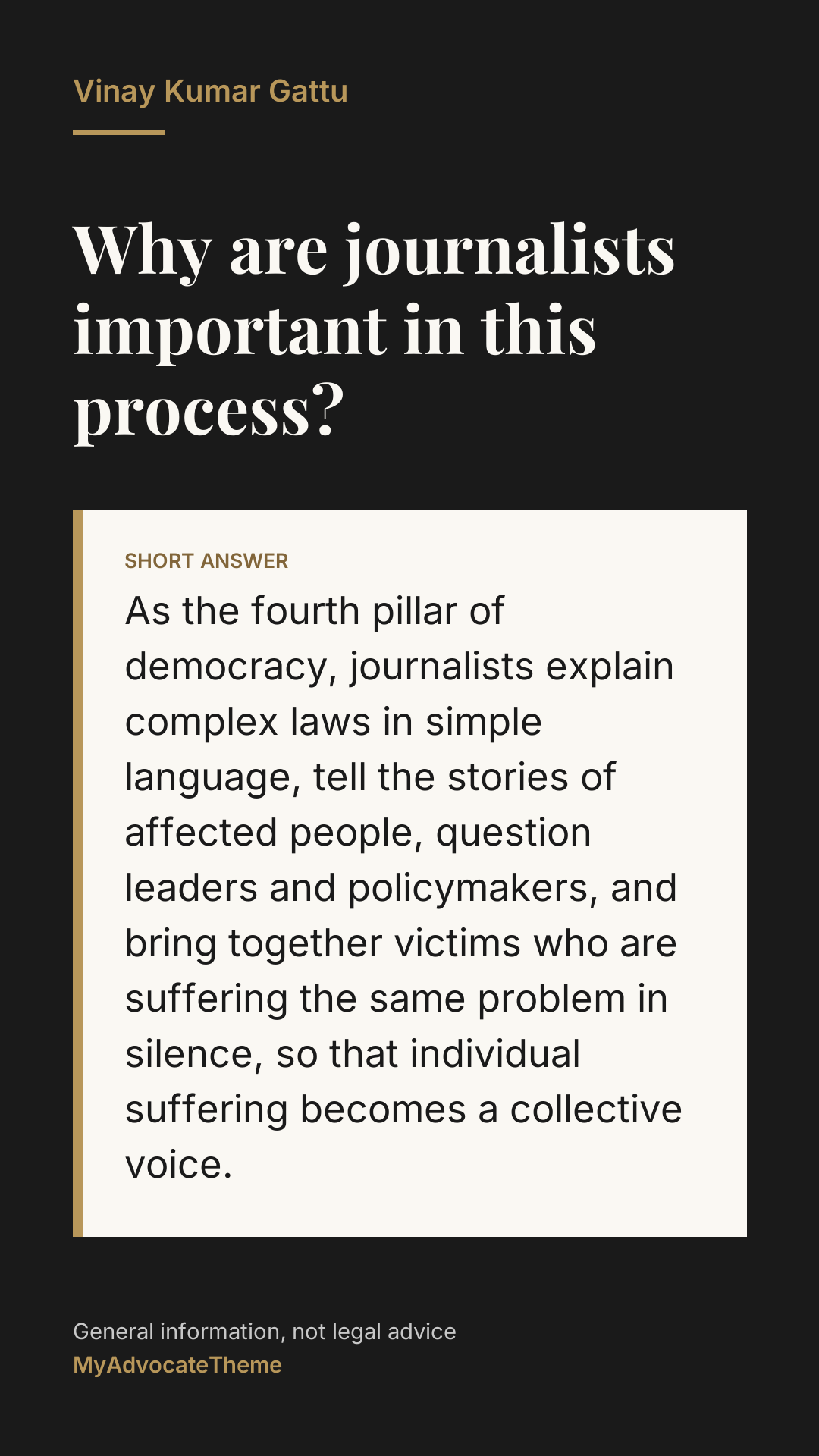
In this process of awakening, the role of journalists is most crucial and powerful. As the fourth pillar of democracy, they truly become the “voice of the people.” They take the legal loopholes identified by experts and the endless suffering of people on the ground and channel them into the public consciousness, not just as news, but as the spirit of a movement. They break down complex legal terminology and intricacies that are incomprehensible to the common person, explaining them in simple language. When they write a story that paints a vivid picture of how a farmer lost his land and how his family was ruined, the severity of the issue transcends the printed word and touches the heart of every reader.
Armed with these facts, they fearlessly question government leaders and policymakers. By creating platforms for debate, they demand accountability in the public sphere. This relentless pressure can compel even governments to rethink their decisions. Furthermore, through their stories, they unite all the victims from different regions who are suffering from the same problem in silence. When one person’s problem becomes everyone’s problem, individual anguish transforms into a collective force, laying a strong foundation for a movement to take shape.
The Other Side of the Coin: The Danger of Bias
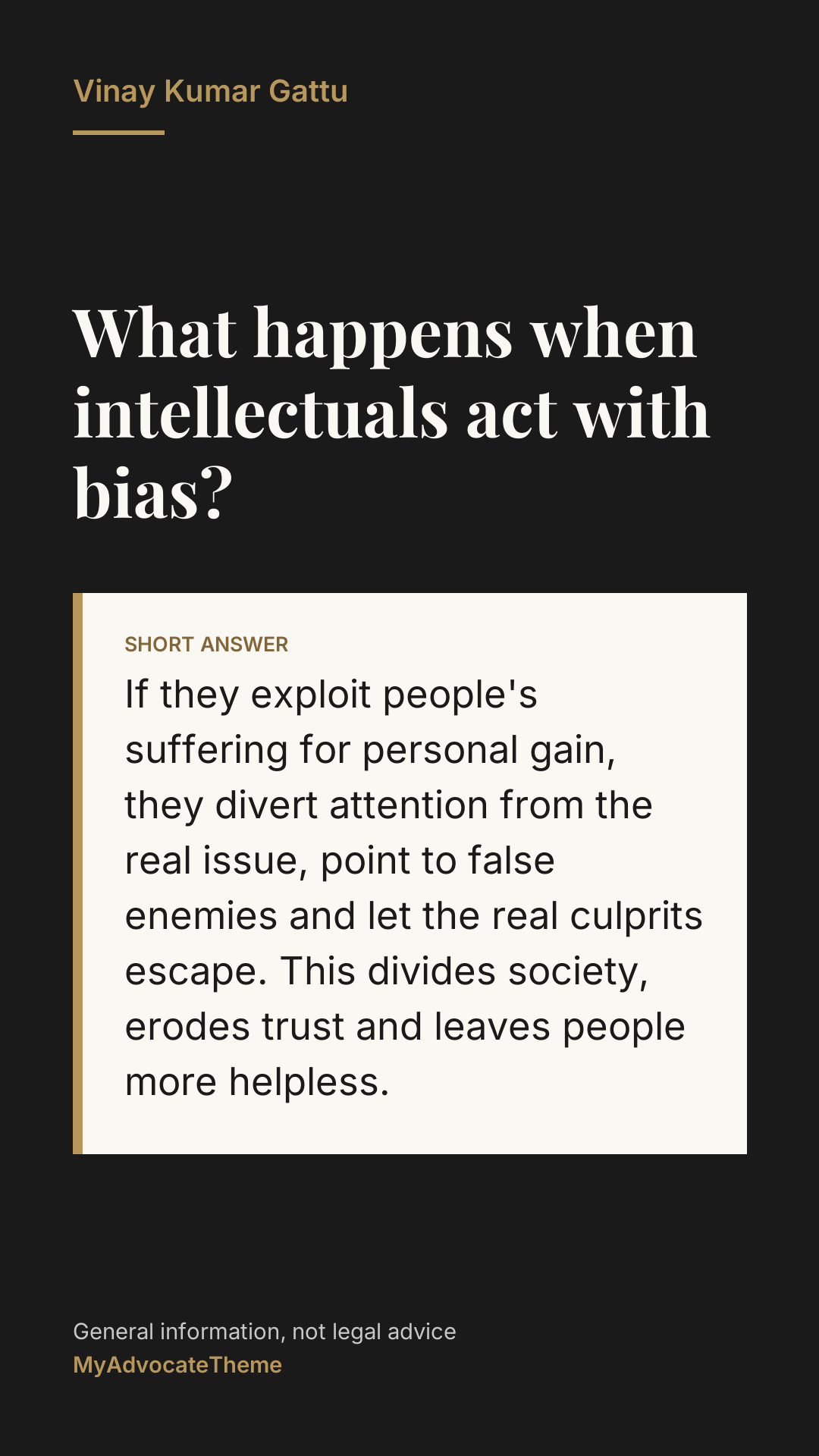
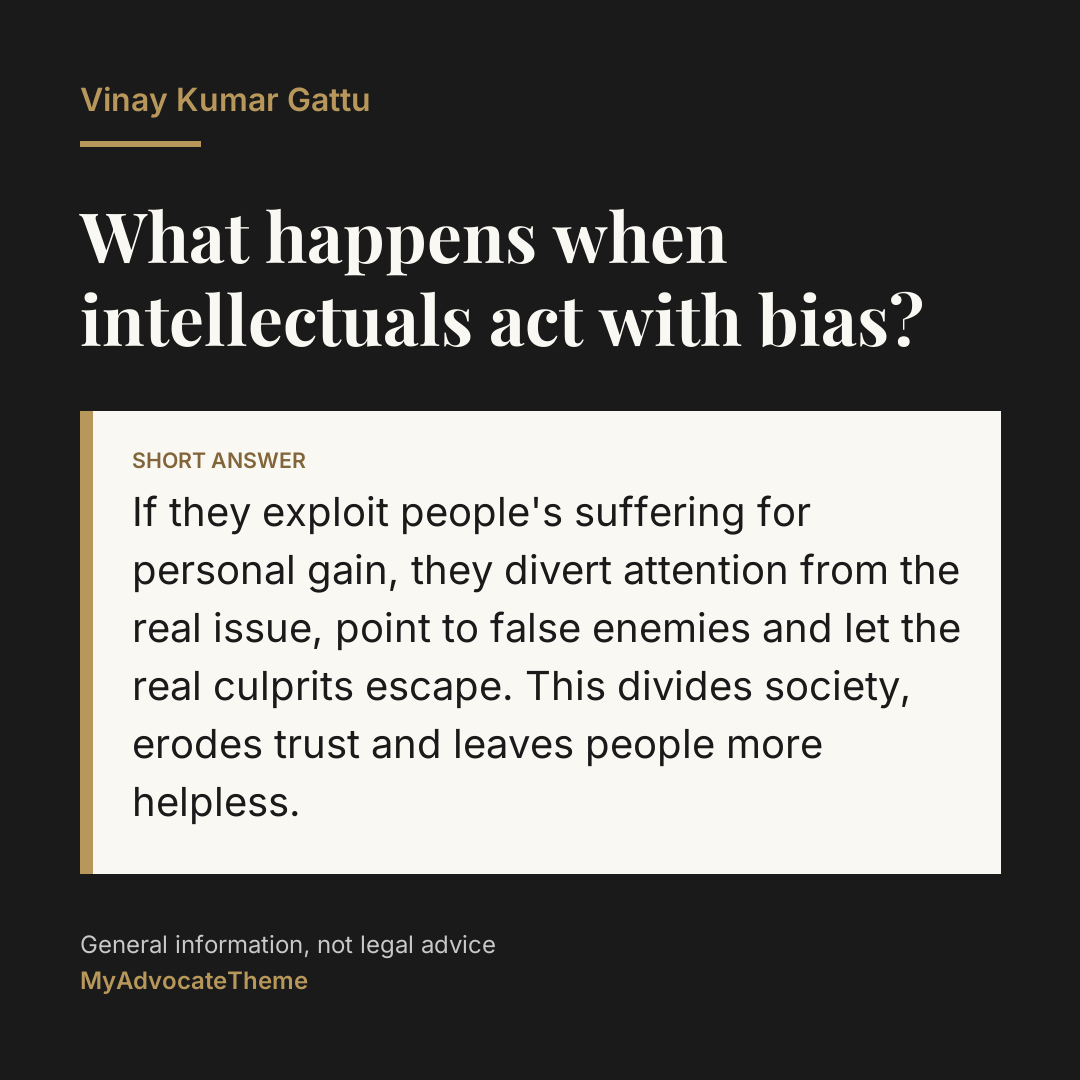
However, if these intellectuals, who play such a critical role, act with bias driven by selfish thoughts and for personal gain, it can cause irreparable harm to society. If they exploit people’s suffering for their own advantage and divert attention from the real issue, they create divisions in society. They point to false enemies and allow the real culprits to escape. This not only erodes public trust but also pushes people into a state of deeper helplessness.
Choosing the Right Path
Therefore, it is essential for everyone who guides society to engage in introspection. We must ask ourselves: Is the path we are walking on for the good of society or for personal gain? On this occasion, we should recall the selfless, people-centric path shown by great men like the Telangana ideologue, Professor Jayashankar. I sincerely wish to be a part of the effort to walk on that right path.
Comments