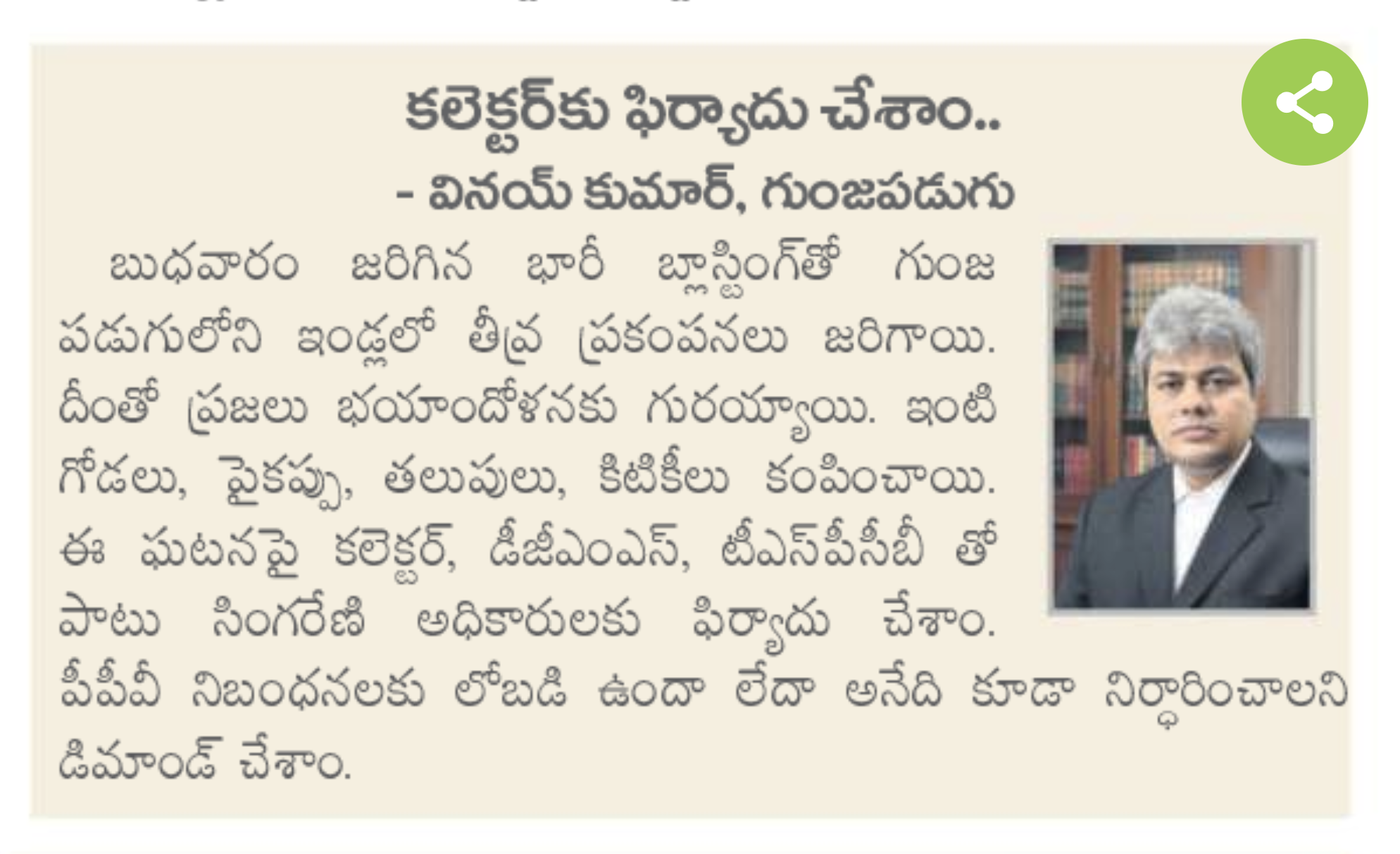
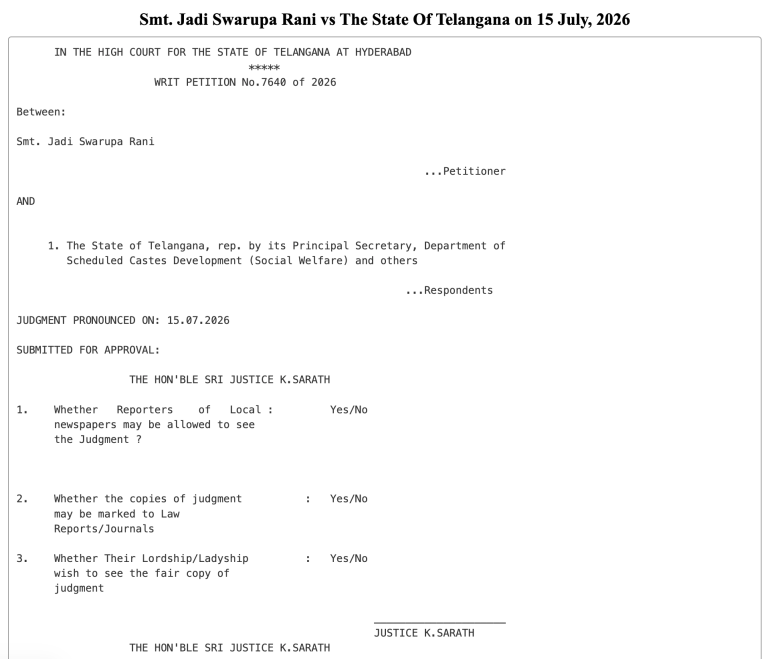
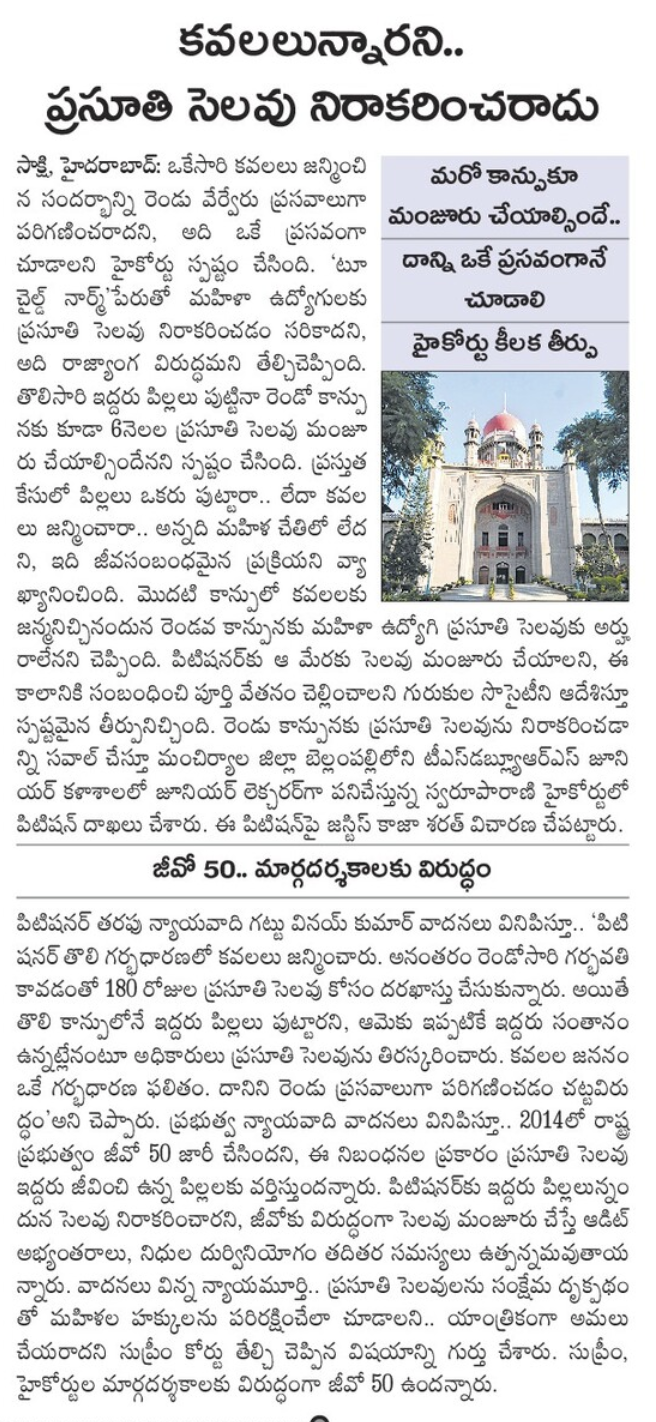
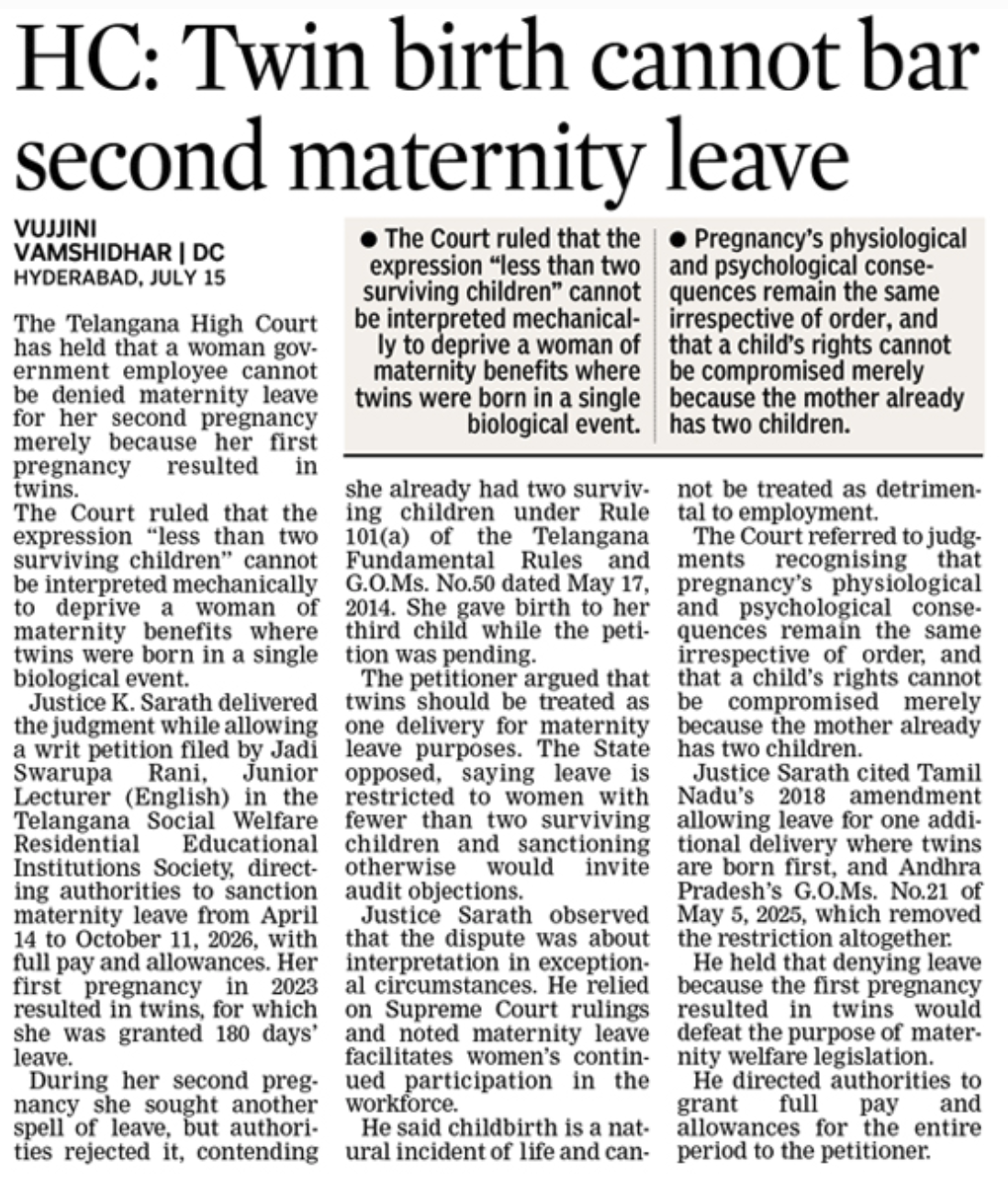
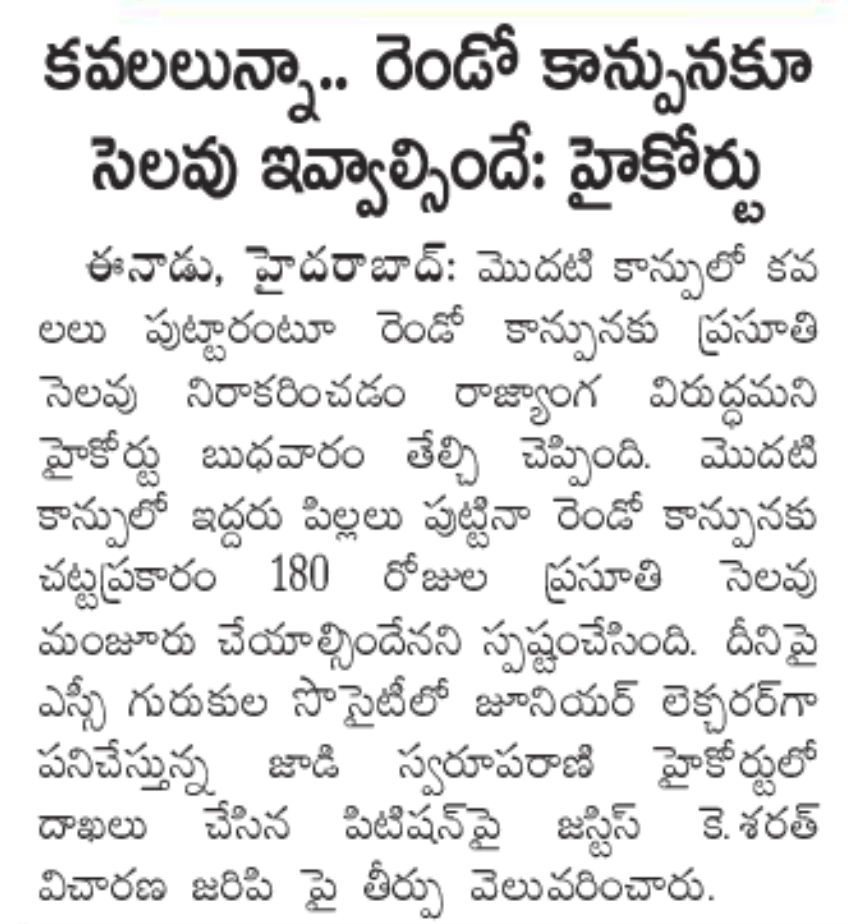
The Telangana High Court (Justice K. Sarath) rejected the state's "rigid" interpretation of the two-child norm and ruled that a woman government employee having twins in her first delivery cannot be denied 180 days of maternity leave with full pay and allowances for her second delivery.
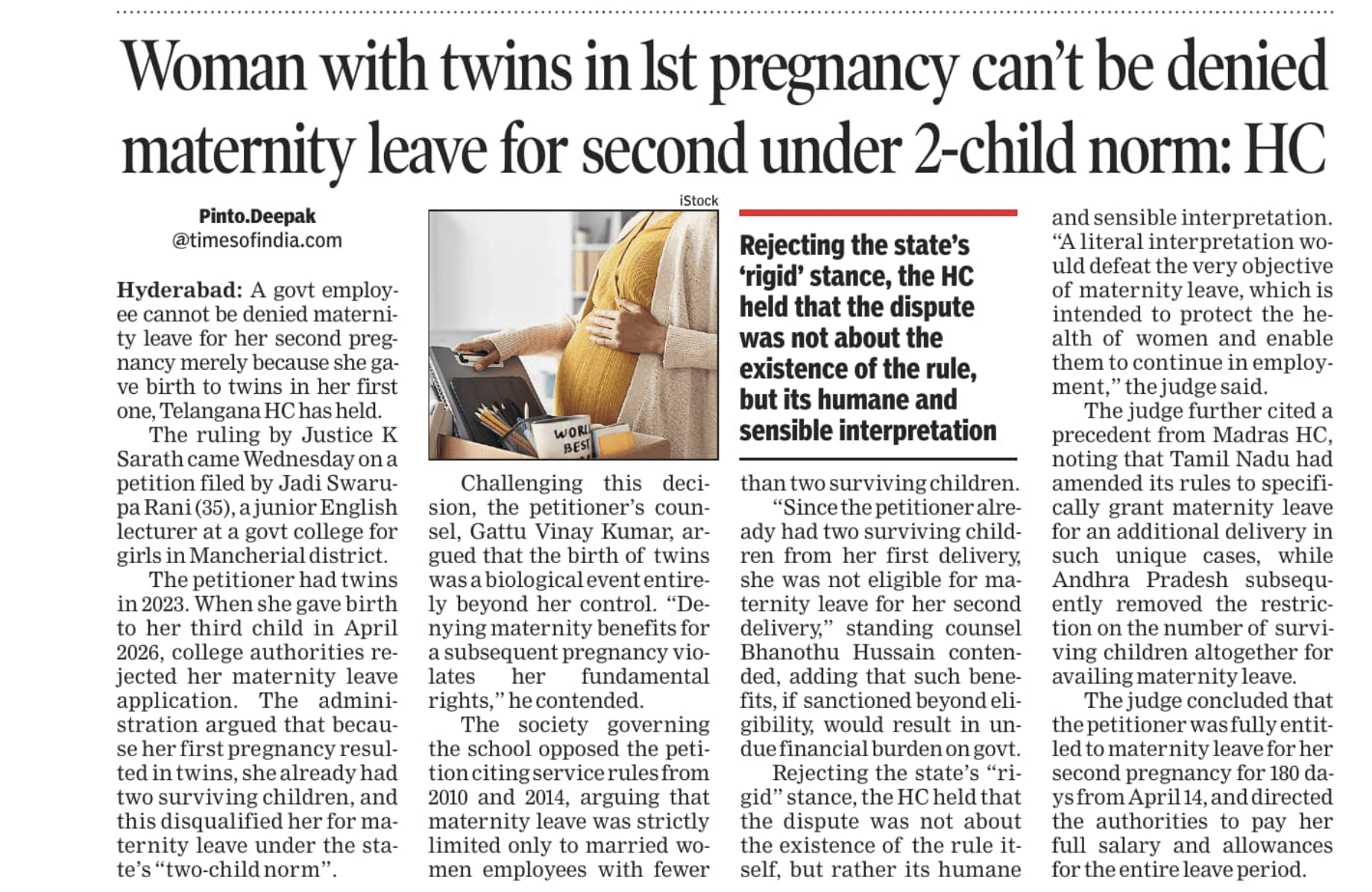
Text of the cutting
Woman with twins in 1st pregnancy can't be denied maternity leave for second under 2-child norm: HC
Pinto.Deepak @timesofindia.com
Hyderabad: A govt employee cannot be denied maternity leave for her second pregnancy merely because she gave birth to twins in her first one, Telangana HC has held.
The ruling by Justice K Sarath came Wednesday on a petition filed by Jadi Swarupa Rani (35), a junior English lecturer at a govt college for girls in Mancherial district.
The petitioner had twins in 2023. When she gave birth to her third child in April 2026, college authorities rejected her maternity leave application. The administration argued that because her first pregnancy resulted in twins, she already had two surviving children, and this disqualified her for maternity leave under the state's "two-child norm".
Challenging this decision, the petitioner's counsel, Gattu Vinay Kumar, argued that the birth of twins was a biological event entirely beyond her control. "Denying maternity benefits for a subsequent pregnancy violates her fundamental rights," he contended.
The society governing the school opposed the petition citing service rules from 2010 and 2014, arguing that maternity leave was strictly limited only to married women employees with fewer than two surviving children.
"Since the petitioner already had two surviving children from her first delivery, she was not eligible for maternity leave for her second delivery," standing counsel Bhanothu Hussain contended, adding that such benefits, if sanctioned beyond eligibility, would result in undue financial burden on govt.
Rejecting the state's "rigid" stance, the HC held that the dispute was not about the existence of the rule itself, but rather its humane and sensible interpretation. "A literal interpretation would defeat the very objective of maternity leave, which is intended to protect the health of women and enable them to continue in employment," the judge said.
The judge further cited a precedent from Madras HC, noting that Tamil Nadu had amended its rules to specifically grant maternity leave for an additional delivery in such unique cases, while Andhra Pradesh subsequently removed the restriction on the number of surviving children altogether for availing maternity leave.
The judge concluded that the petitioner was fully entitled to maternity leave for her second pregnancy for 180 days from April 14, and directed the authorities to pay her full salary and allowances for the entire leave period.