Information that stays online can damage your reputation, breach your privacy, cause mental distress, hurt job or business prospects, and lead to cyberbullying. The Right to be Forgotten lets people move on from their past, but it has to be balanced with the public's right to information.
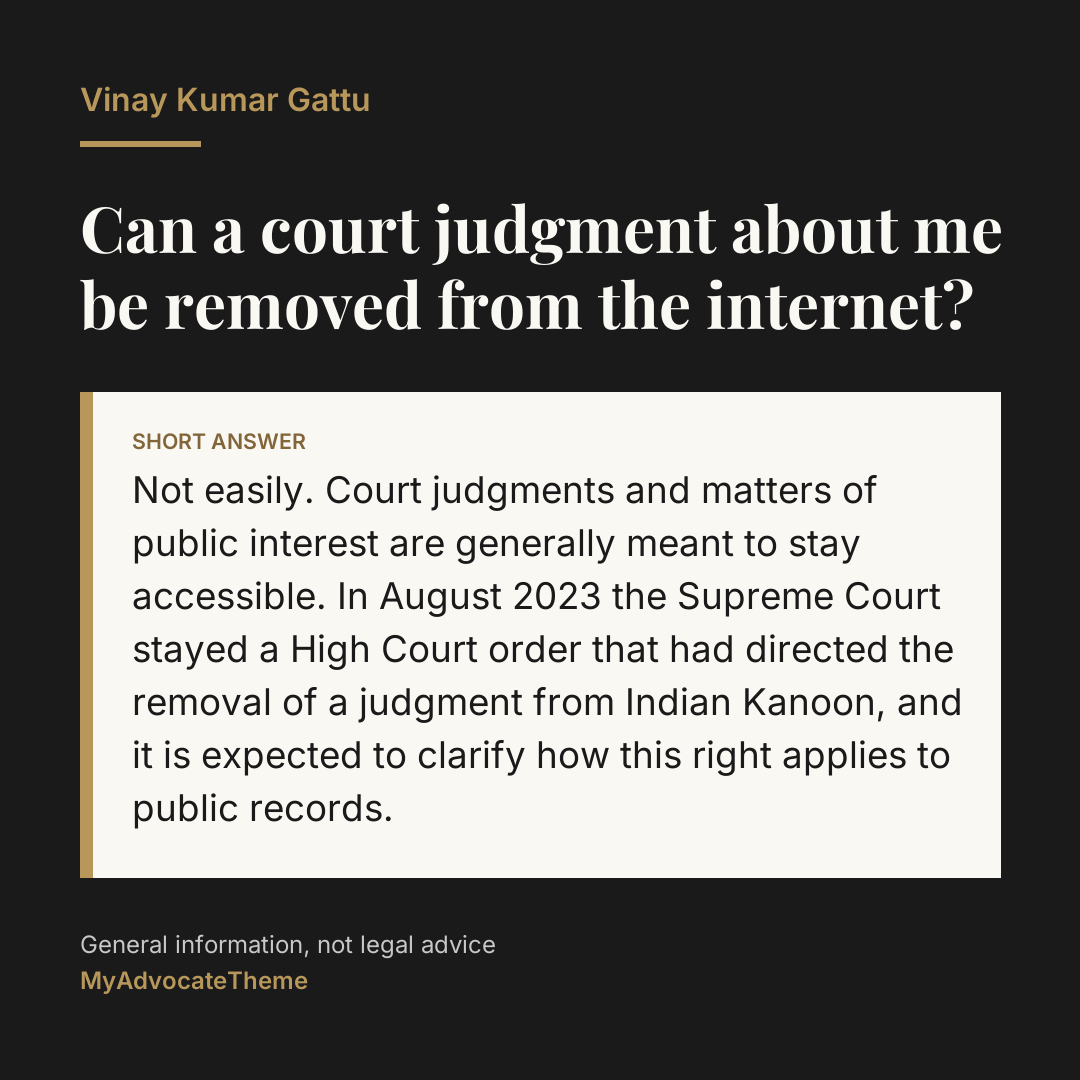
Not easily. Court judgments and matters of public interest are generally meant to stay accessible. In August 2023 the Supreme Court stayed a High Court order that had directed the removal of a judgment from Indian Kanoon, and it is expected to clarify how this right applies to public records.
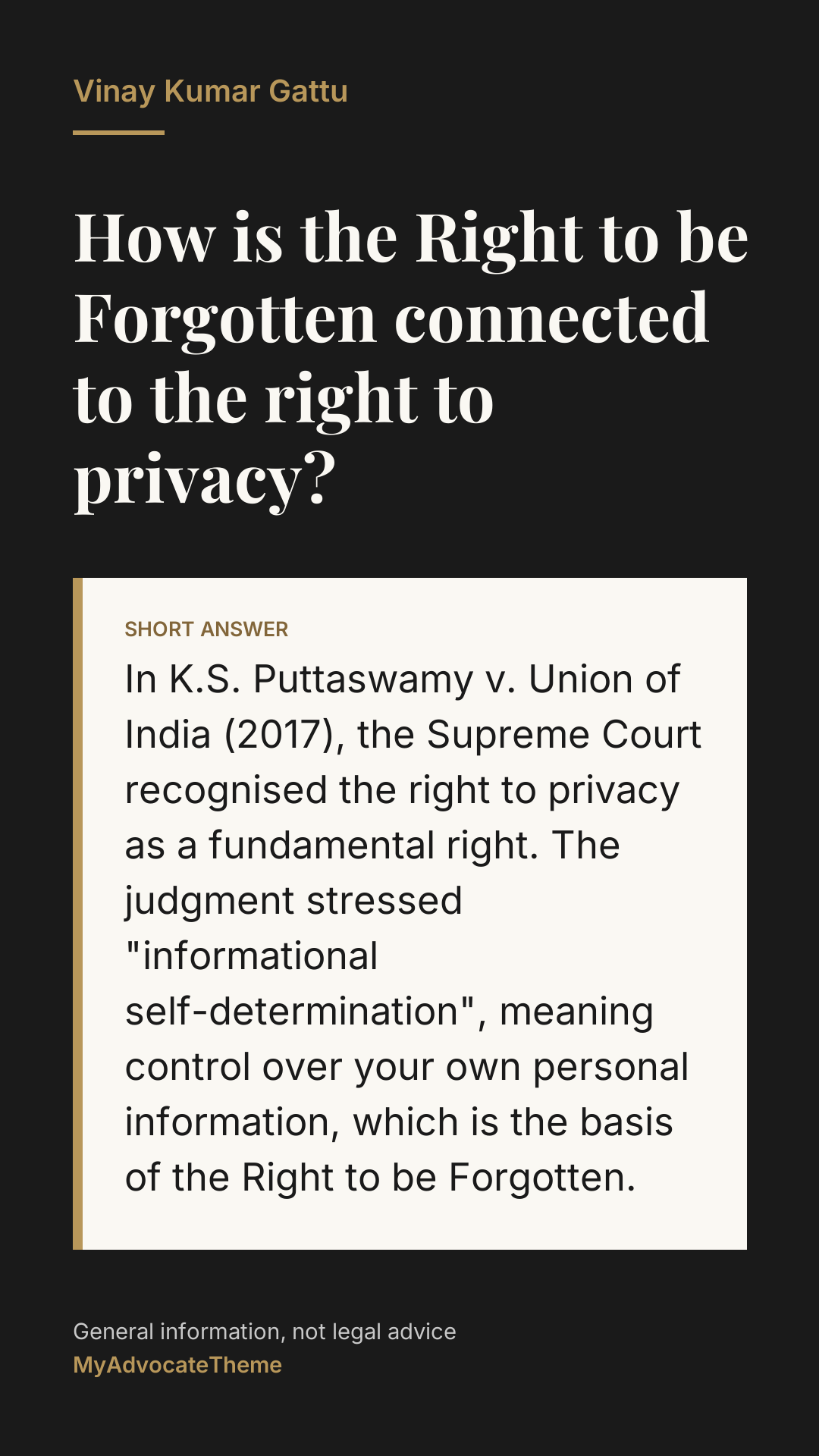
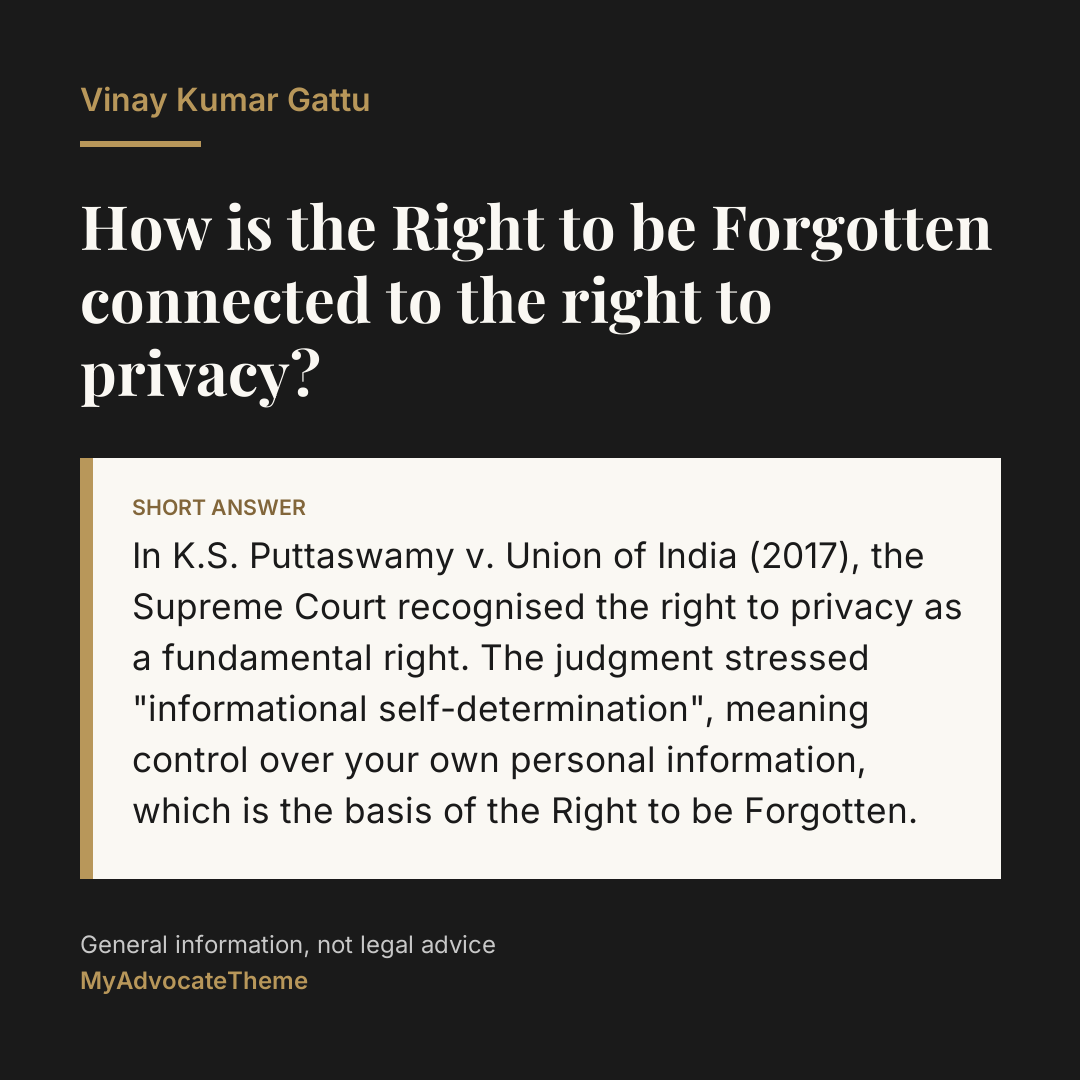
In K.S. Puttaswamy v. Union of India (2017), the Supreme Court recognised the right to privacy as a fundamental right. The judgment stressed "informational self-determination", meaning control over your own personal information, which is the basis of the Right to be Forgotten.
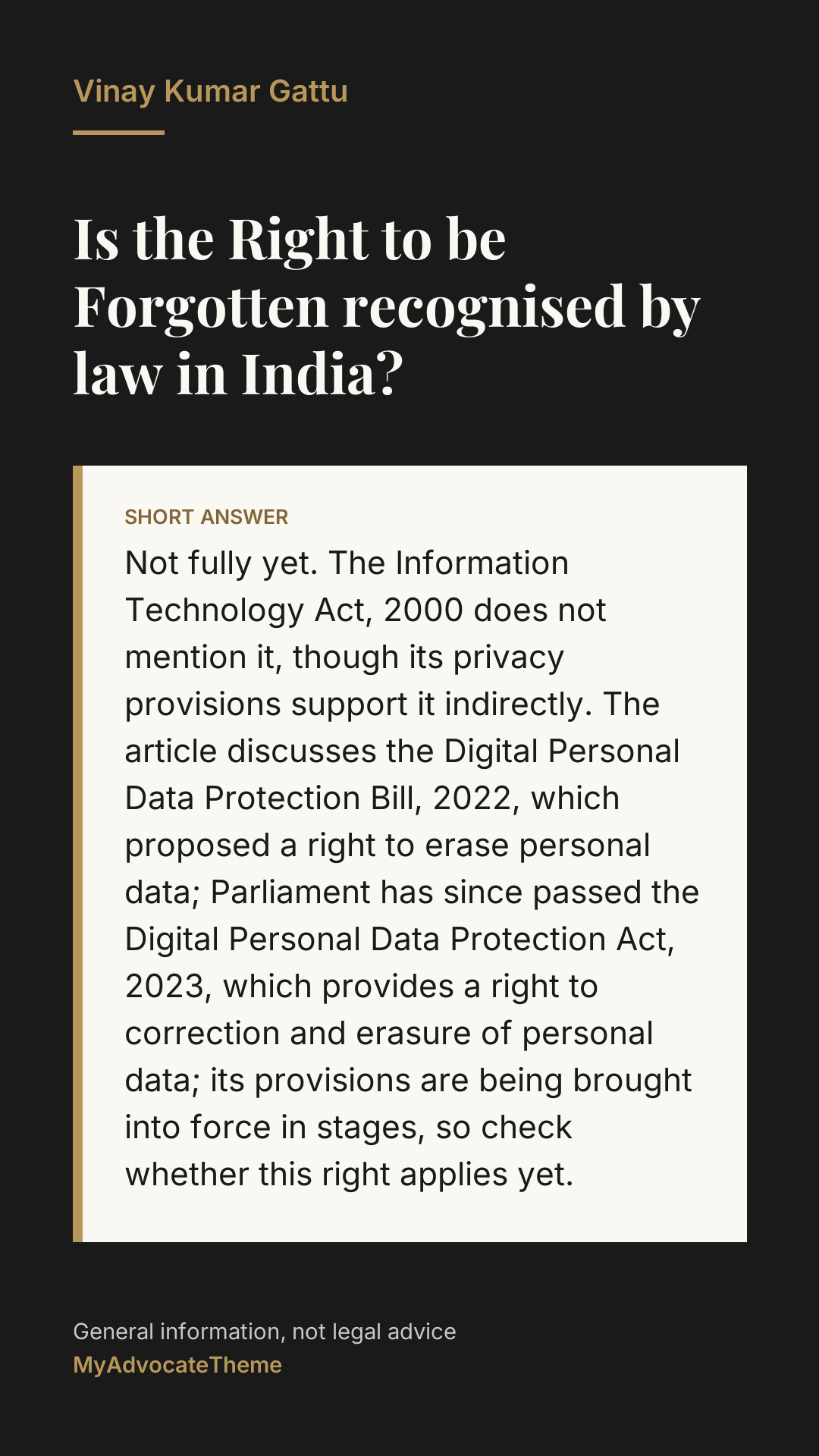
Not fully yet. The Information Technology Act, 2000 does not mention it, though its privacy provisions support it indirectly. The article discusses the Digital Personal Data Protection Bill, 2022, which proposed a right to erase personal data; Parliament has since passed the Digital Personal Data Protection Act, 2023, which provides a right to correction and erasure of personal data; its provisions are being brought into force in stages, so check whether this right applies yet.
It is the right to ask websites or search engines to remove personal information about you that is no longer relevant, accurate or necessary. The idea gained global attention in 2014, when a man in Spain took Google to court to remove outdated news articles about him.