Buildings in buffer zones flood during heavy rain and can even cost lives. Keeping these areas free protects the lakes from pollution, conserves biodiversity and helps maintain groundwater for future generations.
Through a loophole: permission is obtained for a sub-divided plot in one place, but the house is actually built in the FTL or buffer zone. It is then sold as legal, with tax receipts and even bank loans, and buyers suffer when demolitions take place. Linking sub-divided plots to a GPS-based geotagging system would help prevent this.
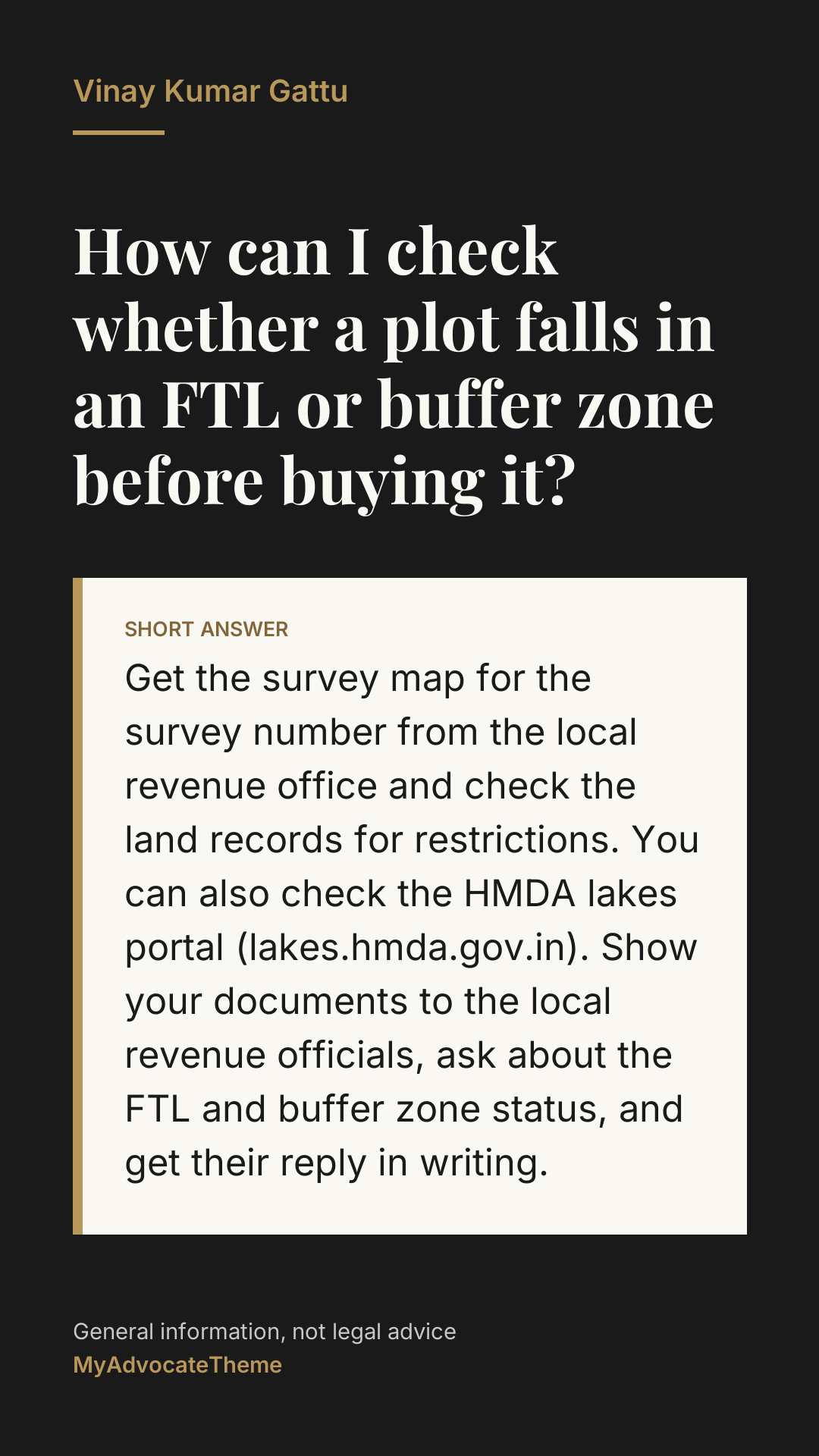
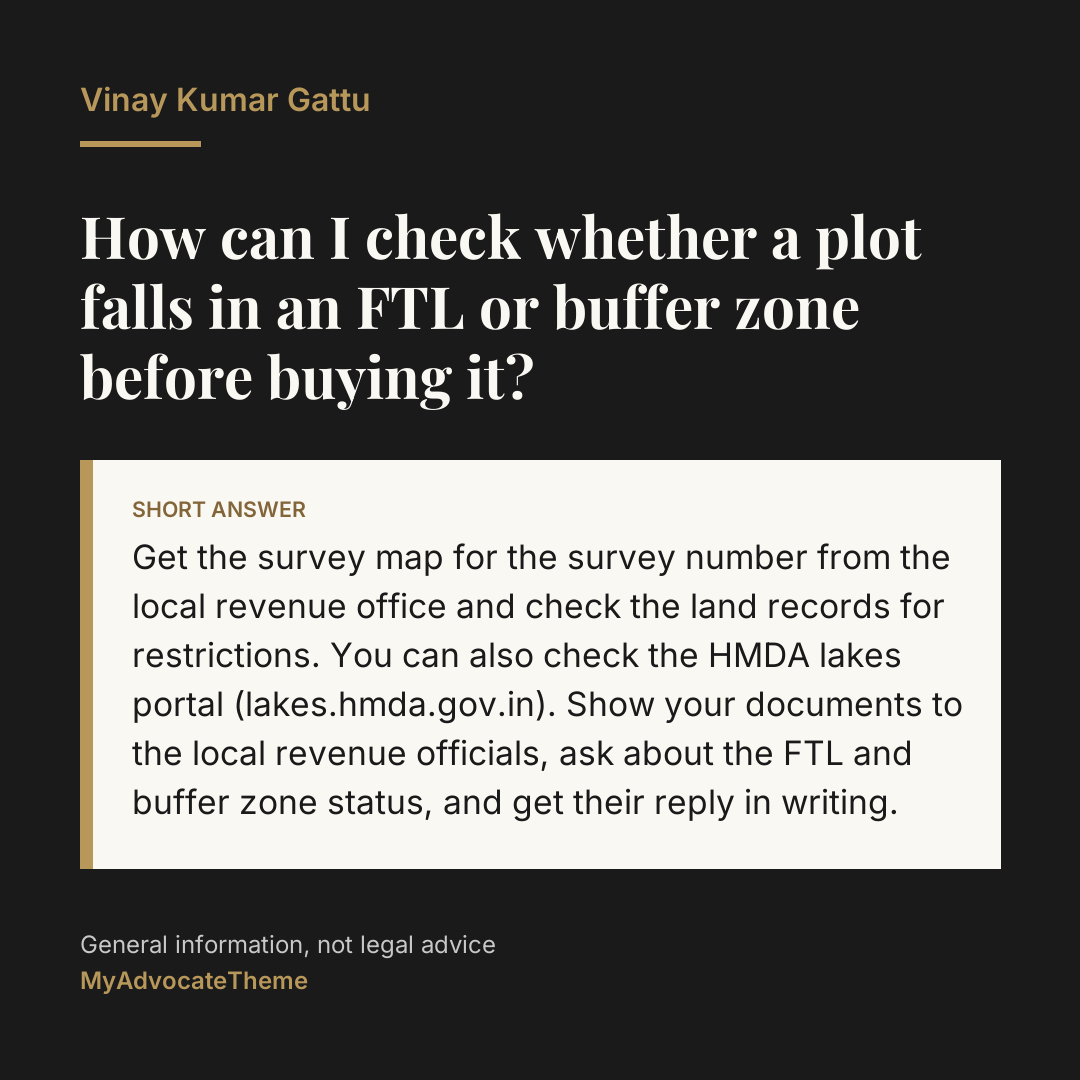
Get the survey map for the survey number from the local revenue office and check the land records for restrictions. You can also check the HMDA lakes portal (lakes.hmda.gov.in). Show your documents to the local revenue officials, ask about the FTL and buffer zone status, and get their reply in writing.
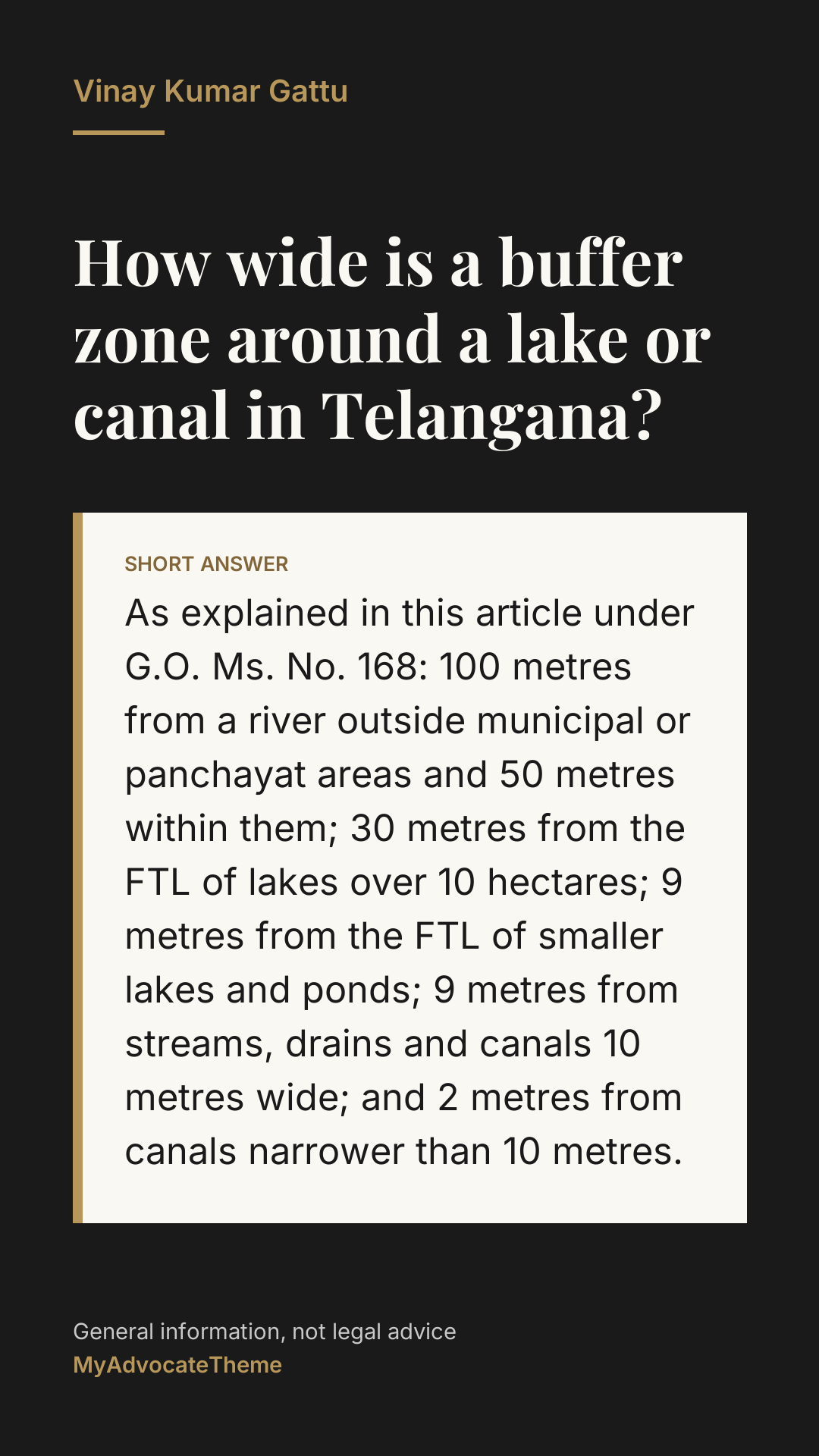
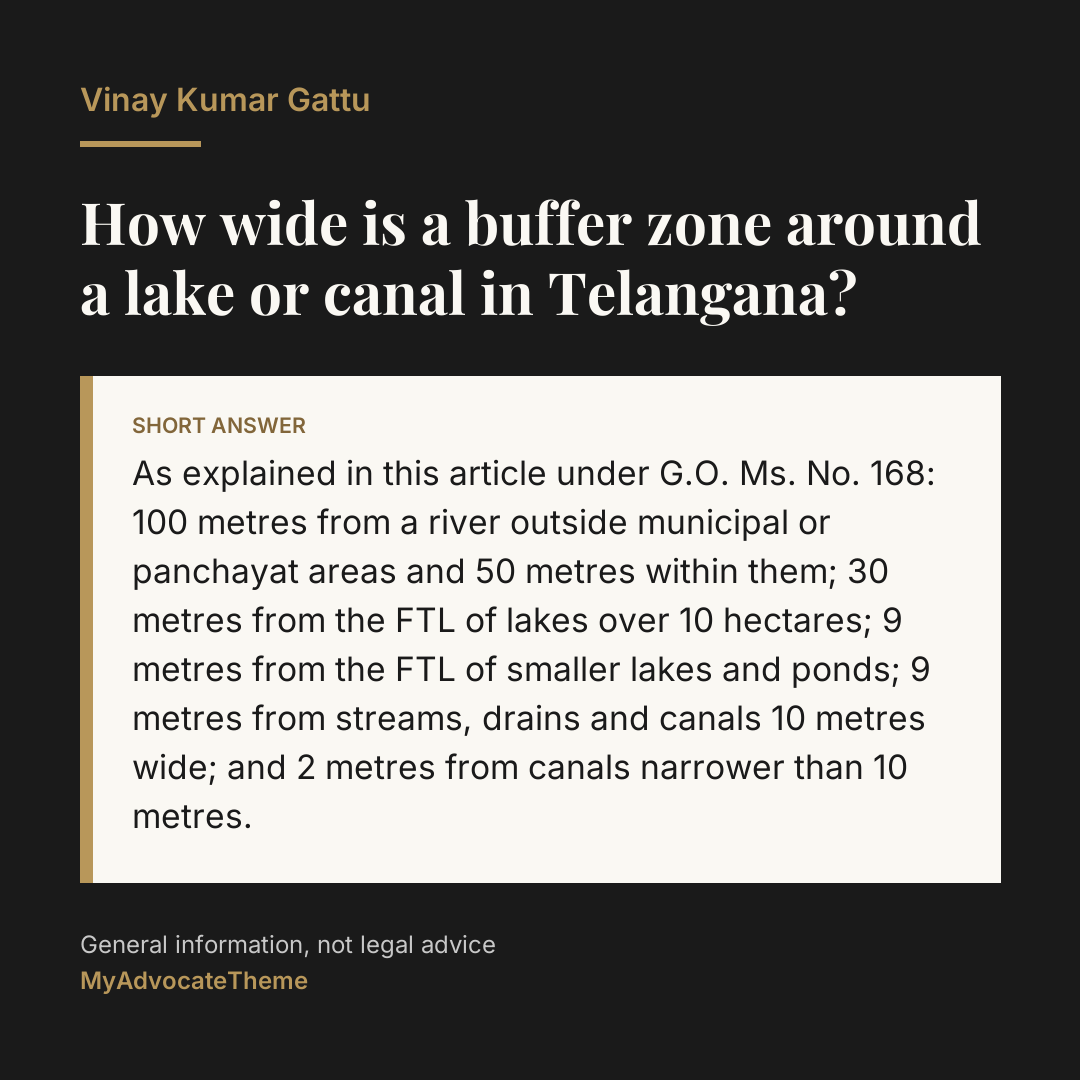
As explained in this article under G.O. Ms. No. 168: 100 metres from a river outside municipal or panchayat areas and 50 metres within them; 30 metres from the FTL of lakes over 10 hectares; 9 metres from the FTL of smaller lakes and ponds; 9 metres from streams, drains and canals 10 metres wide; and 2 metres from canals narrower than 10 metres.
FTL is the extent to which water spreads when a river, lake, stream or canal is completely full. It is fixed after considering the capacity of the water body, the water flow and rainfall. No construction or development is permitted within the FTL.
ఇంటర్నెట్లో మిగిలిపోయిన సమాచారం పరువుకు నష్టం, గోప్యతకు భంగం, మానసిక వేదన, ఉద్యోగ లేదా వ్యాపార అవకాశాలకు ఆటంకం, సైబర్ వేధింపులకు కారణం కావచ్చు. మరచిపోయే హక్కు గతాన్ని దాటి ముందుకు సాగే అవకాశం ఇస్తుంది, అయితే దీనిని ప్రజల సమాచార హక్కుతో సమతుల్యం చేయాలి.