Under Section 15 of the POCSO Act (as amended in 2019), storing or possessing pornographic material involving a child with the specified intention or purpose under sub-sections (1), (2), or (3) is punishable even without actual sharing or transmission. Section 67B(b) of the IT Act also penalizes acts such as collecting, seeking, browsing, or downloading electronic material depicting children in an obscene, indecent, or sexually explicit manner.
Earlier two-Judge Bench rulings such as Jinia Keotin, Neelamma, and Bharatha Matha had restricted such children to self-acquired properties and barred claims in ancestral coparcenary property, which a referring Bench doubted. This three-Judge Bench answered the reference by harmonizing Section 16(3) with Section 6(3) of the Hindu Succession Act, 1956 and sent the individual cases to a two-Judge Bench for disposal.
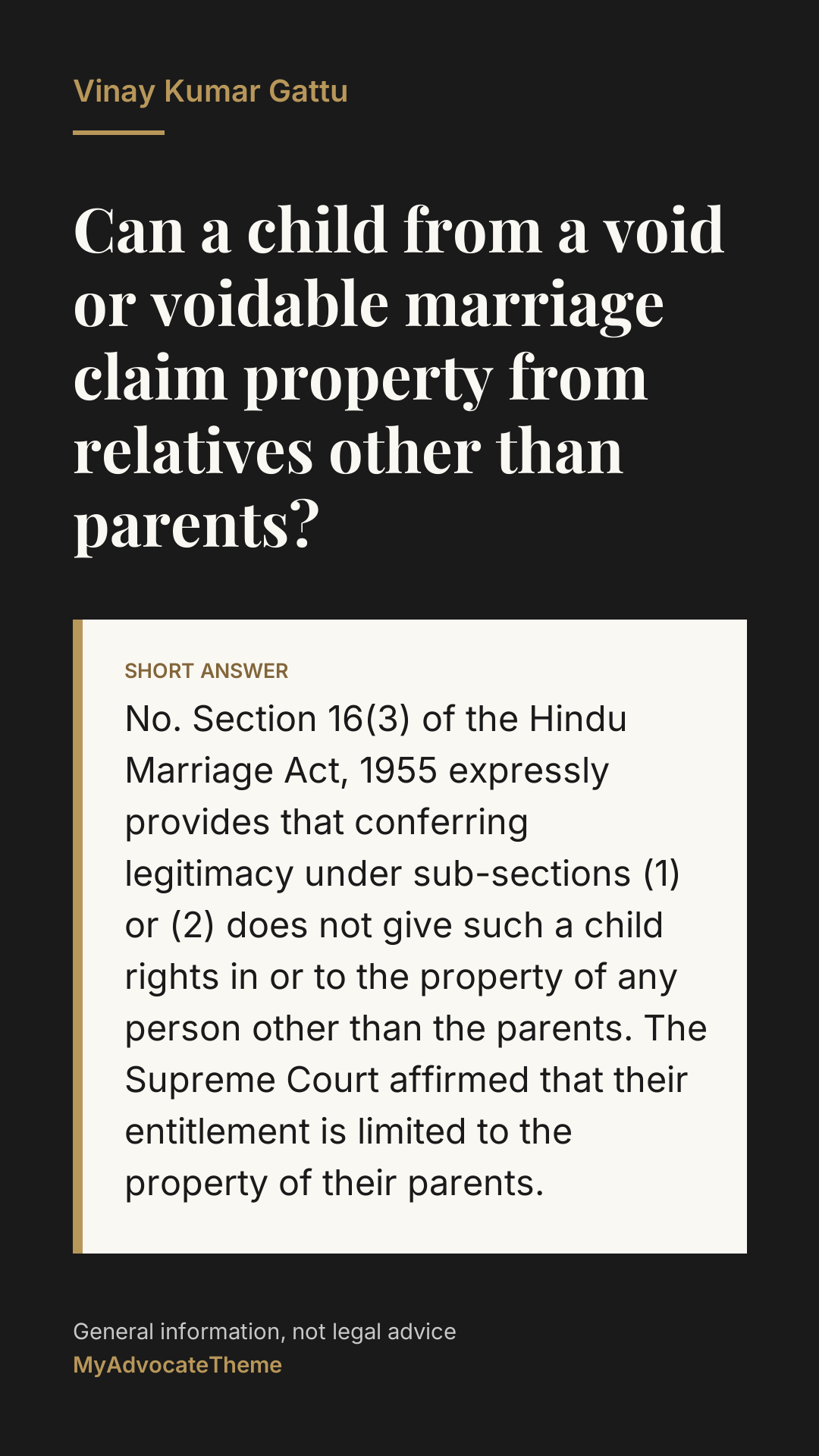
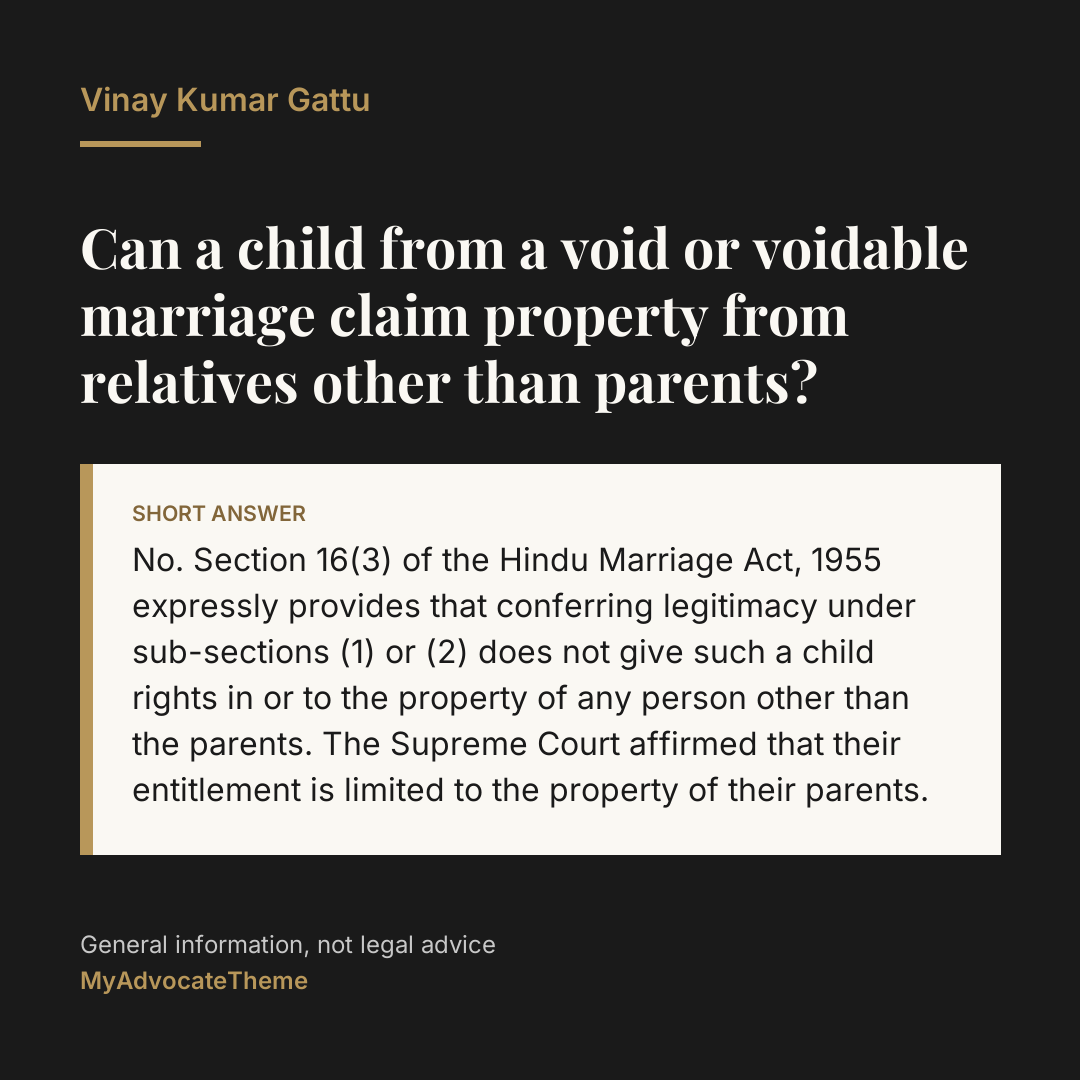
No. Section 16(3) of the Hindu Marriage Act, 1955 expressly provides that conferring legitimacy under sub-sections (1) or (2) does not give such a child rights in or to the property of any person other than the parents. The Supreme Court affirmed that their entitlement is limited to the property of their parents.
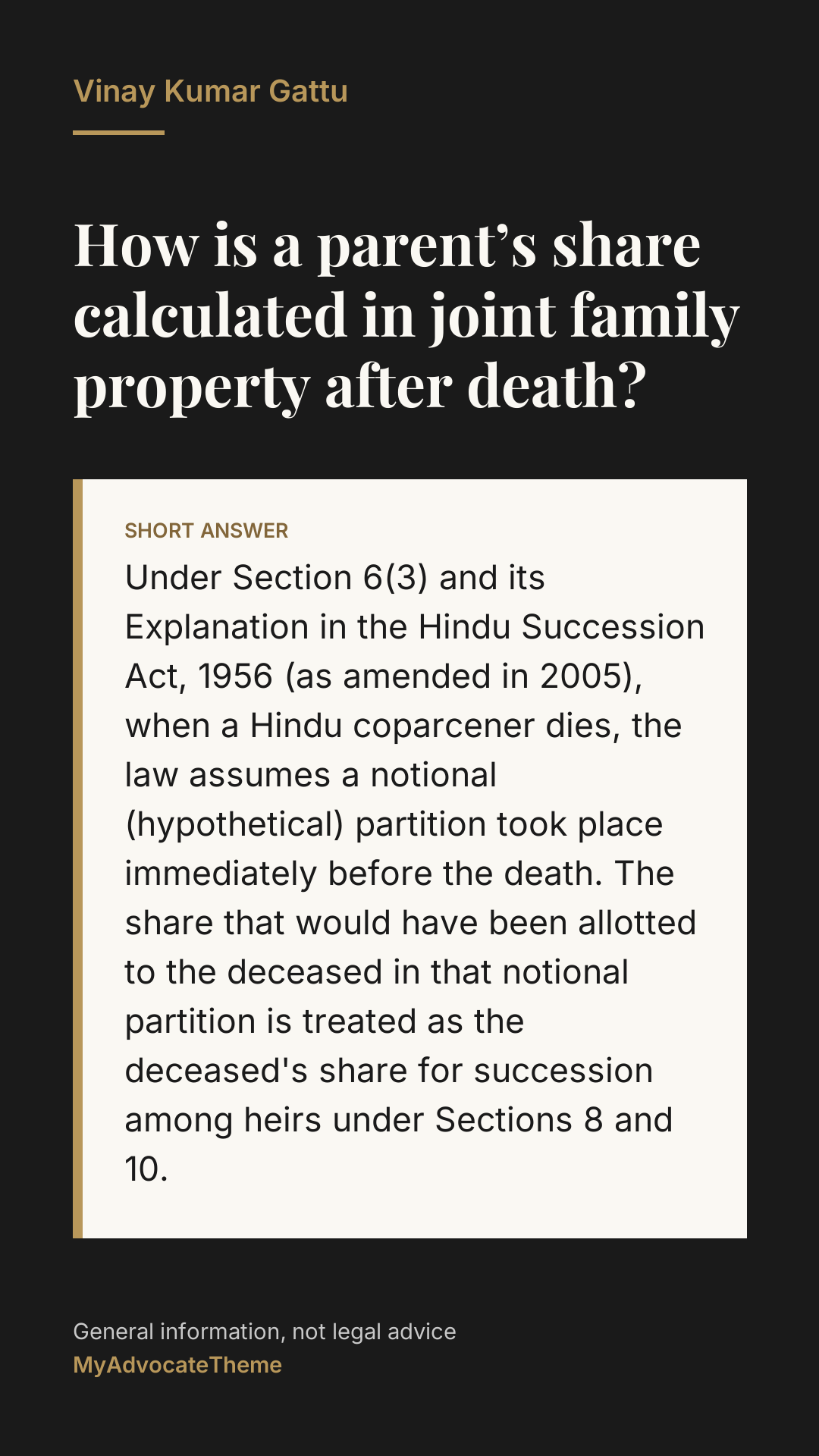
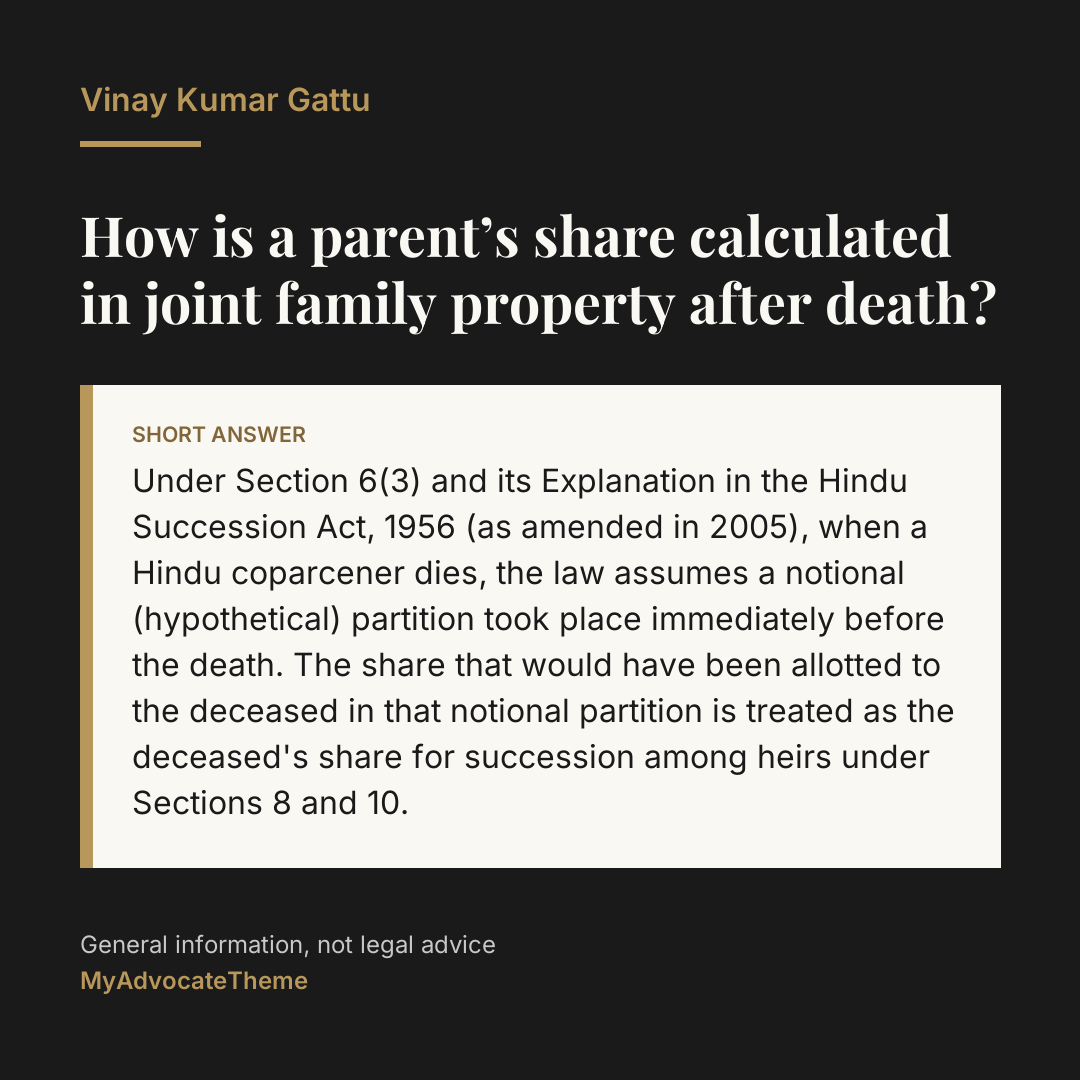
Under Section 6(3) and its Explanation in the Hindu Succession Act, 1956 (as amended in 2005), when a Hindu coparcener dies, the law assumes a notional (hypothetical) partition took place immediately before the death. The share that would have been allotted to the deceased in that notional partition is treated as the deceased's share for succession among heirs under Sections 8 and 10.
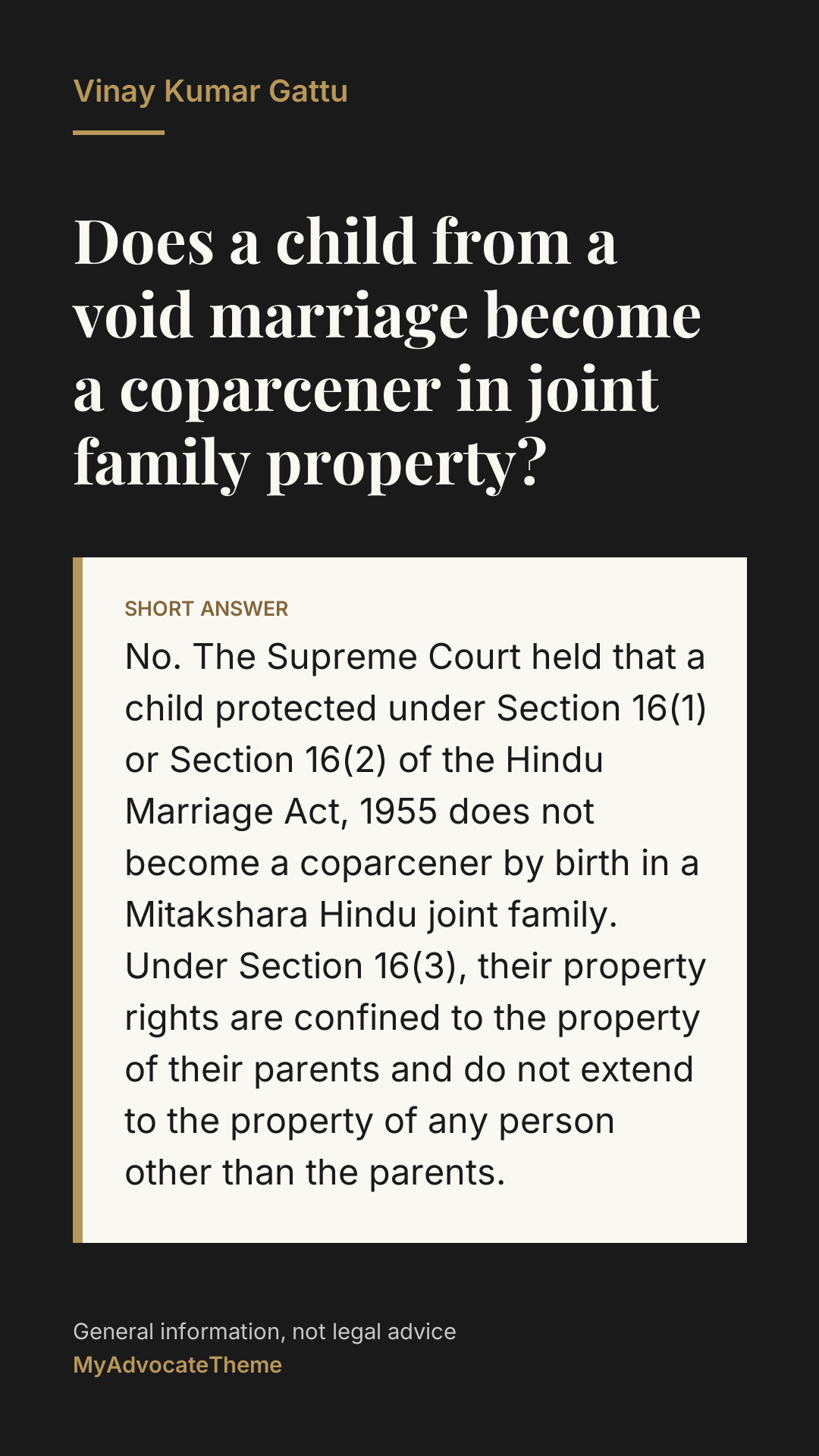
No. The Supreme Court held that a child protected under Section 16(1) or Section 16(2) of the Hindu Marriage Act, 1955 does not become a coparcener by birth in a Mitakshara Hindu joint family. Under Section 16(3), their property rights are confined to the property of their parents and do not extend to the property of any person other than the parents.
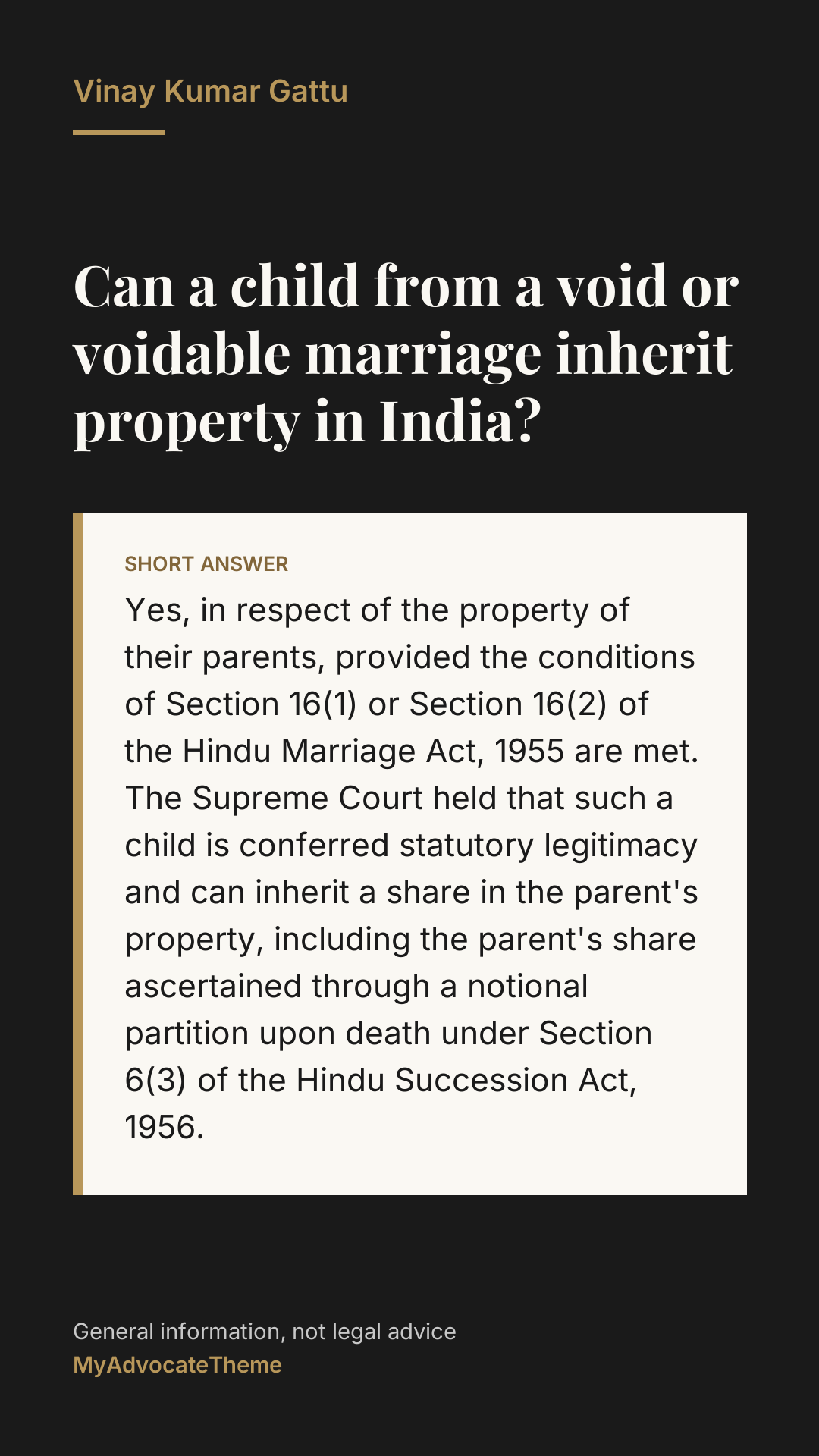
Yes, in respect of the property of their parents, provided the conditions of Section 16(1) or Section 16(2) of the Hindu Marriage Act, 1955 are met. The Supreme Court held that such a child is conferred statutory legitimacy and can inherit a share in the parent's property, including the parent's share ascertained through a notional partition upon death under Section 6(3) of the Hindu Succession Act, 1956.