The victim can approach the High Court through a lawyer and file an "Early Disposal Petition" asking for the case to be decided quickly, under Section 482 of the Code of Criminal Procedure (now Section 528 of the BNSS).
Mainly because there are too few judges for the number of pending cases. In many criminal cases the accused also delay the trial deliberately, for example by avoiding service of summons or seeking repeated adjournments, so the case stays stuck at an early stage.
Yes. The Supreme Court has held that the right to a speedy trial is part of the right to life and personal liberty under Article 21 of the Constitution; Hussainara Khatoon v. State of Bihar is a leading example. Timely justice protects victims as well as the accused.
If a person who has suffered an injustice does not get justice in time, even a good judgment later loses its value. A verdict that comes after years in court, or after the victim has died, gives the victim no real relief.
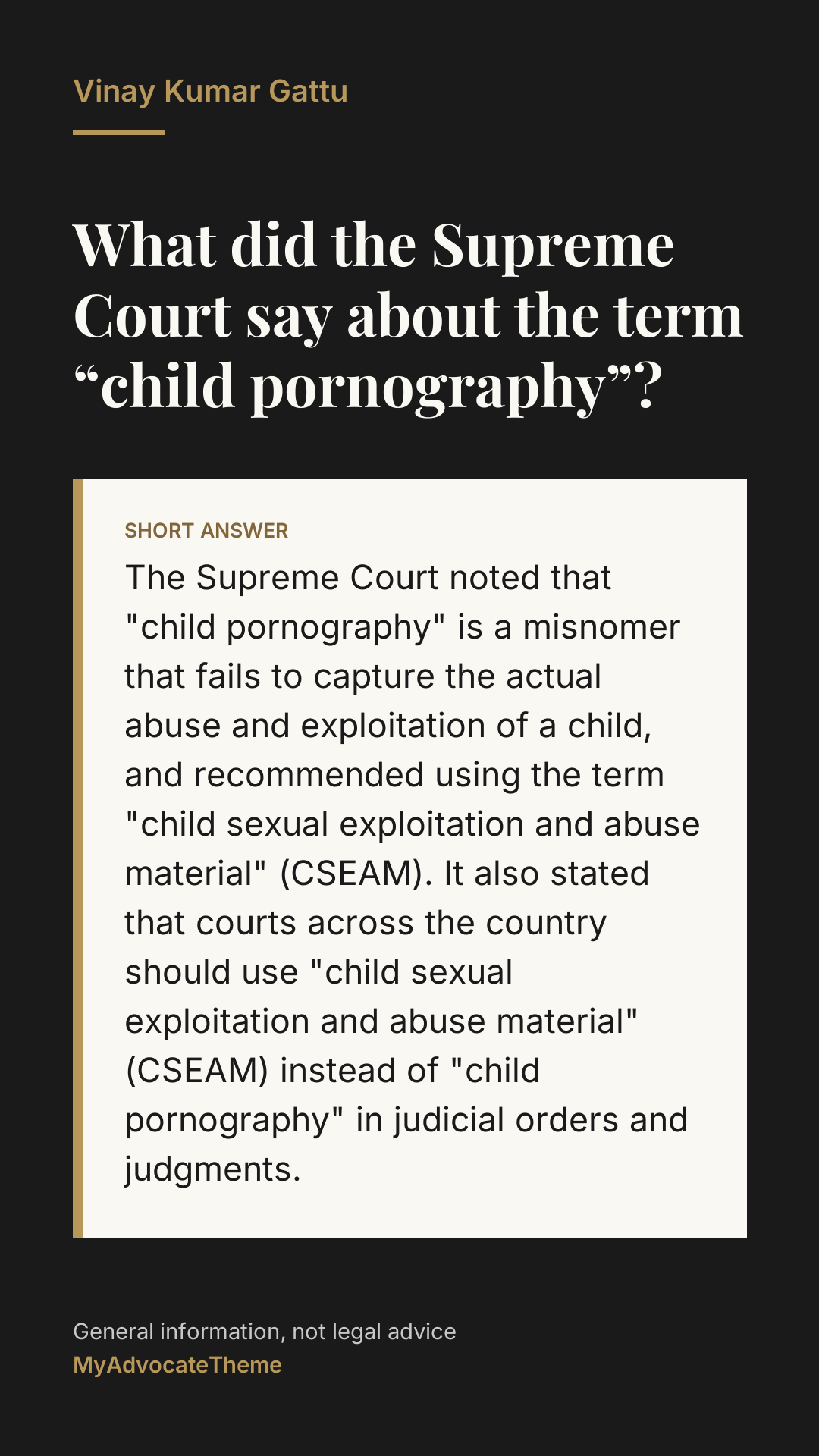
The Supreme Court noted that "child pornography" is a misnomer that fails to capture the actual abuse and exploitation of a child, and recommended using the term "child sexual exploitation and abuse material" (CSEAM). It also stated that courts across the country should use "child sexual exploitation and abuse material" (CSEAM) instead of "child pornography" in judicial orders and judgments.
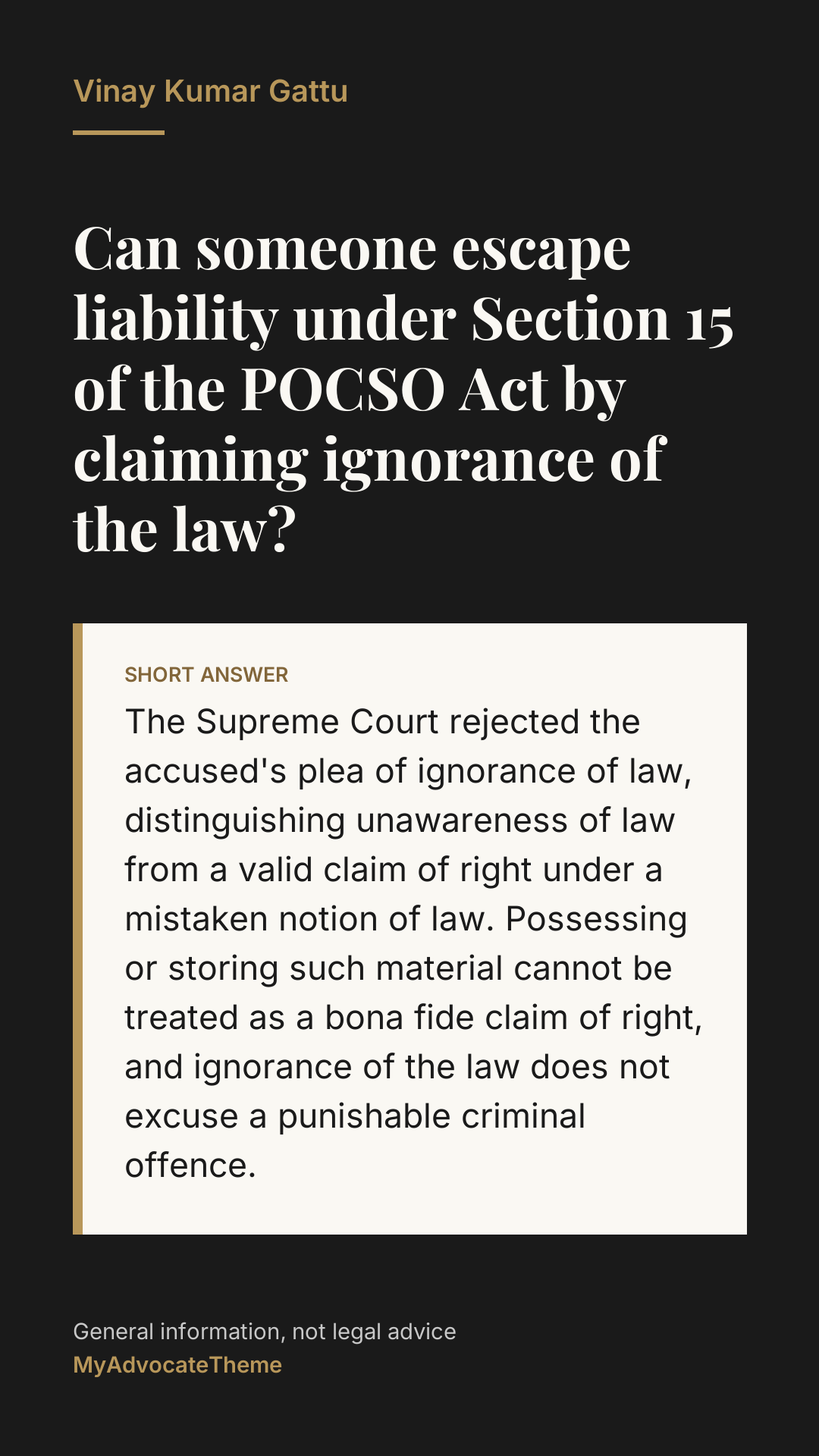
The Supreme Court rejected the accused's plea of ignorance of law, distinguishing unawareness of law from a valid claim of right under a mistaken notion of law. Possessing or storing such material cannot be treated as a bona fide claim of right, and ignorance of the law does not excuse a punishable criminal offence.