The Supreme Court rejected the accused's plea of ignorance of law, distinguishing unawareness of law from a valid claim of right under a mistaken notion of law. Possessing or storing such material cannot be treated as a bona fide claim of right, and ignorance of the law does not excuse a punishable criminal offence.
The Supreme Court held that the statutory presumption of culpable mental state under Section 30 of the POCSO Act can be invoked in quashing proceedings once foundational facts are prima facie established. Defences such as lack of knowledge or accidental download are ordinarily matters to be examined at trial rather than decided in a quashing petition when a prima facie case exists.
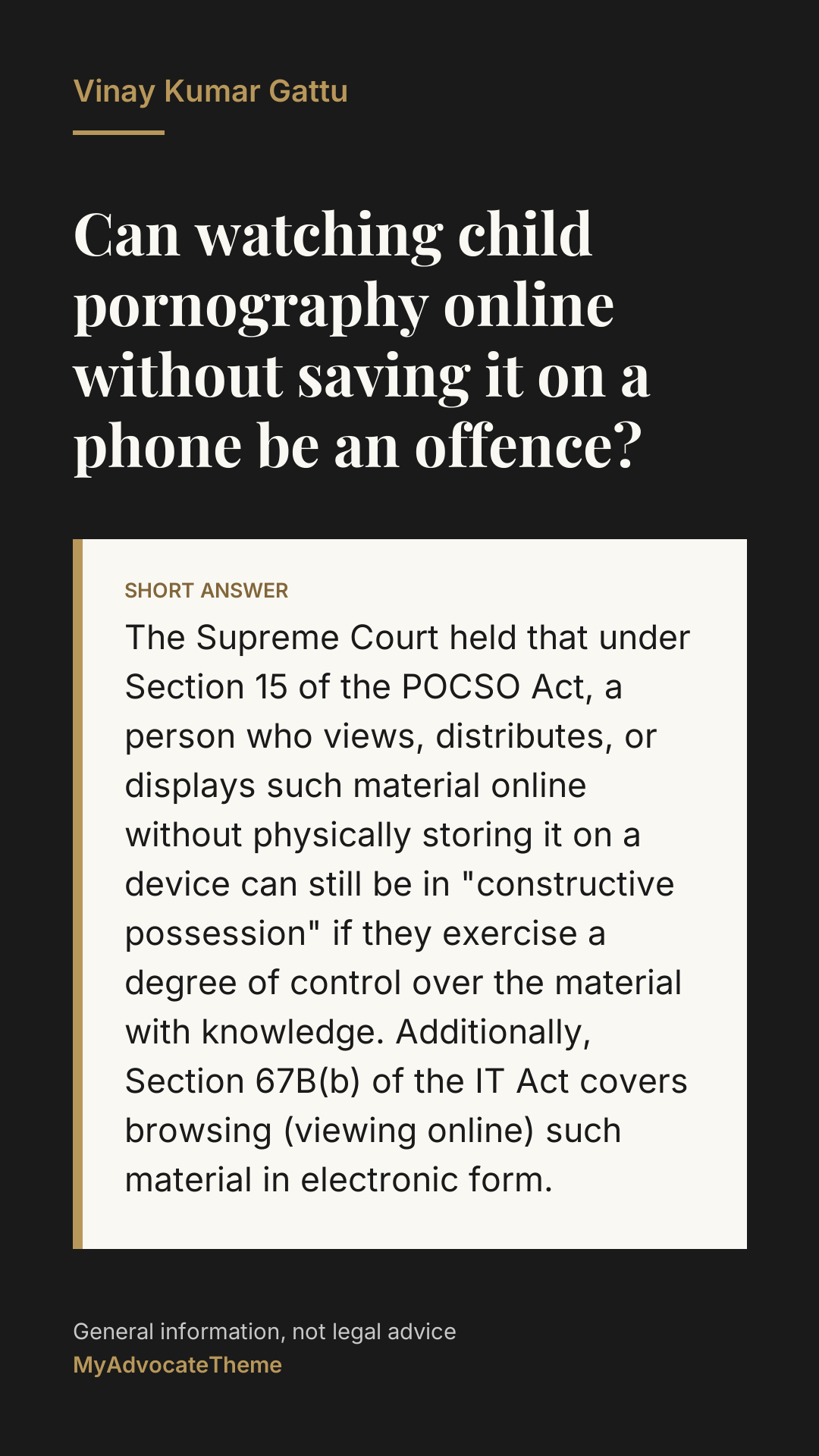
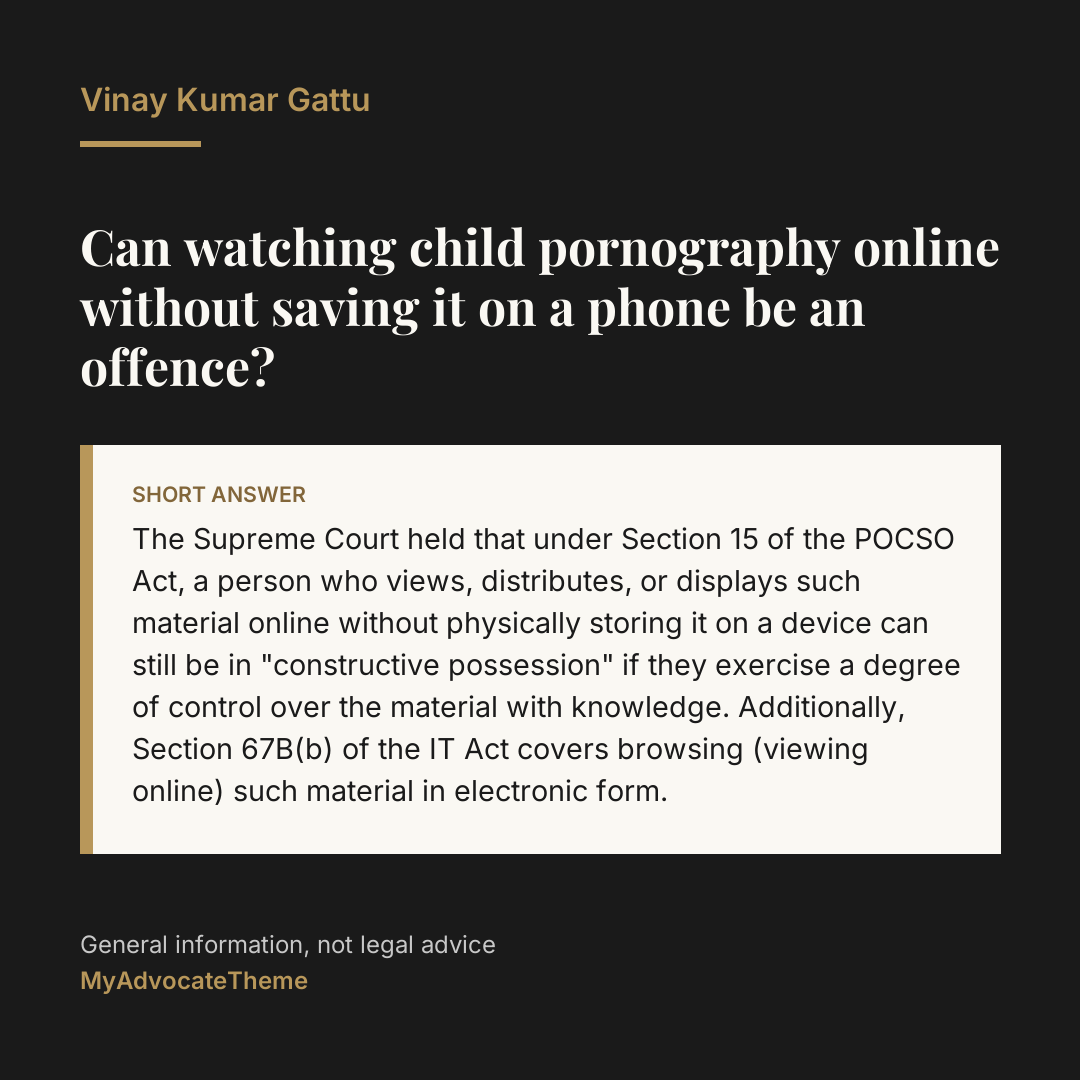
The Supreme Court held that under Section 15 of the POCSO Act, a person who views, distributes, or displays such material online without physically storing it on a device can still be in "constructive possession" if they exercise a degree of control over the material with knowledge. Additionally, Section 67B(b) of the IT Act covers browsing (viewing online) such material in electronic form.
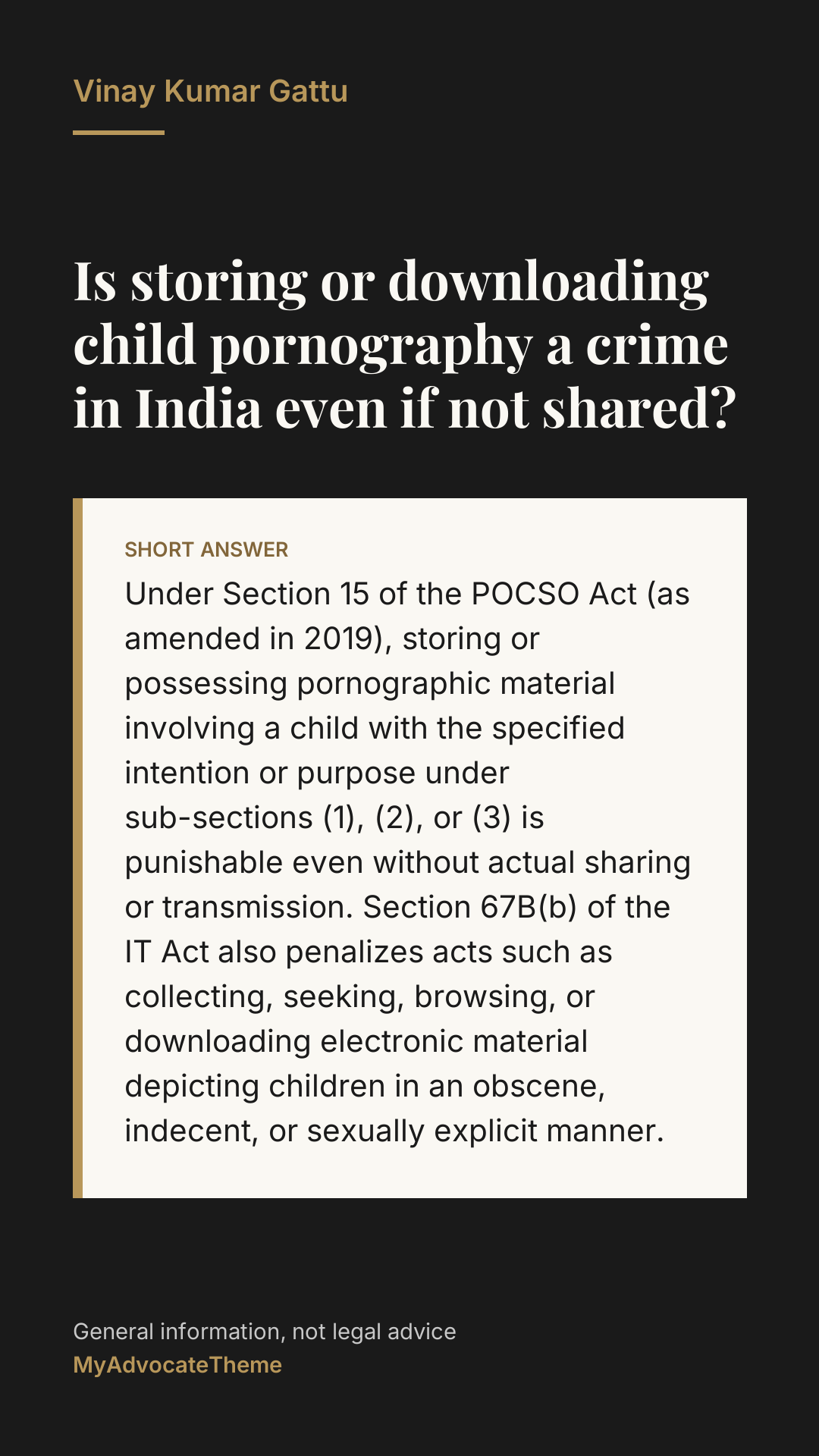
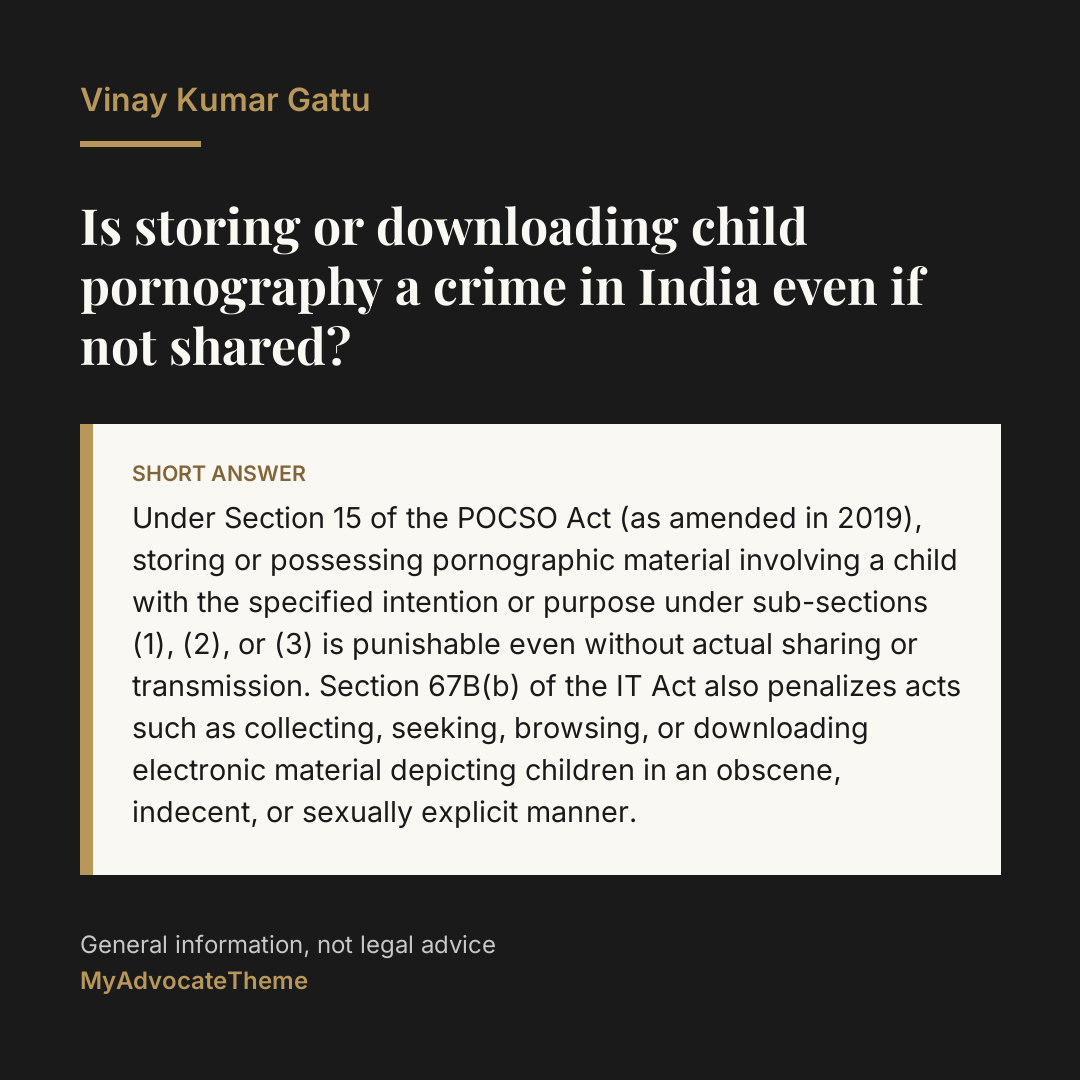
Under Section 15 of the POCSO Act (as amended in 2019), storing or possessing pornographic material involving a child with the specified intention or purpose under sub-sections (1), (2), or (3) is punishable even without actual sharing or transmission. Section 67B(b) of the IT Act also penalizes acts such as collecting, seeking, browsing, or downloading electronic material depicting children in an obscene, indecent, or sexually explicit manner.