When a judgment goes against you, the clock starts running immediately. Appeals, revisions and reviews must be filed within short, fixed periods, and the right remedy depends on the court that passed the order and the kind of case. This consultation reviews the judgment and tells you what you can do next – and by when.
Is this for you?
- A civil suit has been decided against you, or a decree has been passed for possession, money or an injunction.
- You, or a family member, have been convicted, or the accused in your complaint has been acquitted.
- A single judge of the High Court has dismissed your writ petition.
- A tribunal, authority or revenue officer has passed an order against you – for example in a service, land or tax matter.
- The time to appeal may already have passed, and you want to know whether the delay can be condoned.
Time limits are short
Some common examples under the Limitation Act and court rules (the exact period depends on the case, so always check yours):
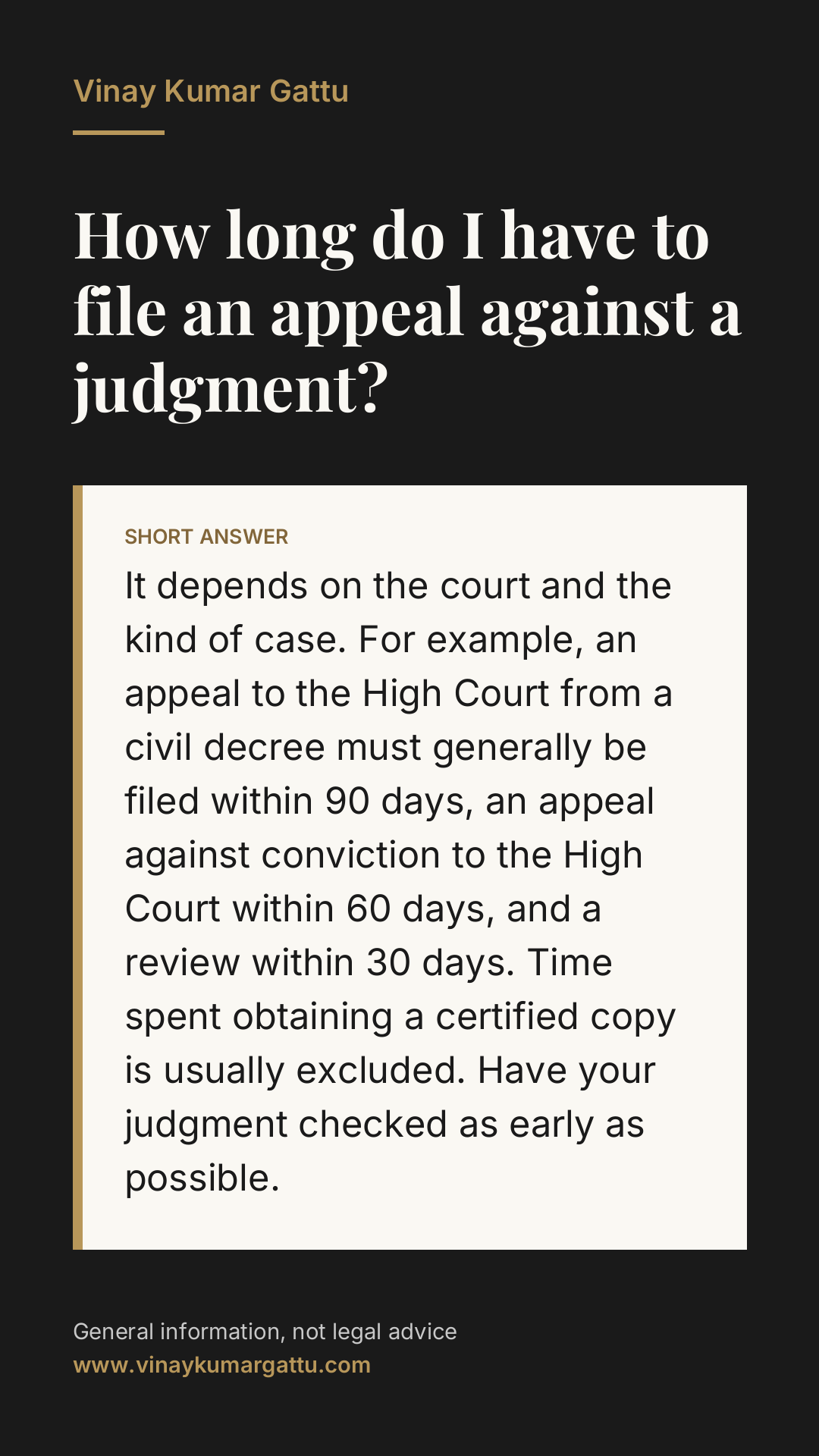
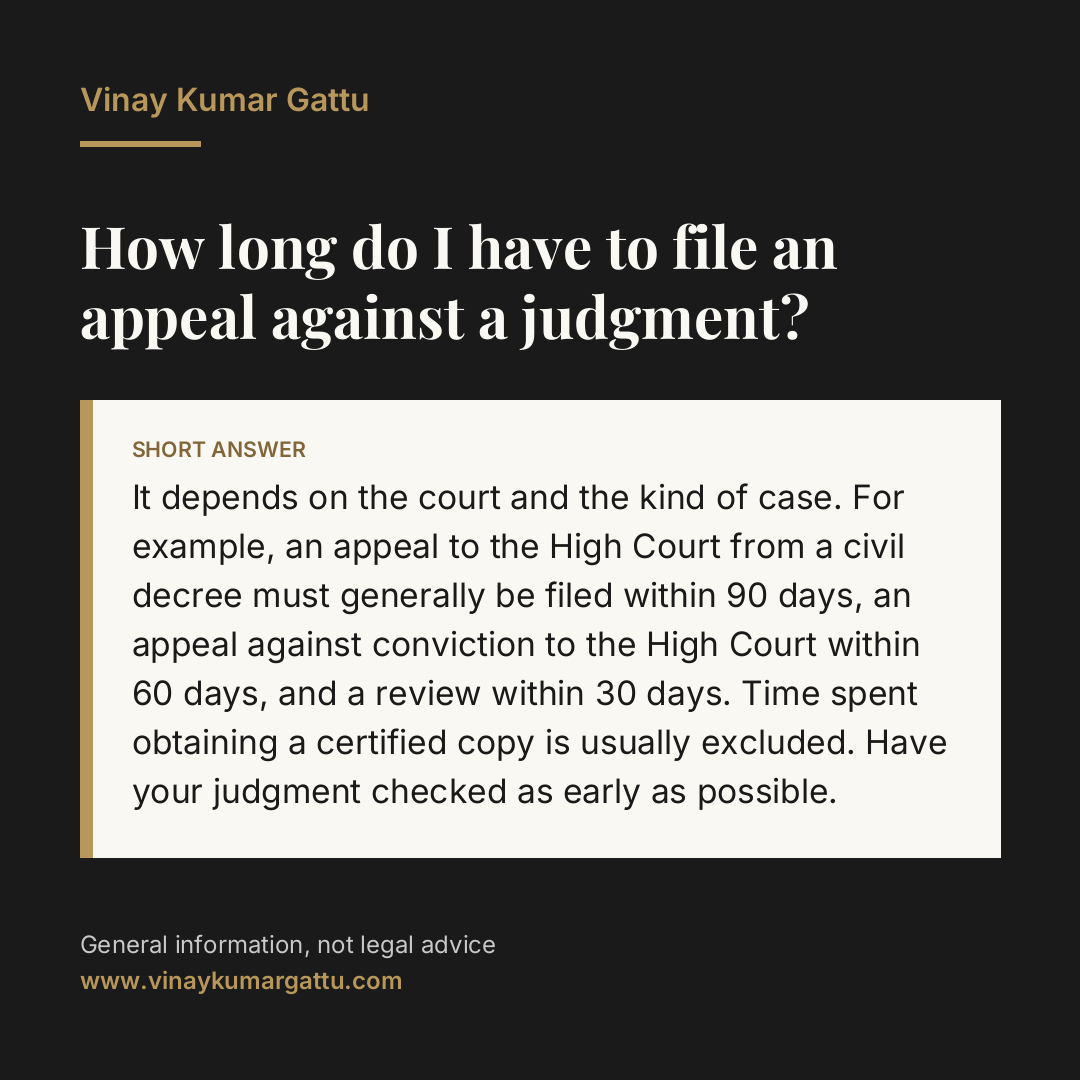
- Appeal to the High Court from a civil decree: 90 days; appeal to a District Court: 30 days.
- Appeal against a conviction to the High Court: 60 days; to any other court: 30 days.
- Writ appeal against a single judge’s order in the High Court: generally 30 days.
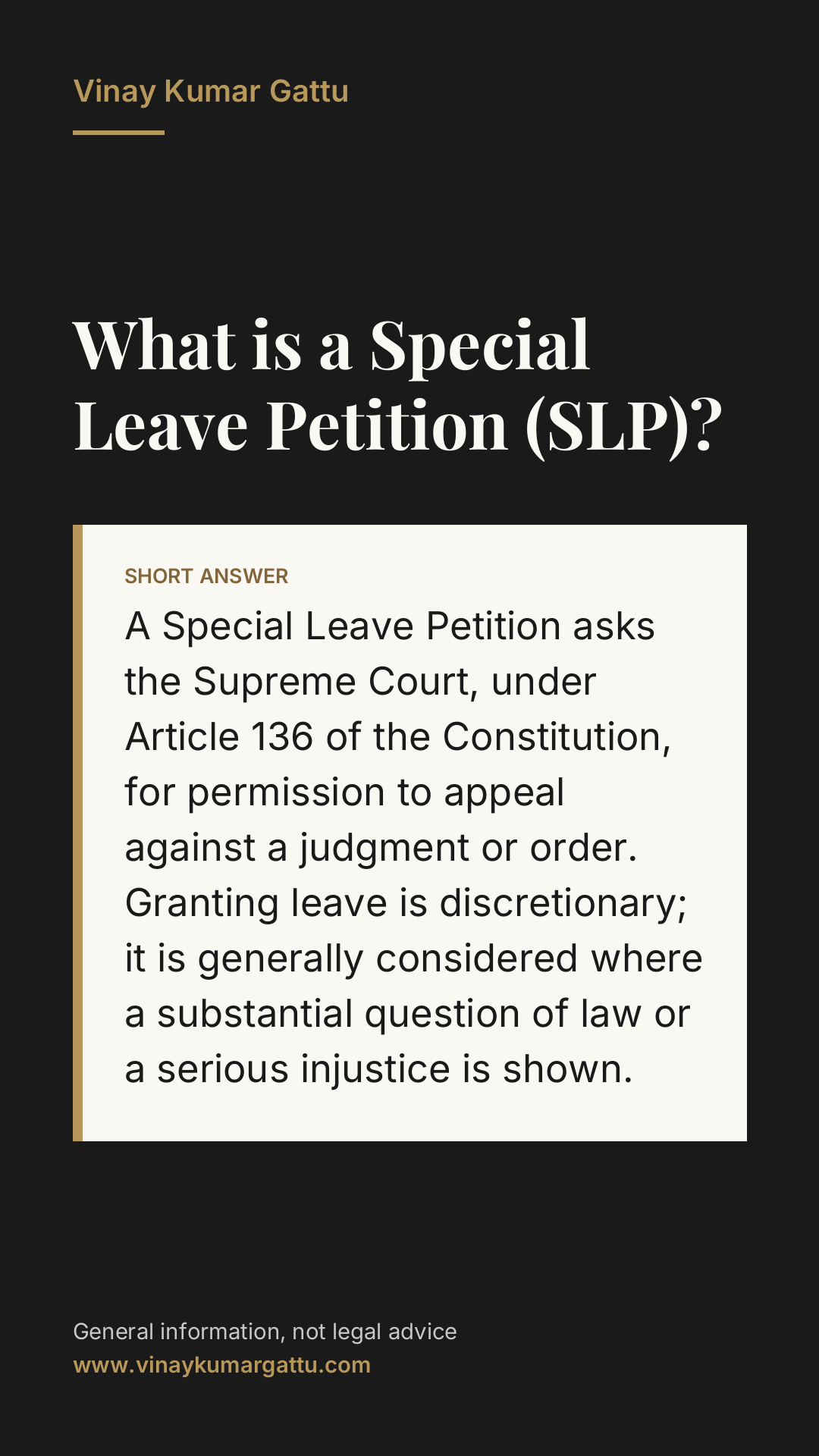
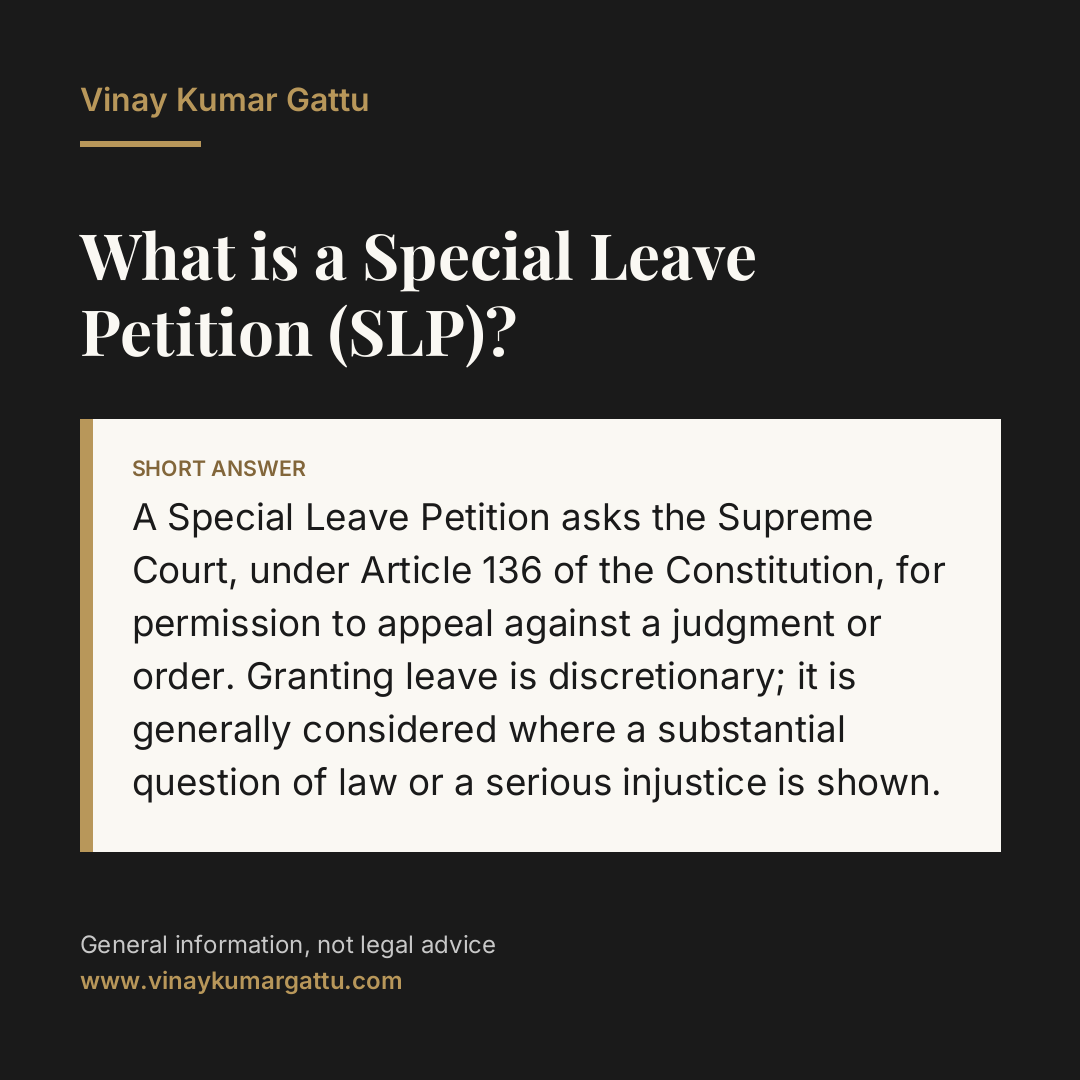
- Review of a judgment: generally 30 days; Special Leave Petition to the Supreme Court: 90 days.
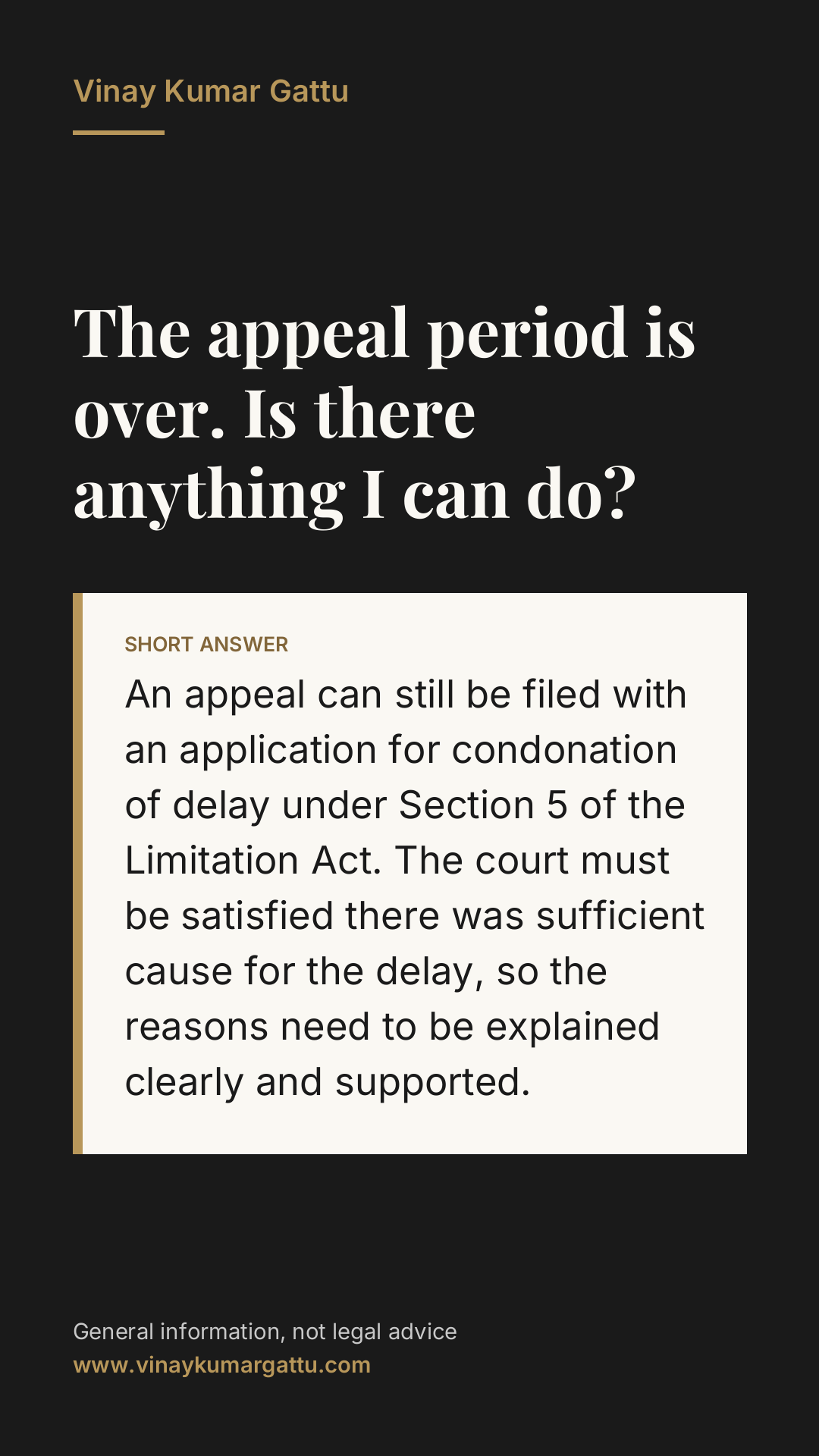
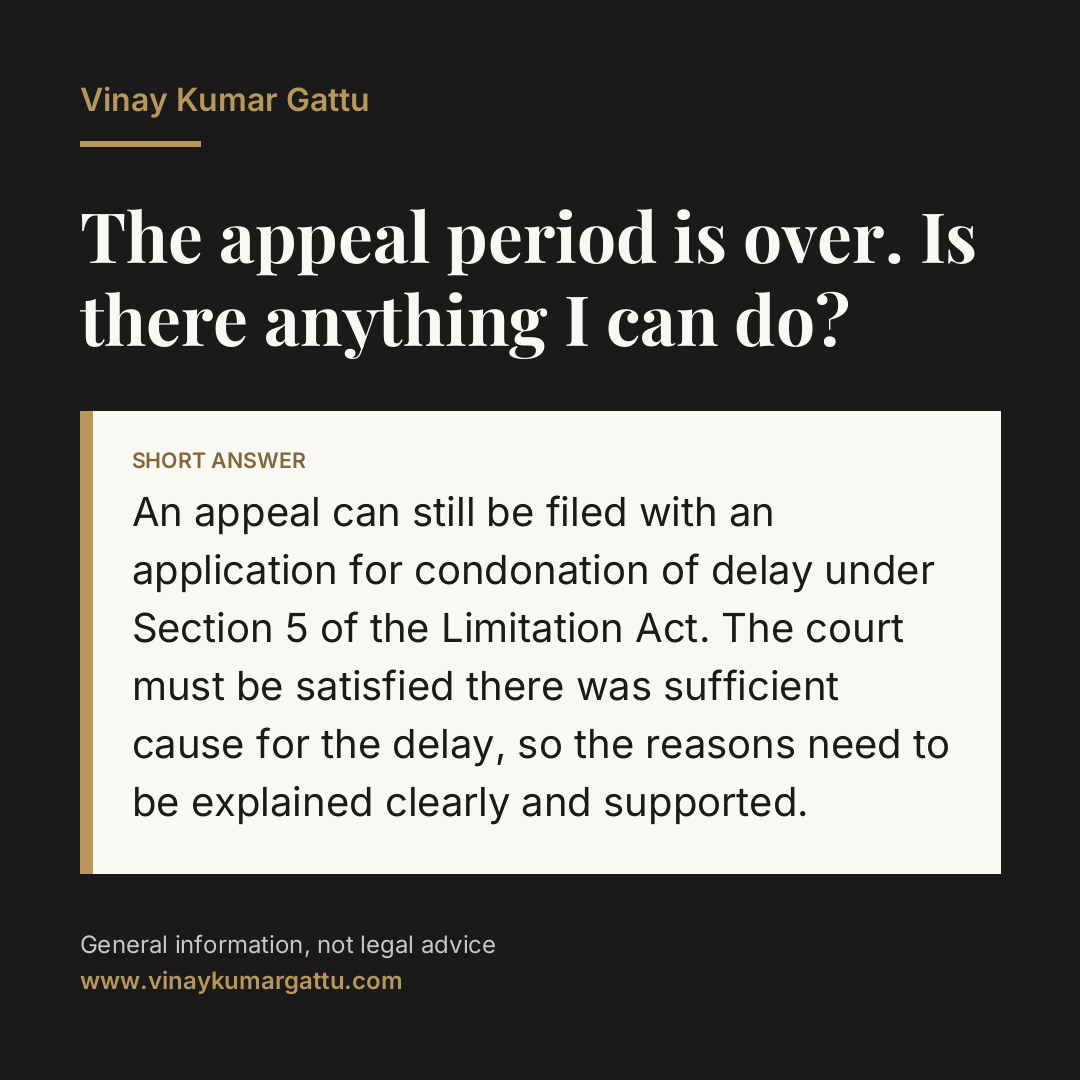
Time taken to obtain a certified copy of the judgment is usually excluded, so apply for it at once. If the period has passed, an application for condonation of delay (Section 5 of the Limitation Act) can be considered, but you must explain the delay with reasons and supporting material.
What you get
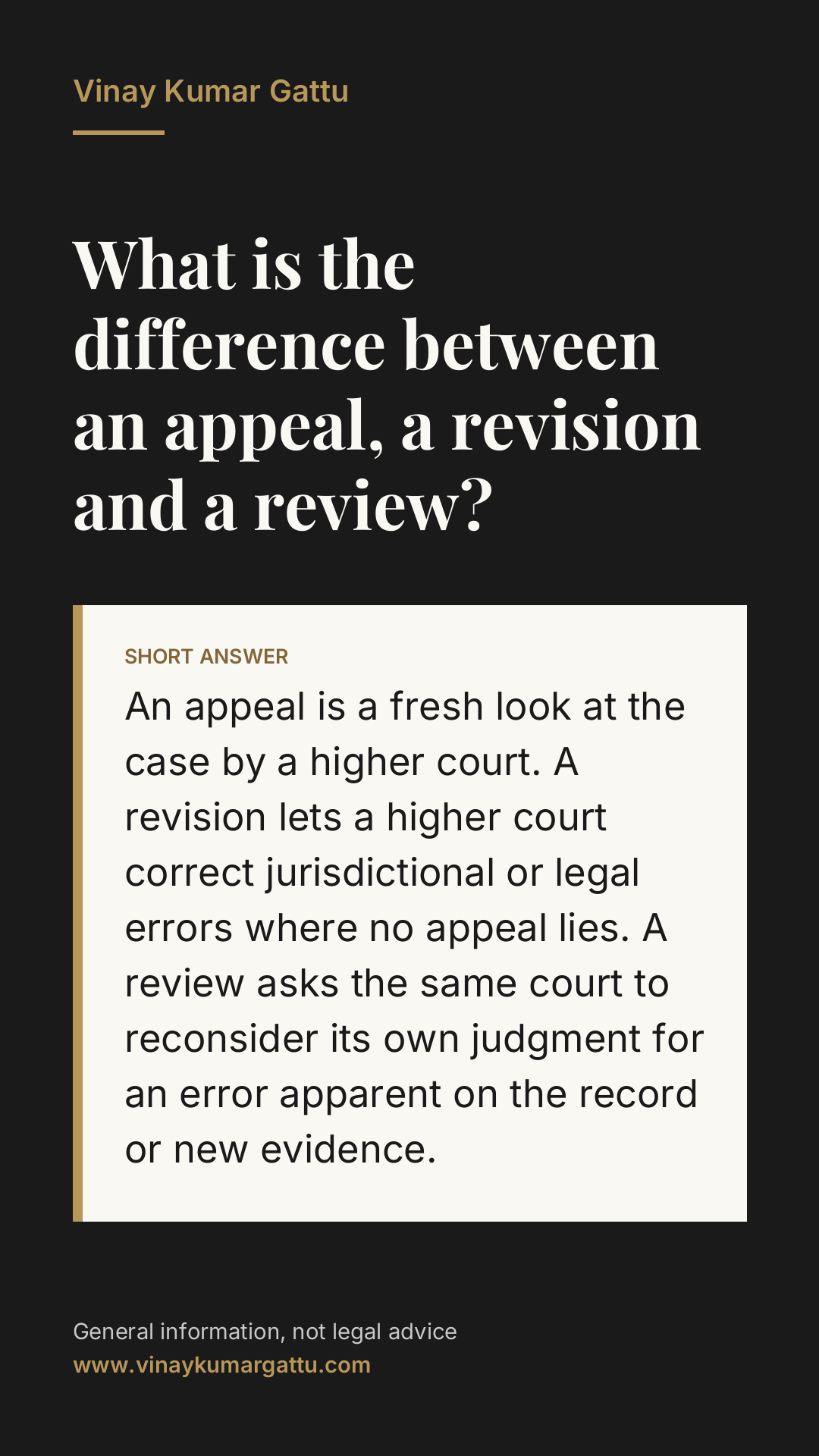
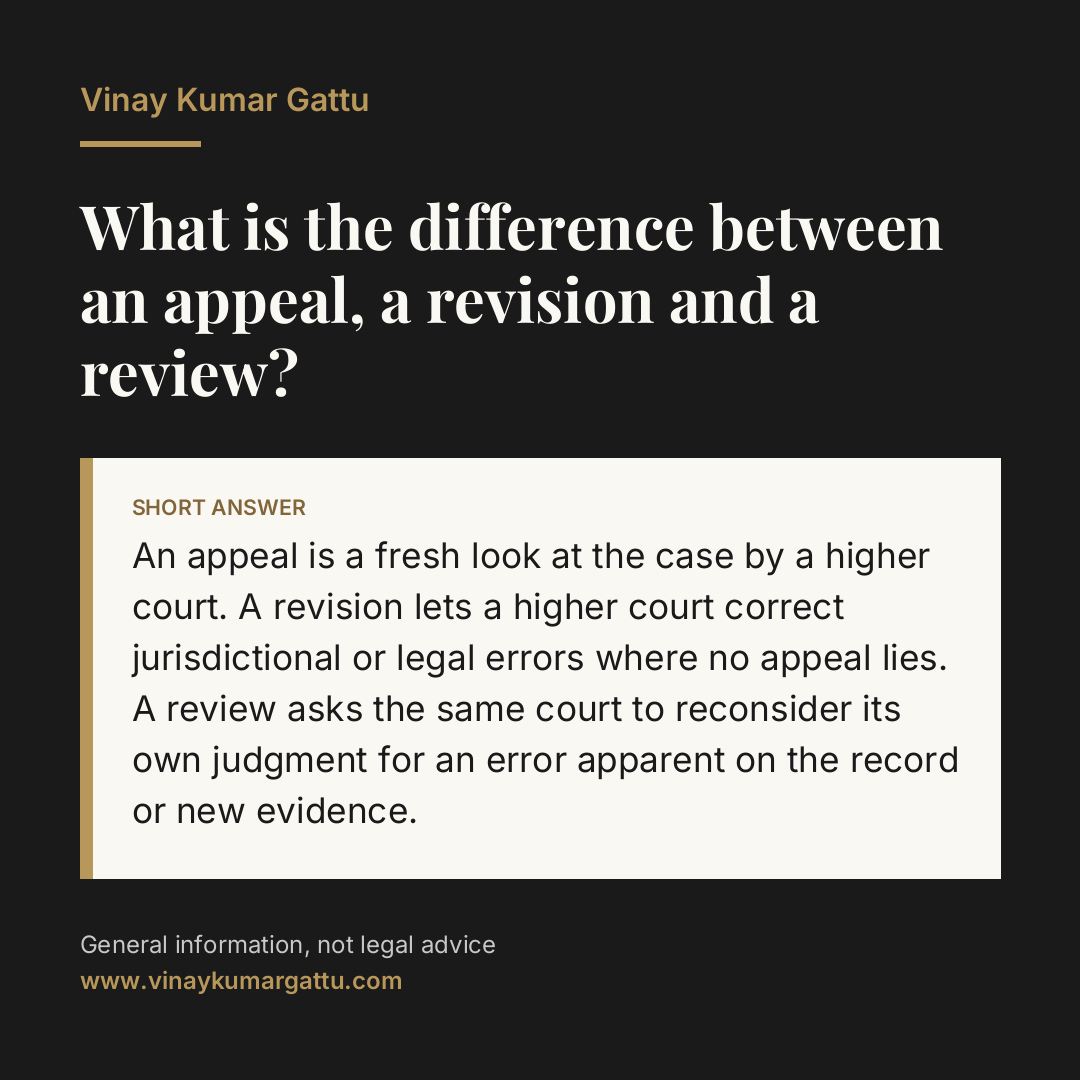
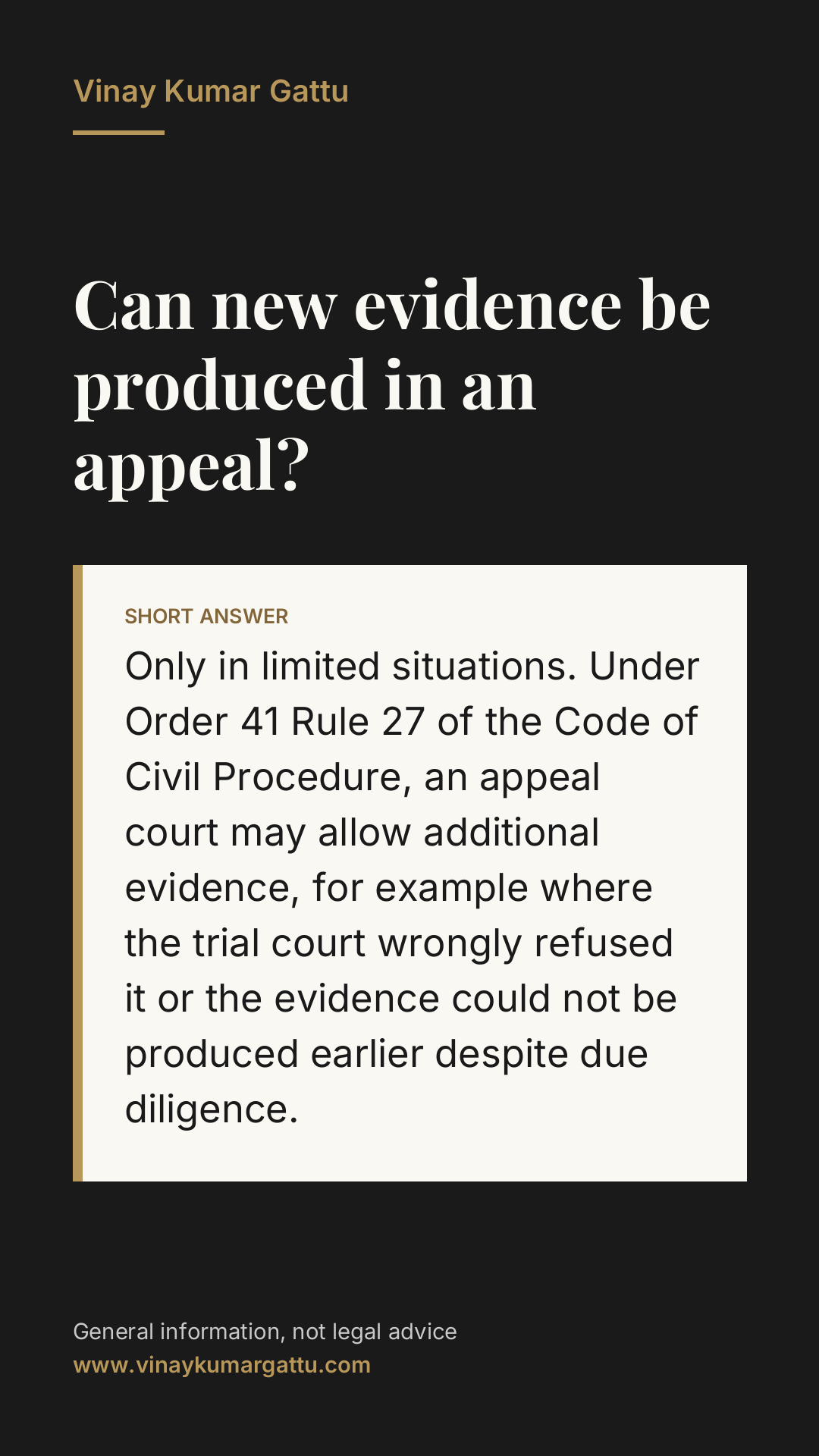
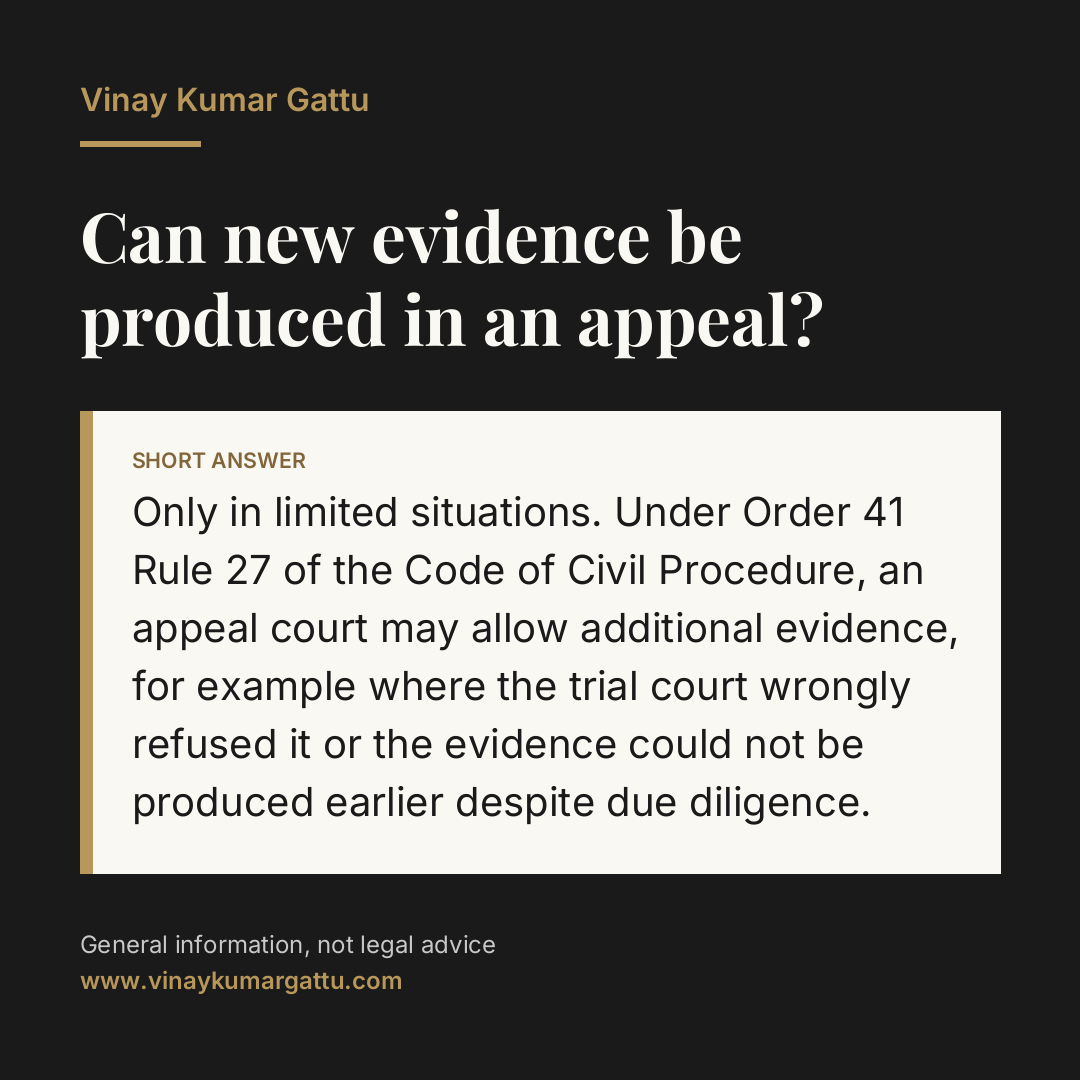
- A reading of the judgment to identify errors of fact or law that an appeal court can correct.
- The right remedy: appeal, revision, review, writ petition or Special Leave Petition.
- The limitation period that applies to you and the date by which you must file.
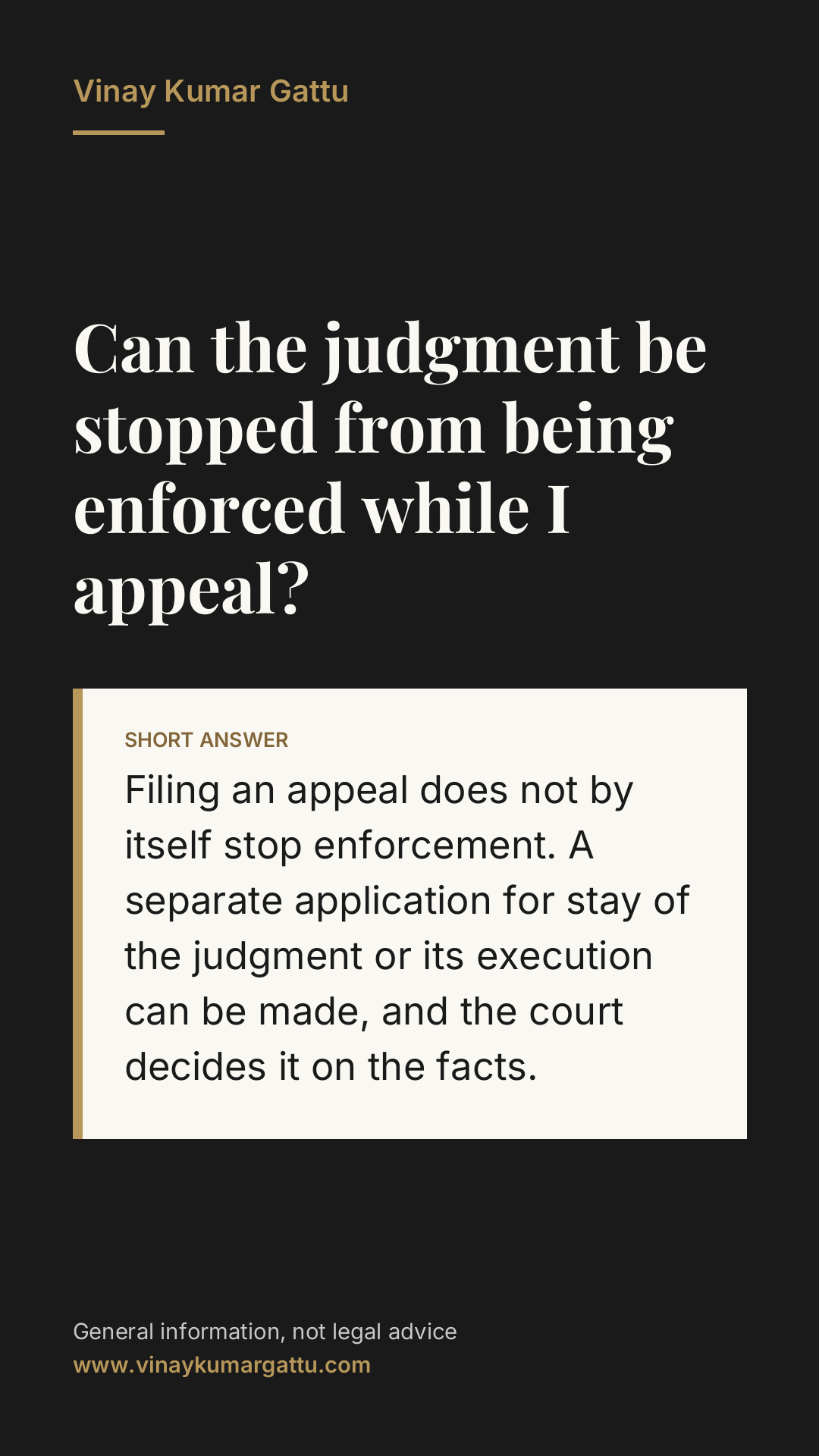
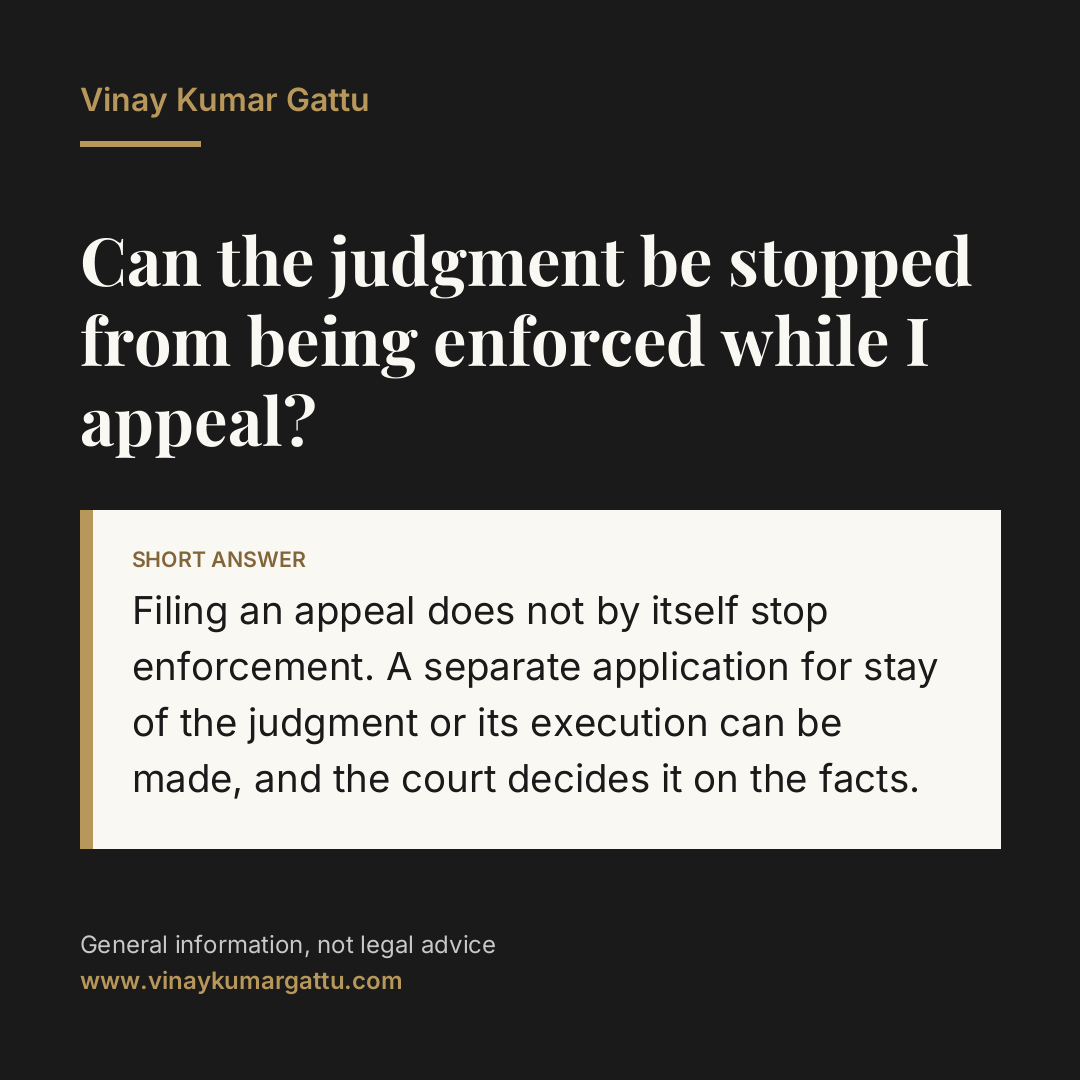
- Whether a stay of the judgment or its execution can be sought meanwhile.
- If you are late, an assessment of whether condonation of delay is realistic.
What to keep ready
- The judgment or order (a certified copy if you have one), and the date it was pronounced.
- The date you applied for and received the certified copy.
- The pleadings and key evidence from the case, if available.