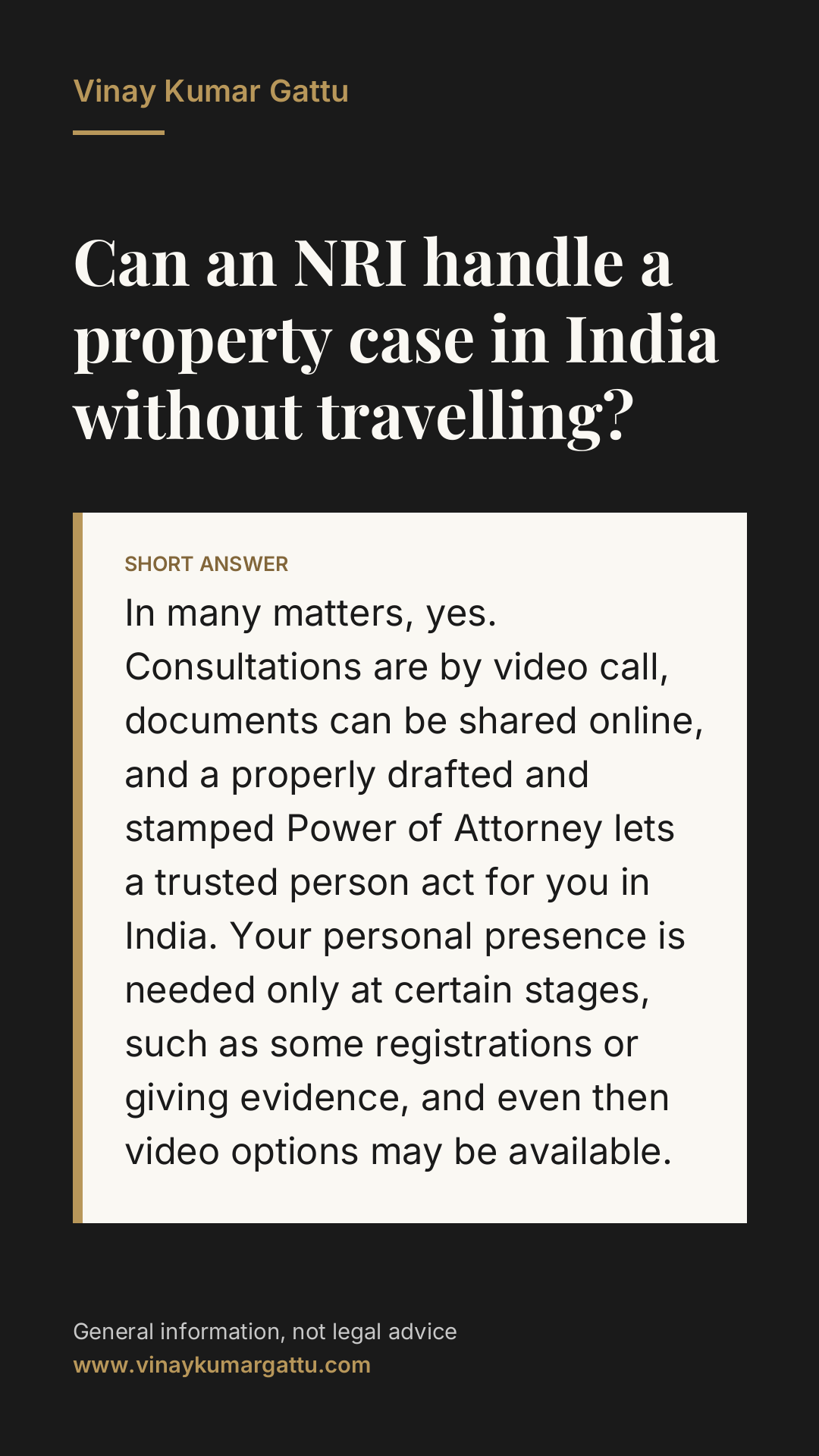
Owning property or having a legal matter in India while living abroad is hard. You cannot visit the site, the office or the court whenever needed, and you often have to rely on others. This consultation helps you understand your rights and plan the next steps from wherever you are, by video call, with documents shared online.
Common situations NRIs face
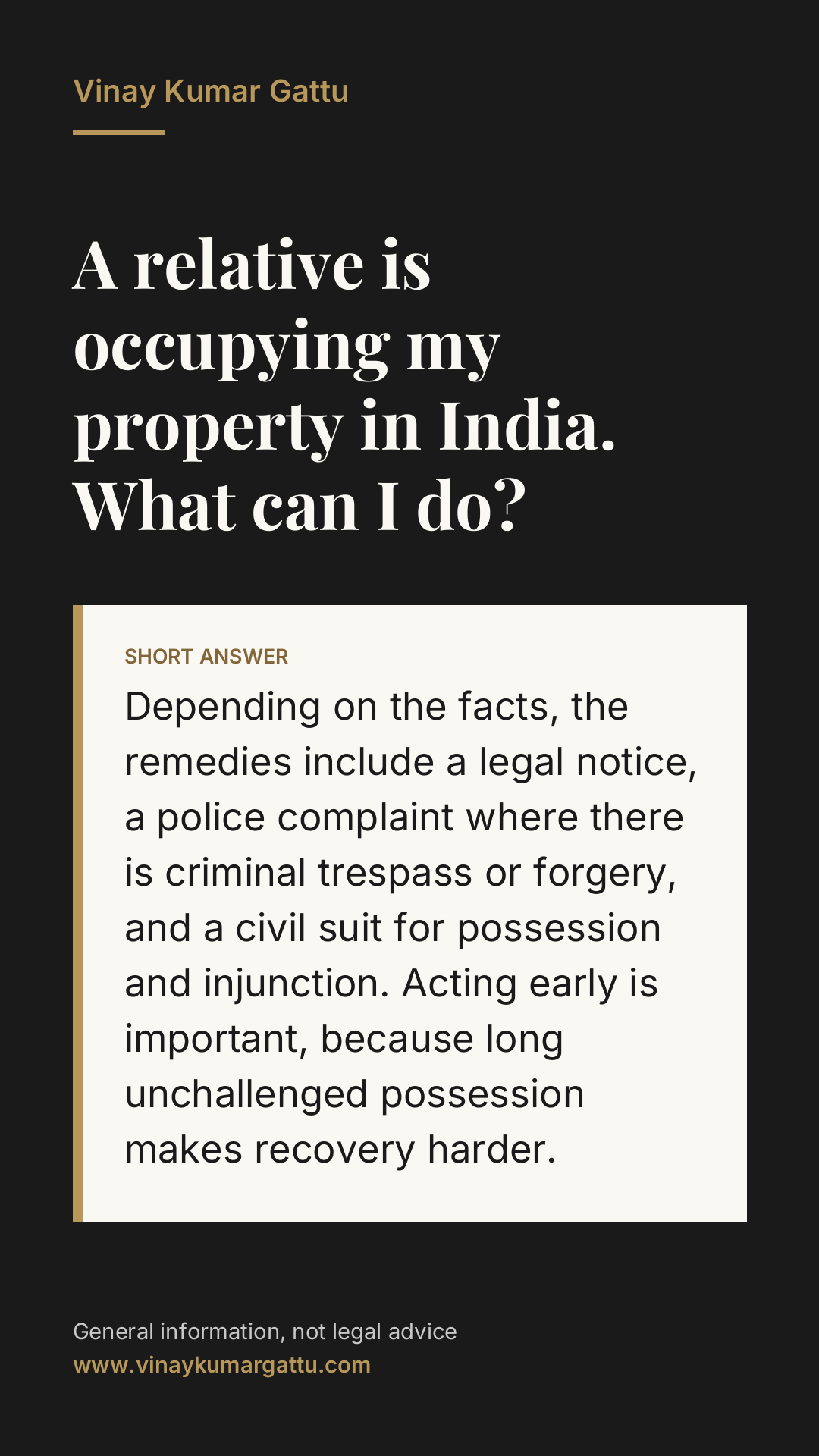
- A relative, tenant or caretaker is in possession of your house or plot and will not hand it back.
- Someone has encroached on your open plot, started construction on it, or claims it with documents you have never seen.
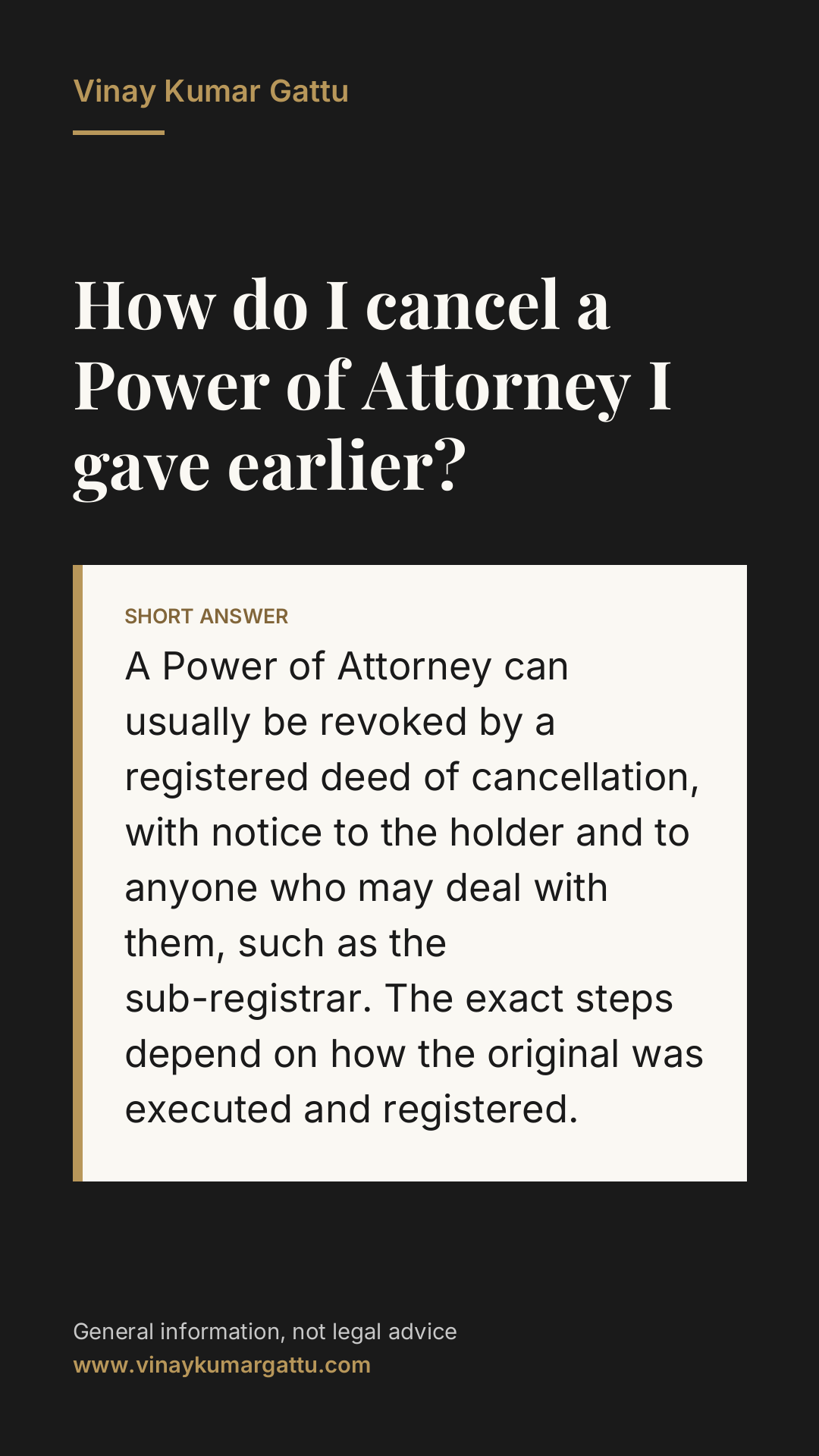
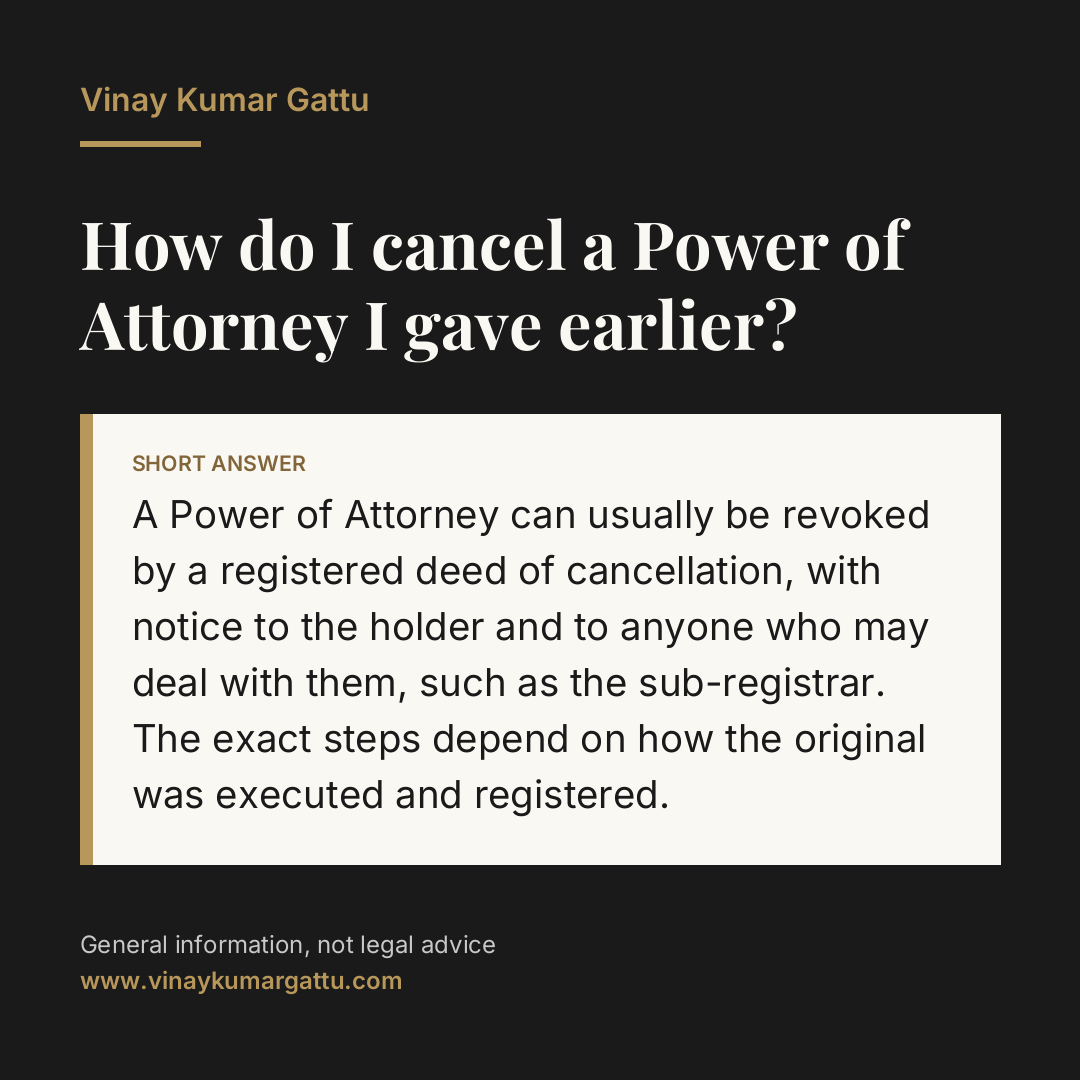
- A General Power of Attorney you gave years ago is being misused, or you want to cancel it.
- You want to sell, gift or rent out property in India and need a Power of Attorney that is valid and safe.
- Your share in ancestral or family property is being denied after a parent’s death, and partition or succession has to be sorted out.
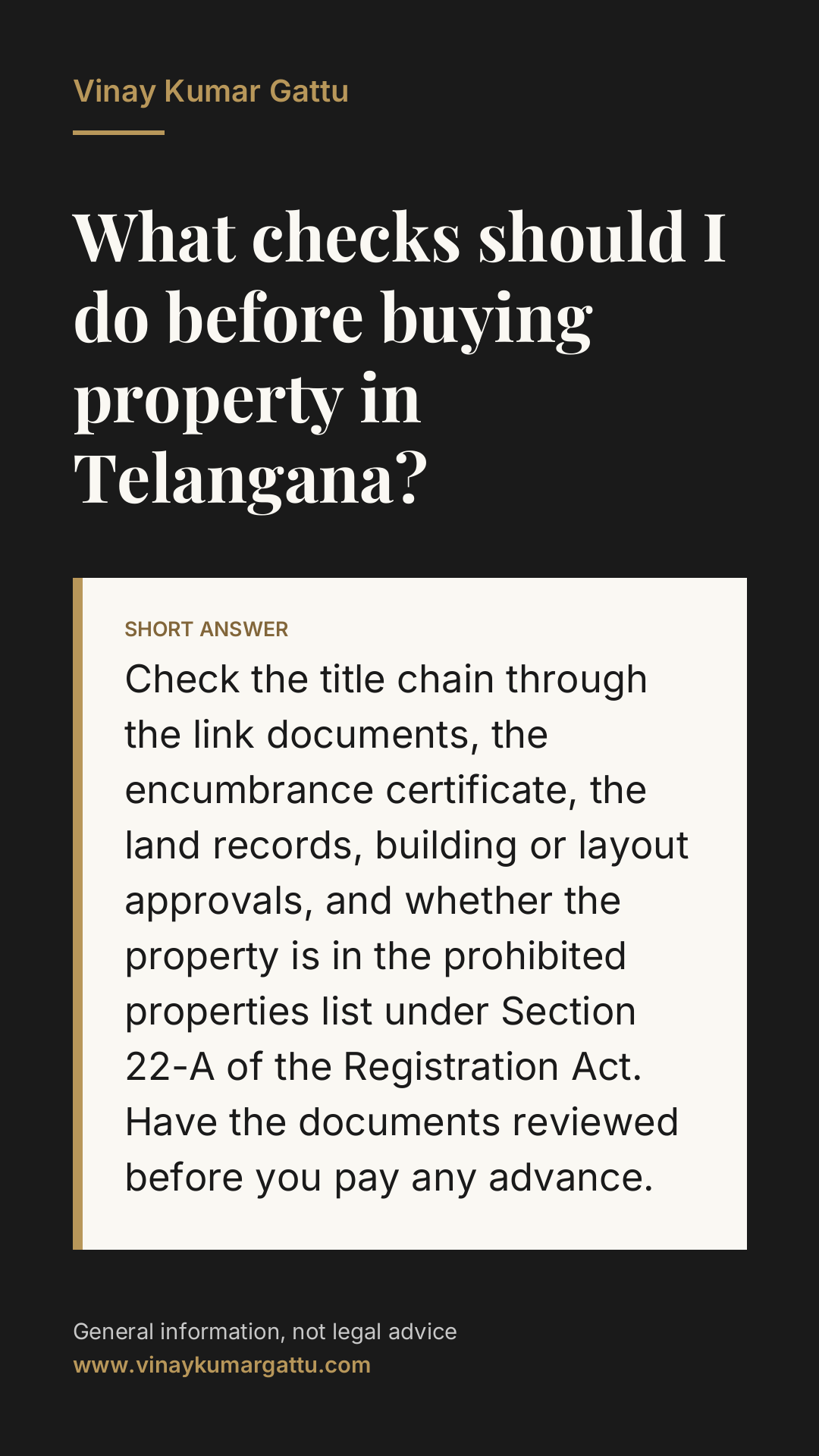
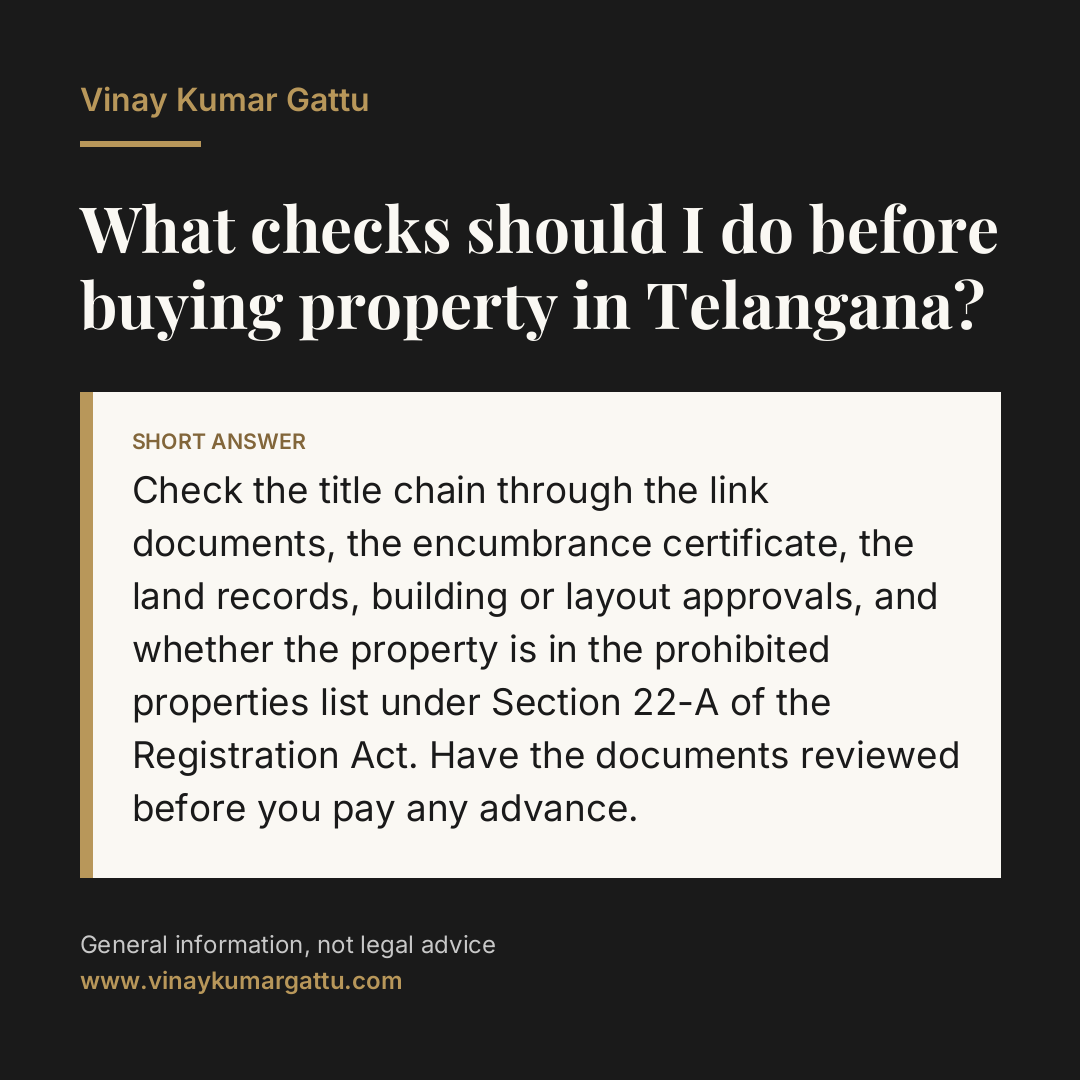
- You want to buy property in Telangana and need the title, link documents and land records checked first.
- Your property is shown in the prohibited list or has wrong entries in the land records, and you cannot register a sale.
What you get
- An assessment of your rights and the legal remedies available: police complaint, civil suit for possession or injunction, partition suit, or revenue proceedings.
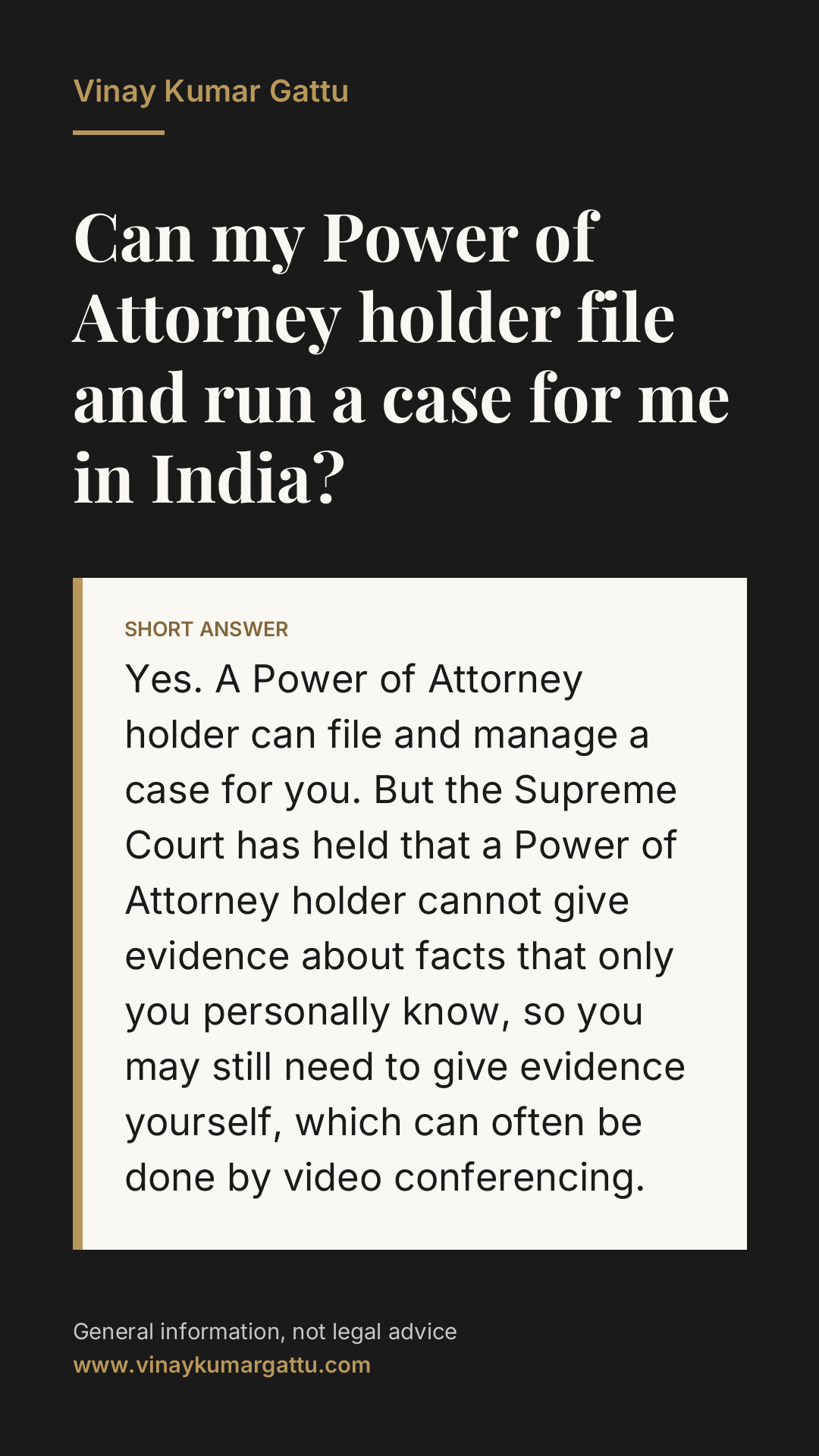
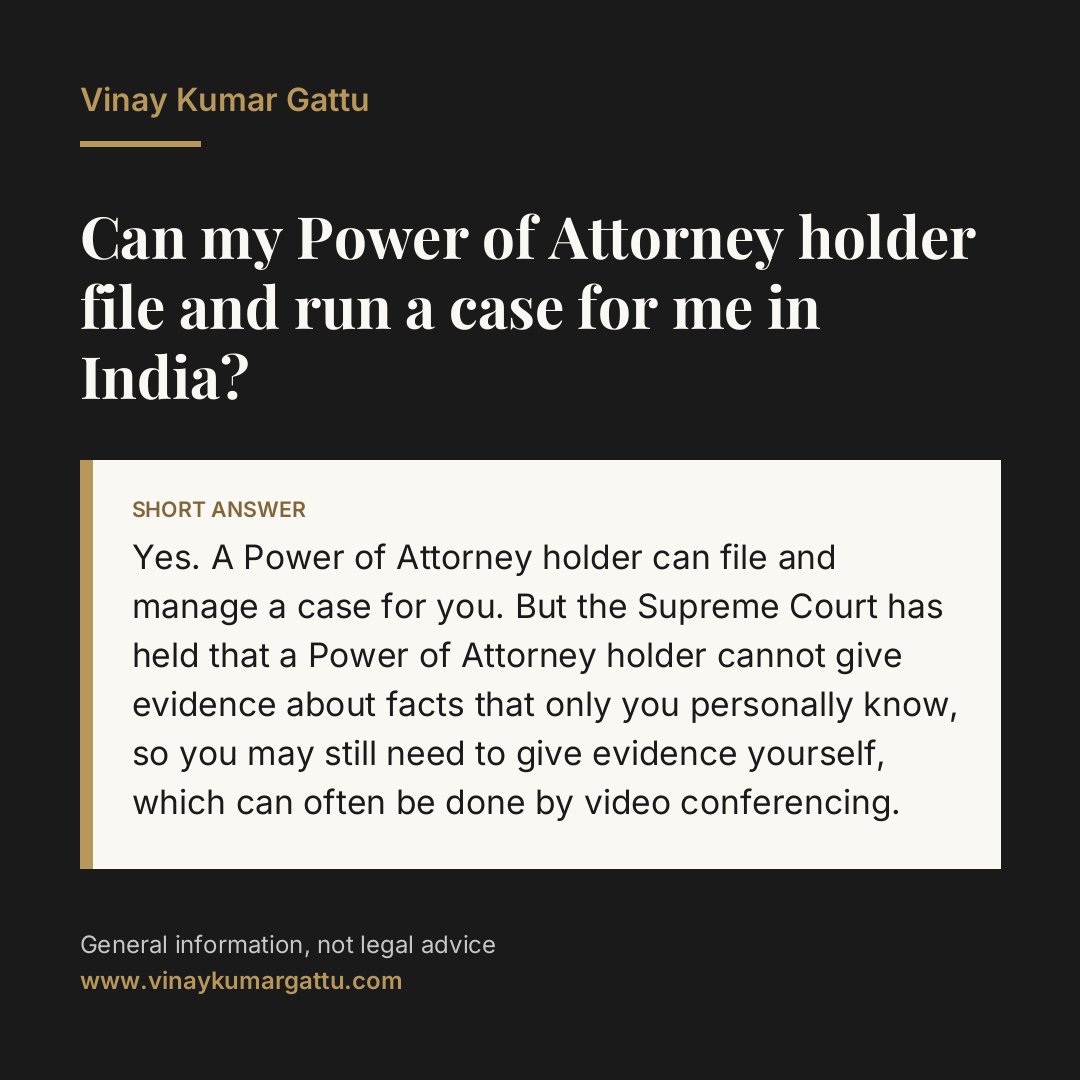
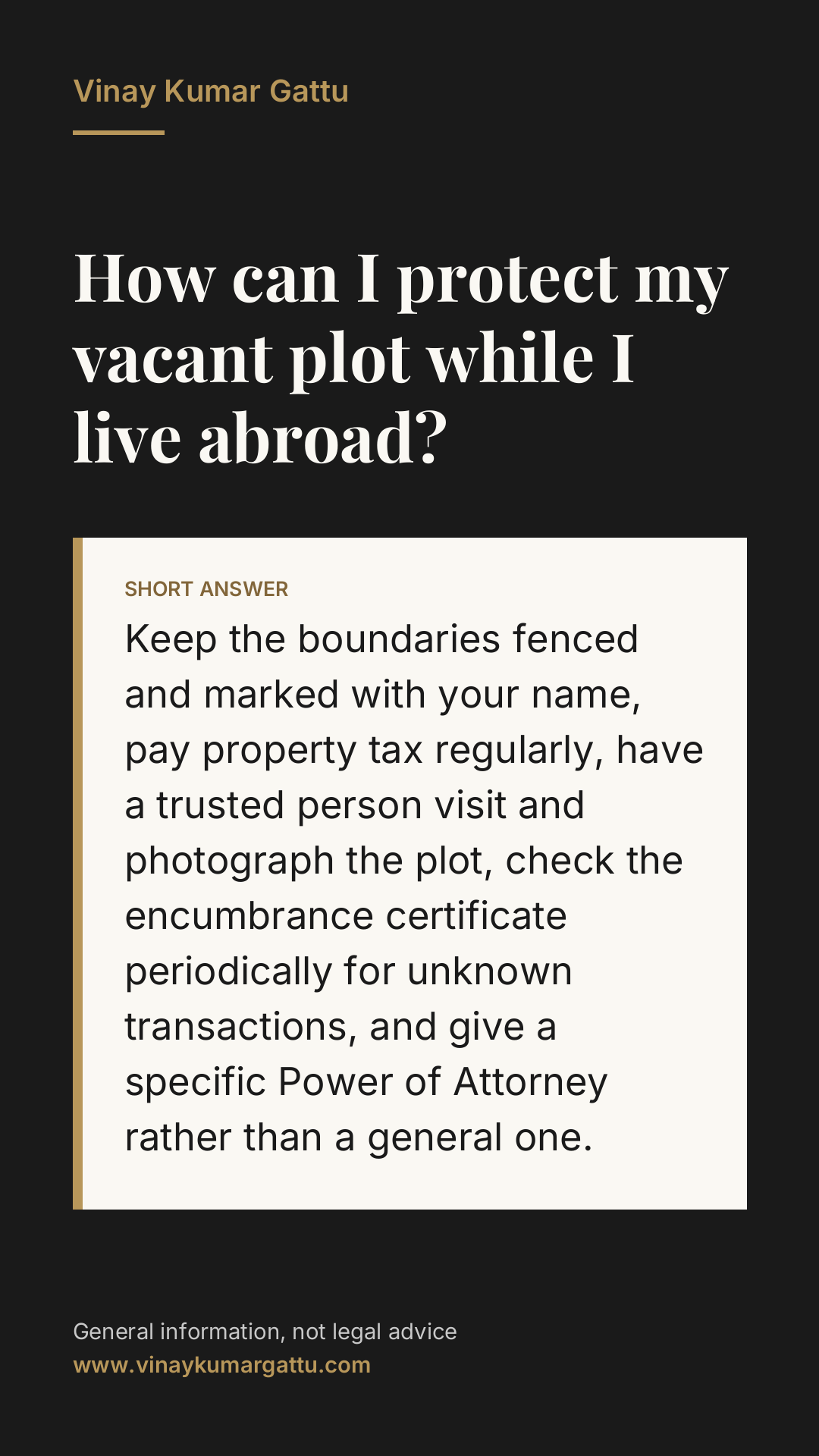
- Guidance on a Power of Attorney that does only what you need – a specific POA rather than a general one where possible – and on cancelling an existing one.
- A checklist for verifying title before you buy: link documents, encumbrance certificate, land records and approvals.
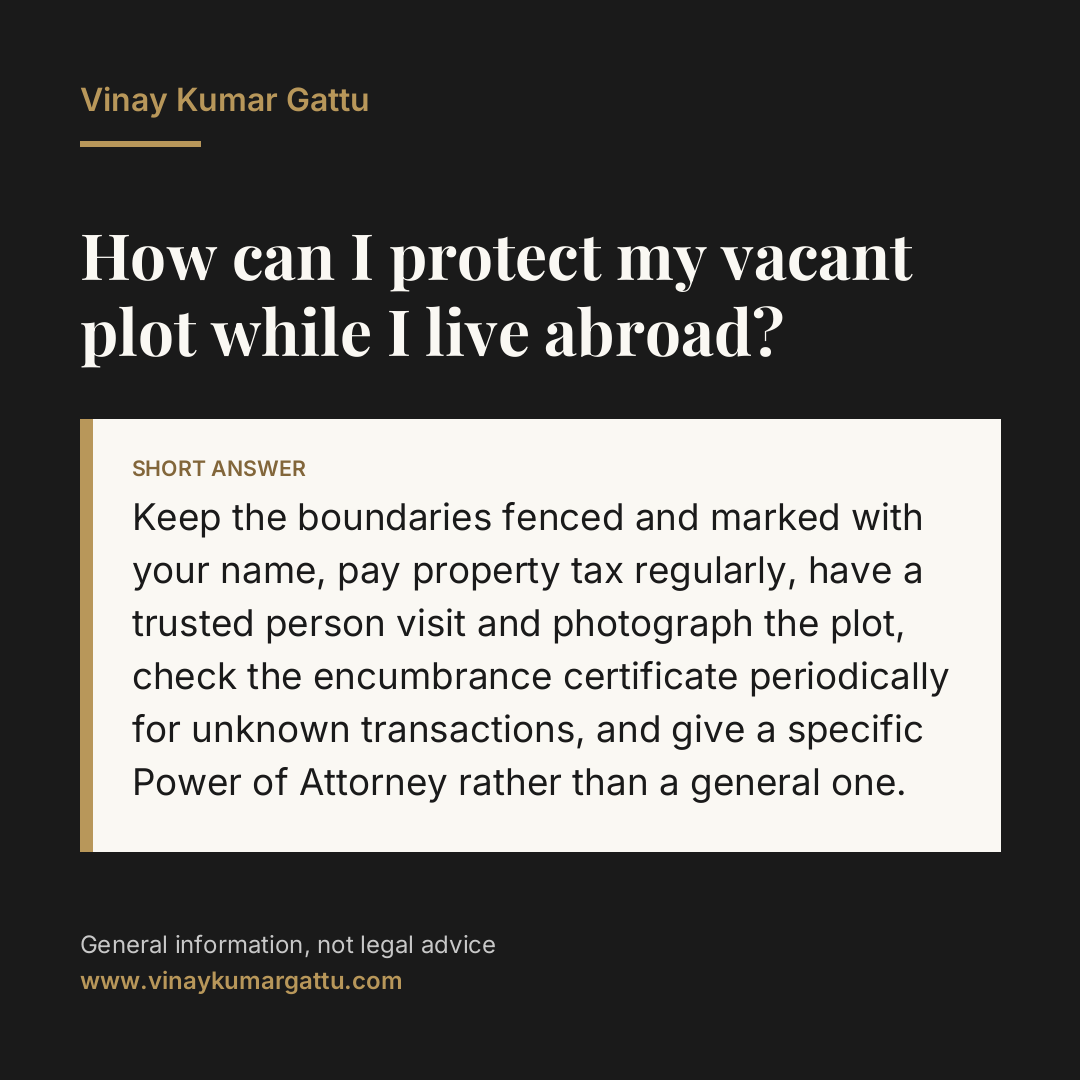
- Practical steps to protect your property while you are away.
Power of Attorney signed abroad
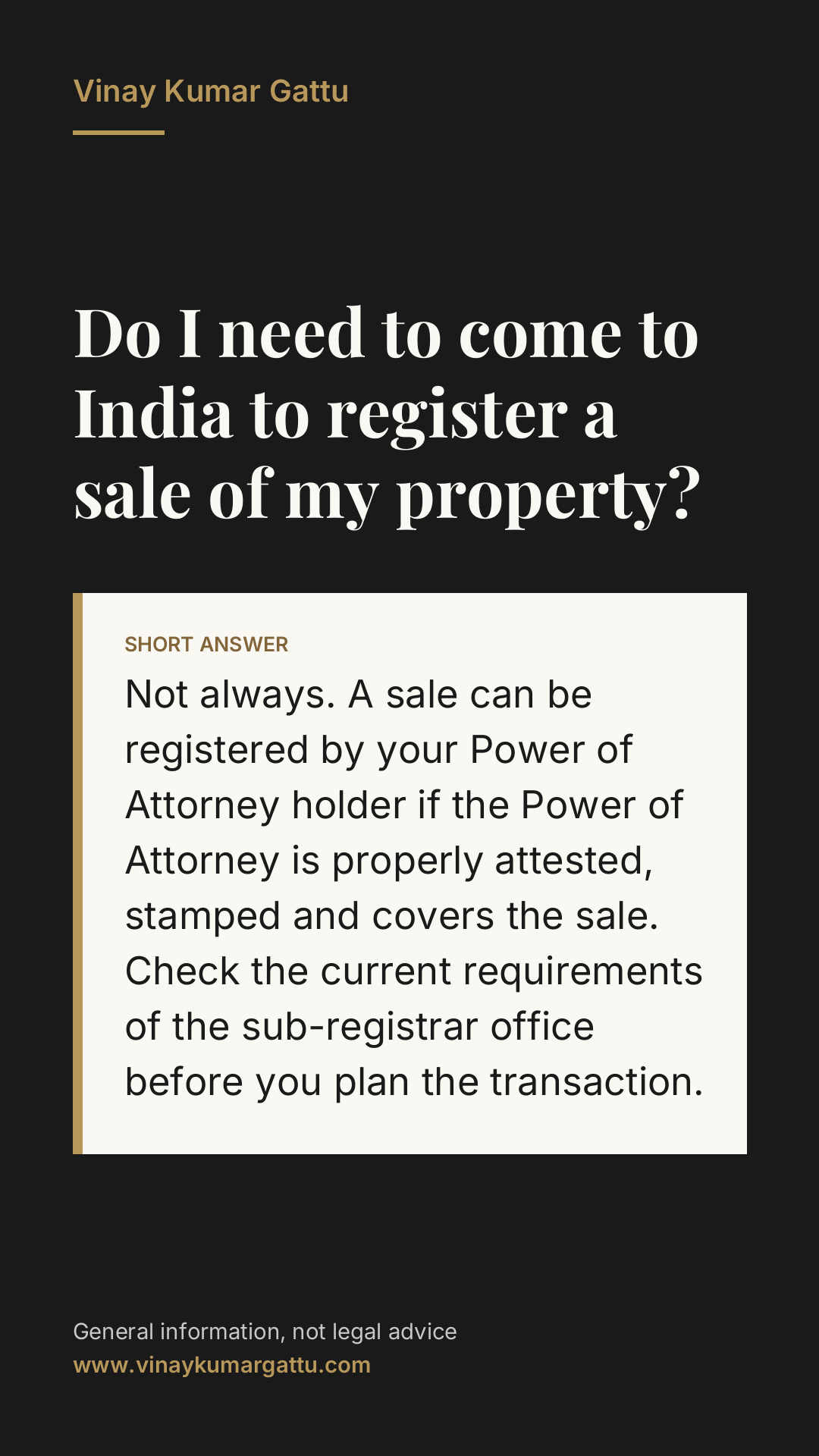
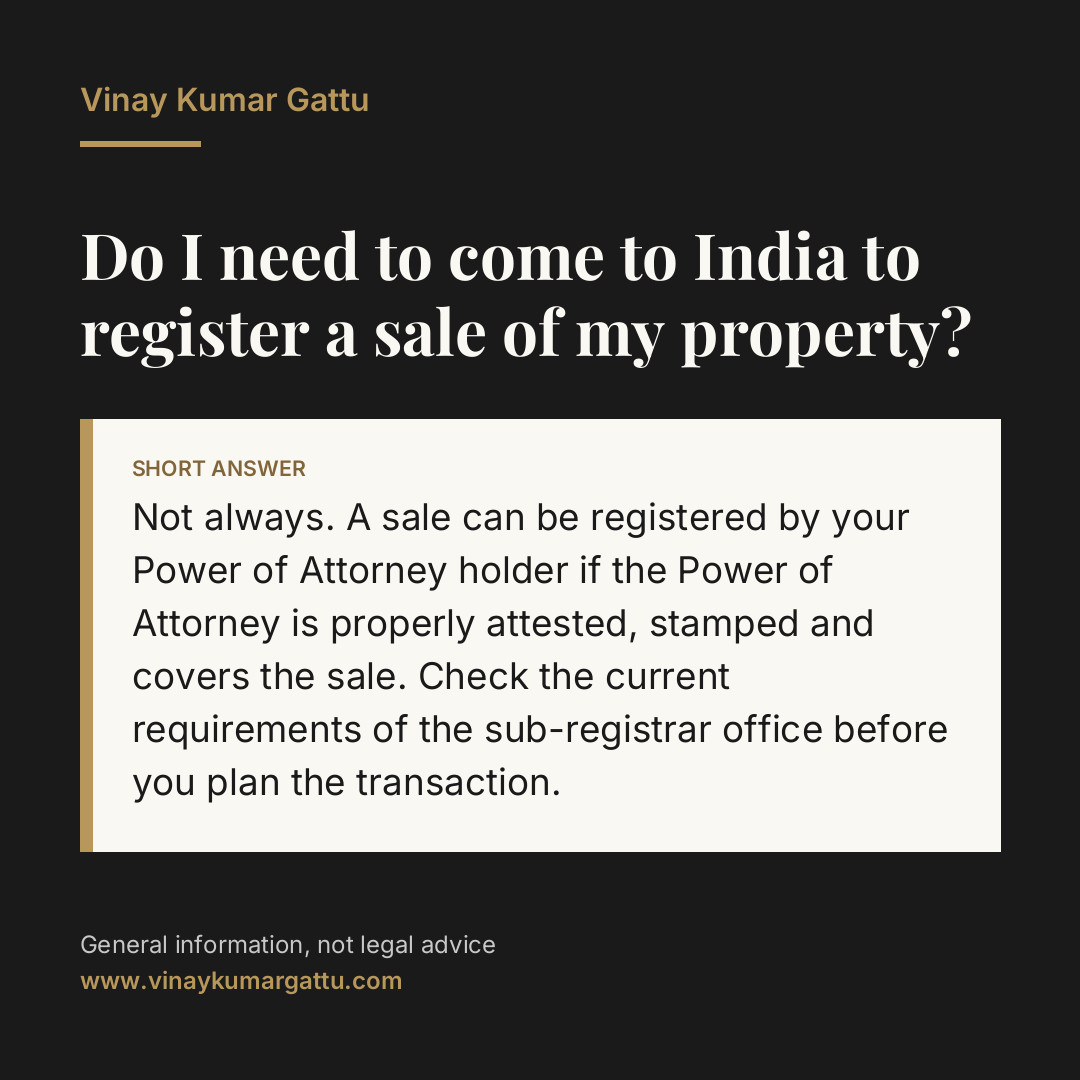
A Power of Attorney signed outside India must be attested – by an Indian embassy or consulate, or by notarisation with an apostille, depending on the country – and then stamped in India. Under Section 18 of the Indian Stamp Act, it should be presented for stamping within three months of its arrival in India; if it is presented late, it can be impounded and a penalty levied. Getting the wording and the formalities right at the start saves months of delay.
What to keep ready
- Sale deed, gift deed or other title documents, with the link documents if you have them.
- Encumbrance certificate, property tax receipts and land record entries.
- Any Power of Attorney you have given, and details of who is in possession of the property.
- Photographs of the property and any notices or complaints already made.