Legal guidance for startups, MSMEs and companies on the laws that apply to their business in India – trademarks, contracts, IP protection, delayed payments and replies to regulatory notices.
Most legal problems in a business start small: a contract signed without reading the fine print, a brand name used without checking the trademark register, an unpaid invoice, a notice that was put aside. This consultation helps founders and owners spot those risks early and deal with them before they become disputes.
Is this for you?
You have received a trademark examination report or objection, or someone has opposed your application – both have strict deadlines.
Another business is using a name or logo similar to yours, or has sent you a cease-and-desist notice.
You need a contract reviewed or drafted: client agreement, vendor or supply contract, NDA, shareholders’ or founders’ agreement, or employment terms.
A buyer has not paid your invoices. If you are a registered micro or small enterprise, buyers must pay within the agreed period, which cannot exceed 45 days, and delayed-payment cases can be filed online before the MSME Facilitation Council.
You have received a notice from a regulator or department and need to reply on time.
You want to protect your software, content or designs, or use technology and data in a way that complies with Indian law.
What you get
A clear view of the laws that apply to your business and the risks in your current documents.
Guidance on trademark registration, replies to examination reports and oppositions.
Review of the key clauses in your contracts: payment, liability, termination, IP ownership and dispute resolution.
Options for recovering delayed payments, including the MSME route where it applies.
A plan for replying to a notice, with the deadline that applies.
What to keep ready
Your business details: type of entity, registrations (including Udyam registration, if any) and what you do.
The contract, notice, examination report or correspondence you want reviewed.
Invoices, purchase orders and payment records for unpaid amounts.
Your trademark application number, if any.
How it works
1
Book a time
Choose the length, a date and a time online, and pay securely. Consultations are by phone call / video call; in-person meetings at the office in Dilsukhnagar, Hyderabad, can be arranged.
2
Share your documents
Send copies of the papers and a short summary of your matter at least 48 hours before, so the time is spent on your questions, not on reading.
3
Get clear answers
You hear where you stand, your options and the realistic next steps, in English or Telugu. Everything you share is kept confidential.
How long do I have to reply to a trademark examination report?
A reply to a trademark examination report is generally due within one month of receiving it. If it is not filed, the application can be treated as abandoned, so the report should be reviewed as soon as it arrives.
A buyer has not paid my invoices. What can an MSME do?
A registered micro or small enterprise must be paid within the period agreed in writing, which cannot exceed 45 days (or within 15 days if nothing was agreed). If payment is delayed, interest is payable, and a case can be filed online before the Micro and Small Enterprises Facilitation Council.
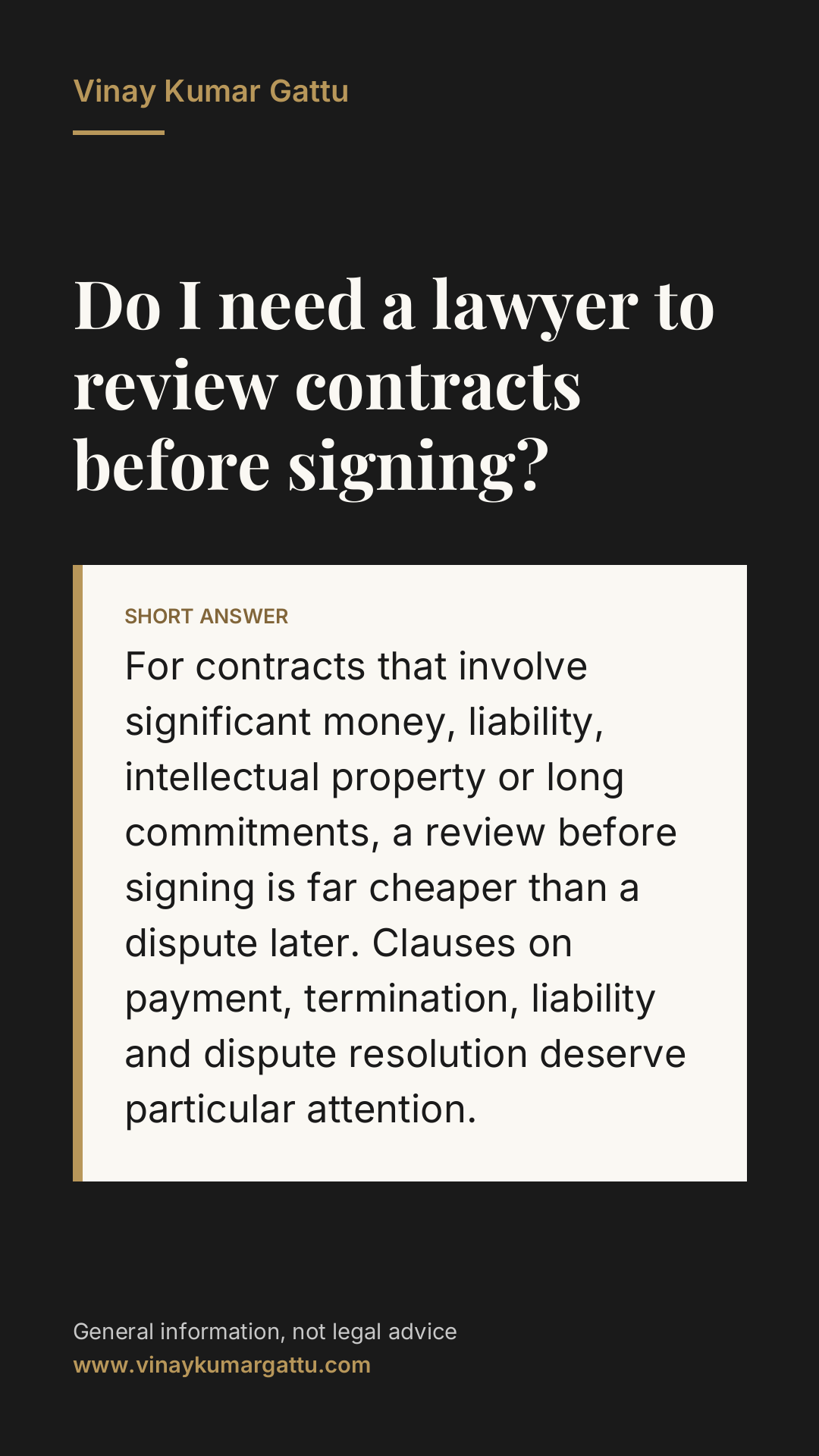
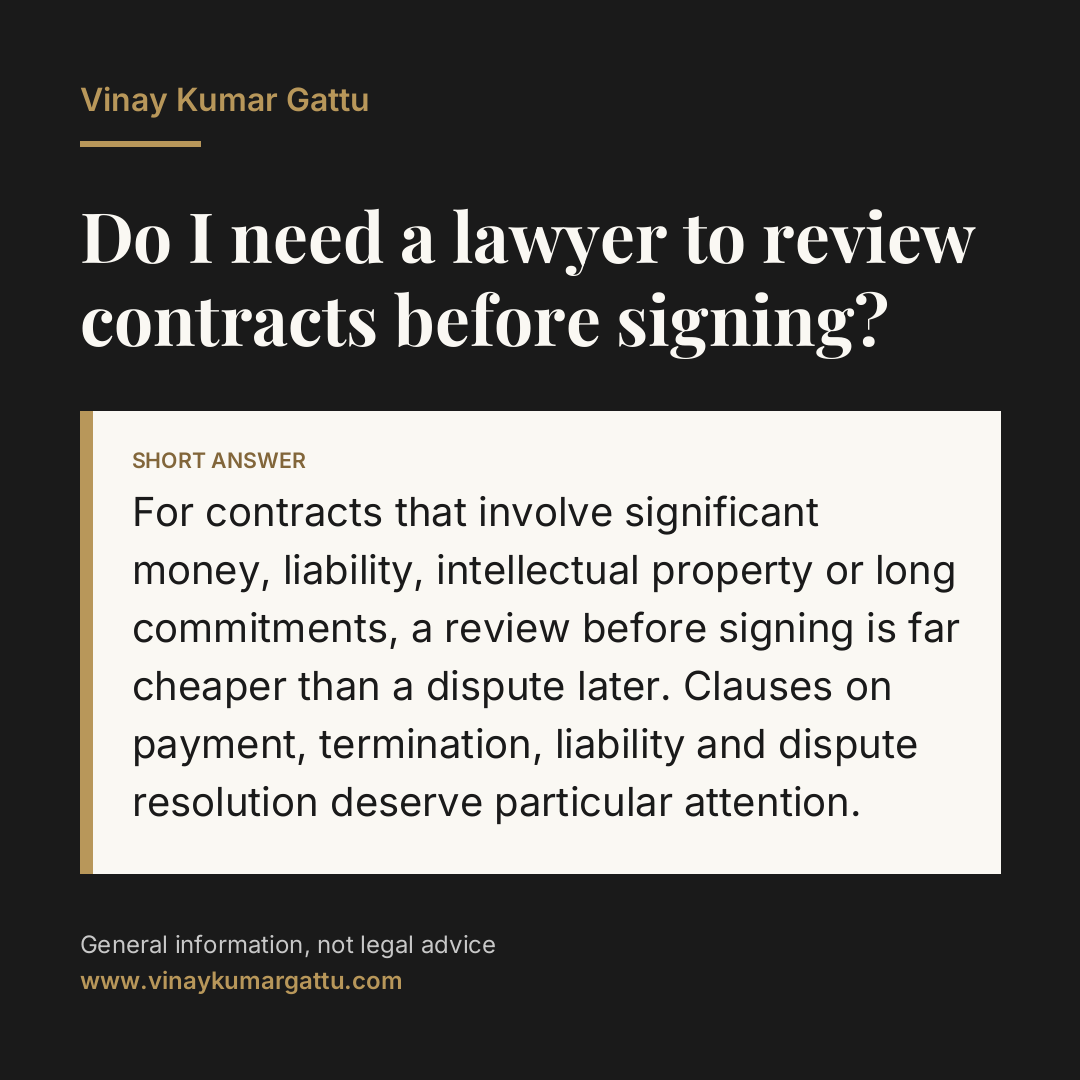
Do I need a lawyer to review contracts before signing?
For contracts that involve significant money, liability, intellectual property or long commitments, a review before signing is far cheaper than a dispute later. Clauses on payment, termination, liability and dispute resolution deserve particular attention.
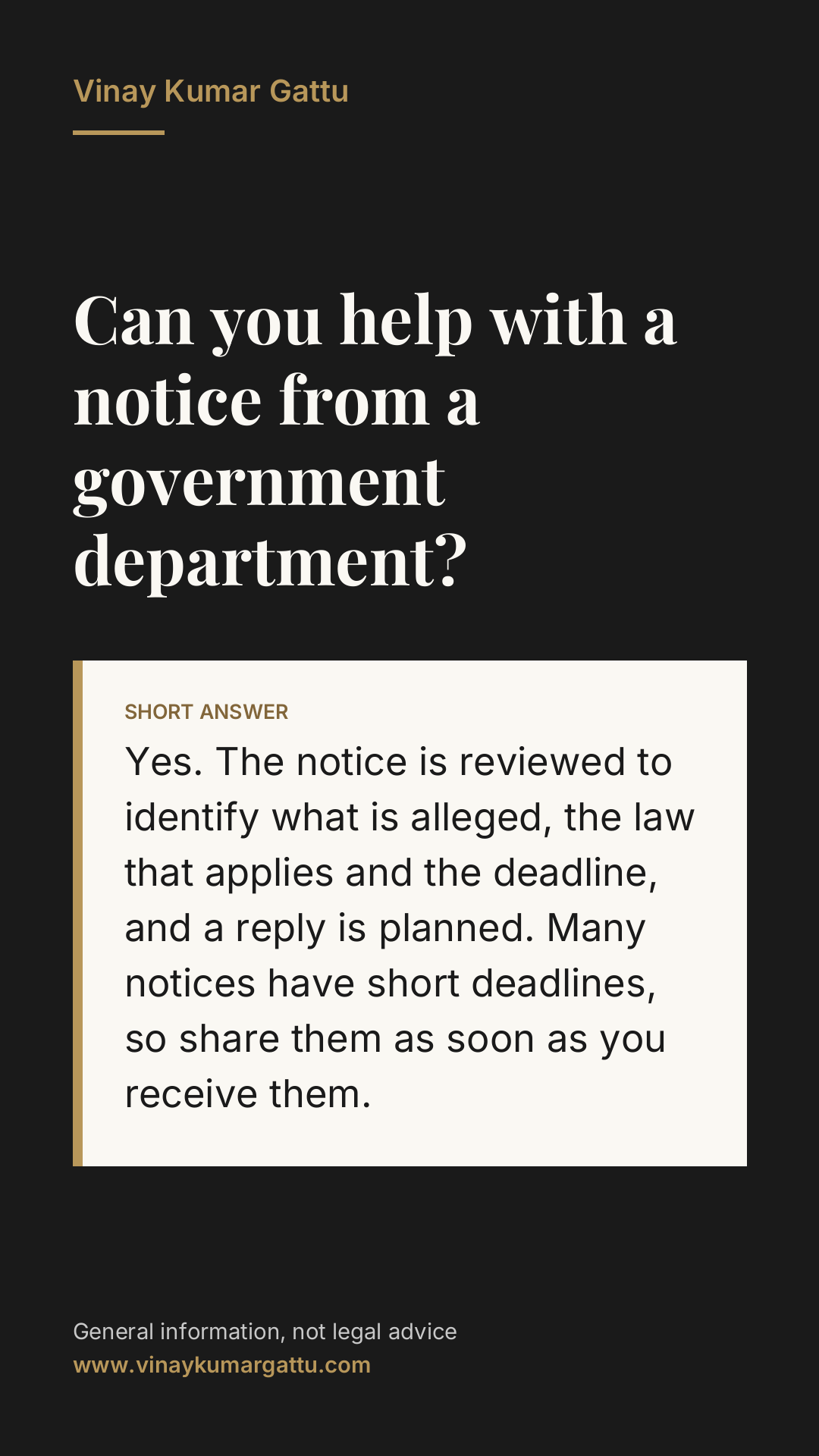
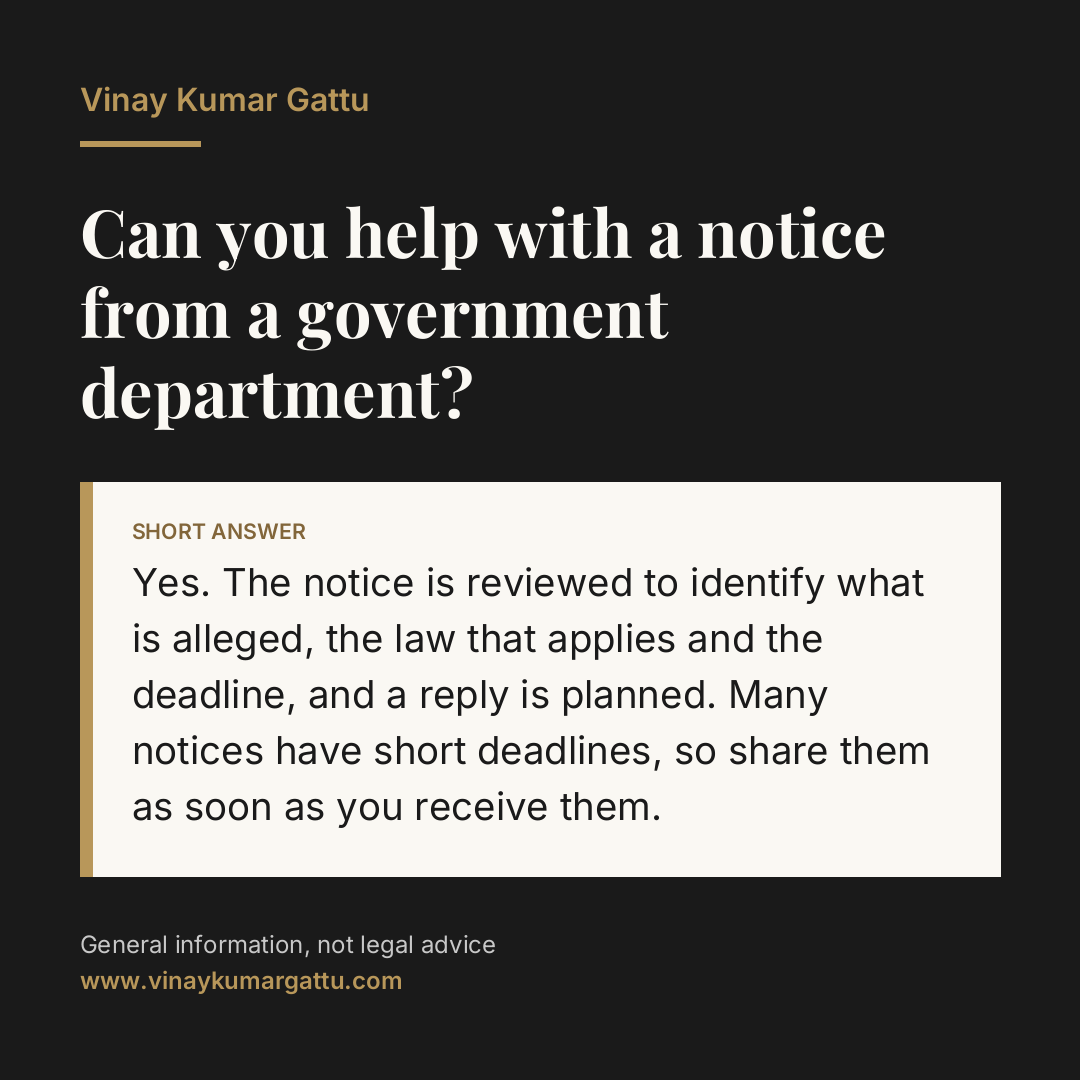
Can you help with a notice from a government department?
Yes. The notice is reviewed to identify what is alleged, the law that applies and the deadline, and a reply is planned. Many notices have short deadlines, so share them as soon as you receive them.
Should I register my trademark before launching my brand?
It is advisable. A search before adopting the name shows whether someone already has a similar mark, and an application can be filed even before use, on a “proposed to be used” basis. Registering early helps prevent disputes after you have invested in the brand.
You can use ™ with a mark you claim, even before registration. The ® symbol can be used only after the trademark is registered; using ® for an unregistered mark is an offence under the Trade Marks Act.
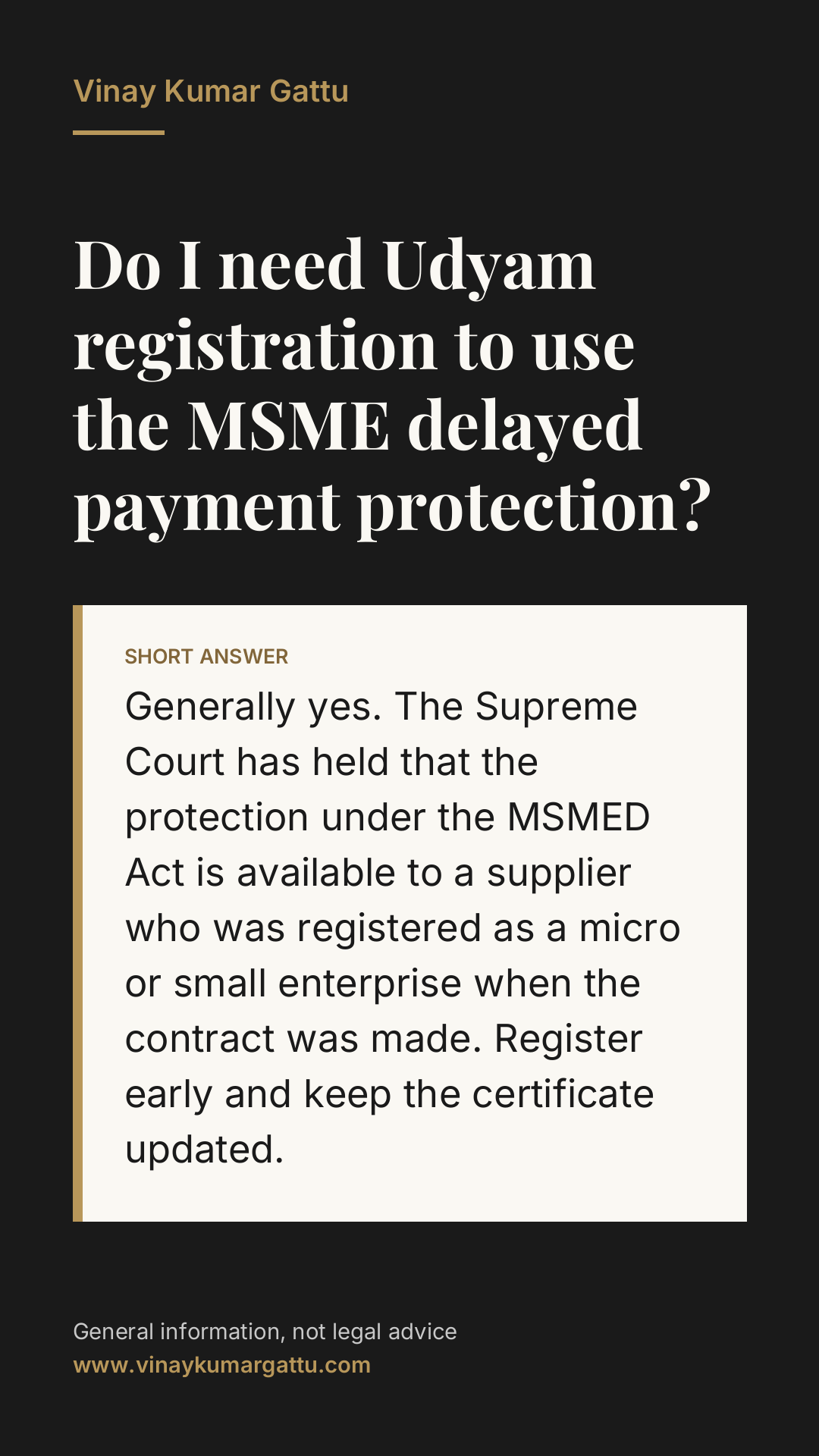
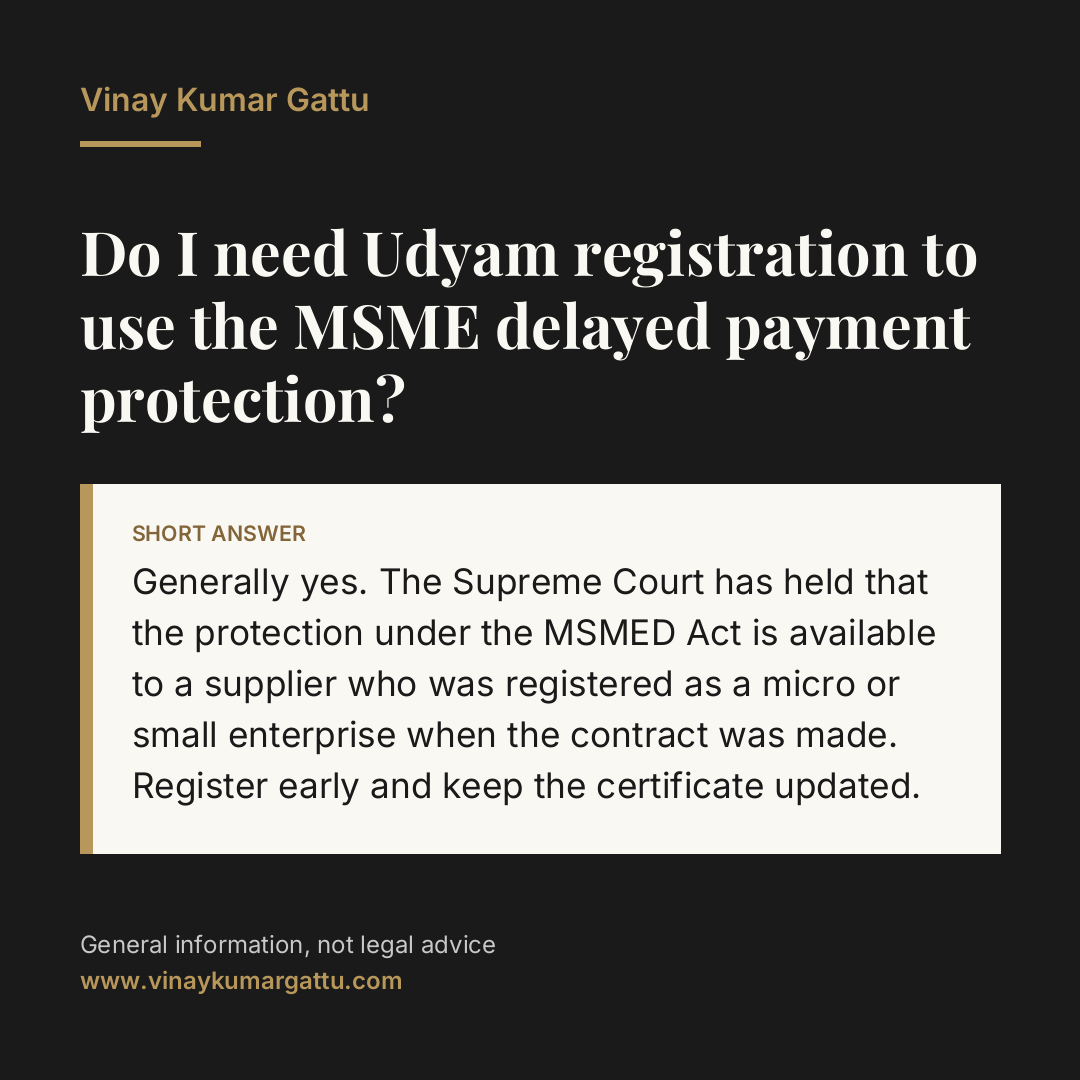
Do I need Udyam registration to use the MSME delayed payment protection?
Generally yes. The Supreme Court has held that the protection under the MSMED Act is available to a supplier who was registered as a micro or small enterprise when the contract was made. Register early and keep the certificate updated.
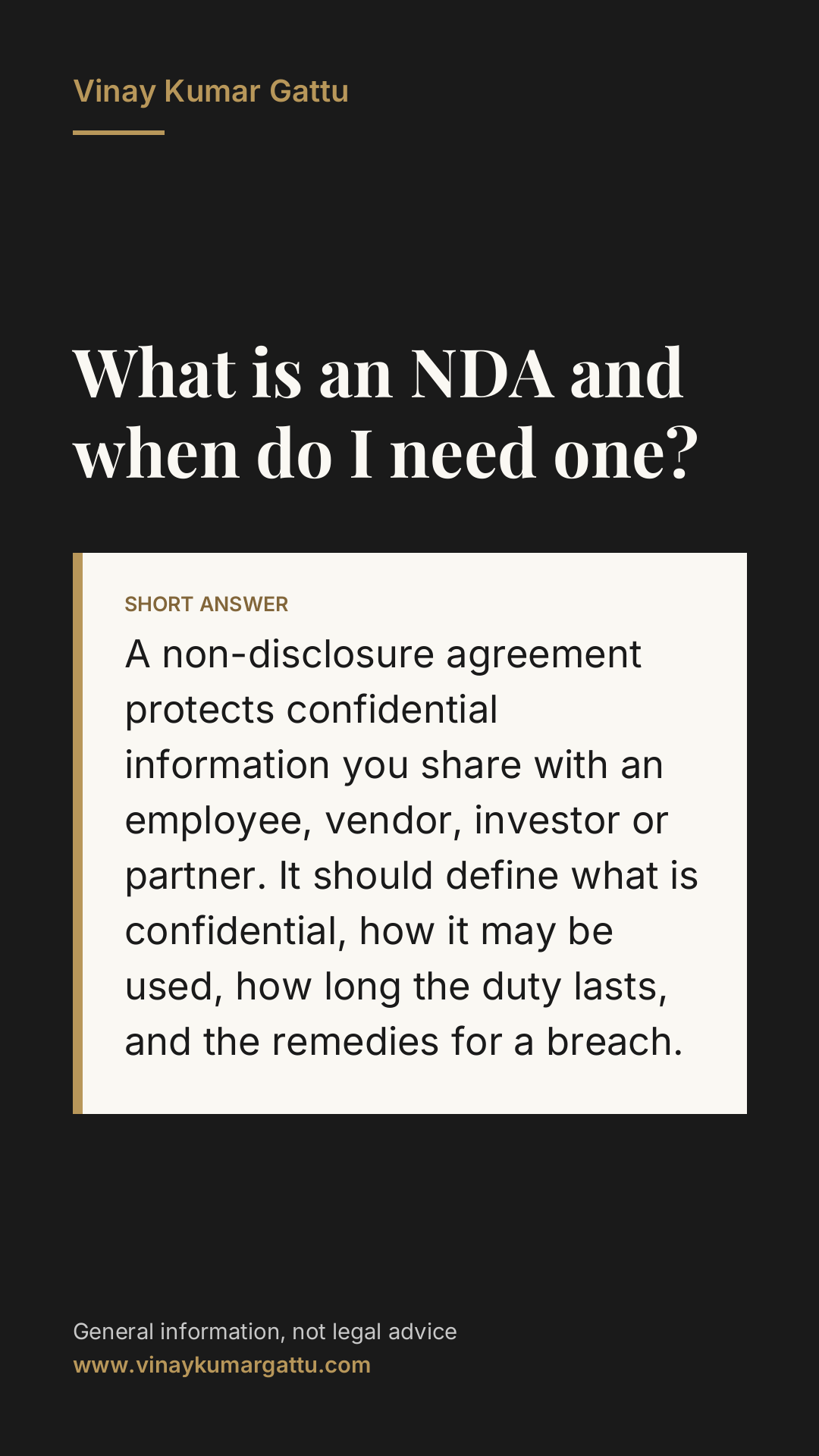
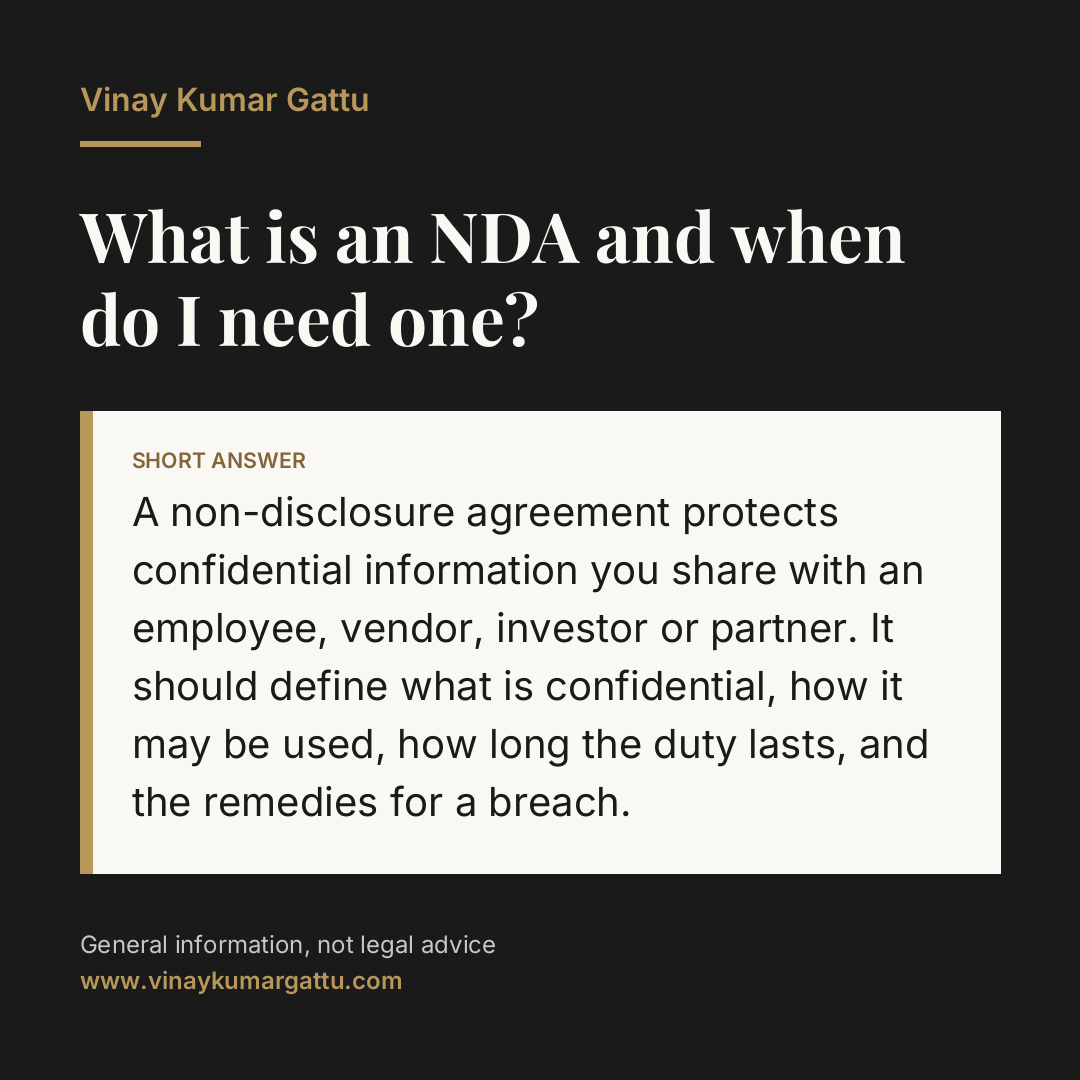
A non-disclosure agreement protects confidential information you share with an employee, vendor, investor or partner. It should define what is confidential, how it may be used, how long the duty lasts, and the remedies for a breach.
Shareholding and vesting, roles and decision-making, ownership of intellectual property created for the business, what happens when a founder leaves, how deadlocks are resolved, and restrictions on transferring shares.
Who owns the software or content made for my business by a freelancer?
Under the Copyright Act, a freelancer who is not your employee generally owns what they create unless the rights are assigned to you in writing. Use a written agreement with a clear assignment of intellectual property for all commissioned work.
This page gives general information about a consultation service; it is not legal advice.
Get the latest updates & legal knowledge
New articles, important court judgments and practical legal tips, explained in simple language and sent to you on WhatsApp.
Cookies on this website
This website uses the cookies it needs to work. With your permission, it also uses Google Analytics to understand how visitors use the site, and Google cookies for translating pages and playing YouTube videos. No advertising cookies. Privacy Policy
As per Bar Council of India rules, this website is for information only and is not an advertisement or solicitation. By continuing, you confirm you are visiting of your own accord. Disclaimer