A review of your facts and documents before you file a case, send a legal notice or reply to one – or of a pending case file – to identify your options, risks and realistic next steps.
The most expensive mistakes in litigation are made at the start: a weak notice, a case filed in the wrong forum, a missed limitation period, or a reply that admits too much. A case assessment looks at your facts and documents before you act, so you know what you have, what you are missing and what the realistic outcomes are.
Is this for you?
You have received a legal notice and need to decide whether and how to reply.
You want to send a legal notice for unpaid money, a cheque that bounced, a breach of agreement or a property dispute.
Someone has encroached on your land, or a builder or developer has not delivered as promised, and you want to know your remedies.
An FIR has been registered, or you fear one may be, and you want to understand the case against you and the options for bail or quashing.
Your case is already pending and you want to understand its stage, the orders passed so far and what comes next.
Your land is shown in the prohibited properties list (Section 22-A of the Registration Act) or has a problem in the Bhu Bharati records, and registration is blocked.
What you get
An assessment of the strengths and weaknesses of your position on the facts and documents.
The right remedy and the right forum – civil court, criminal court, High Court writ, tribunal, consumer commission or revenue authority.
Limitation periods and other deadlines that apply to you.
The documents and evidence you still need.
Realistic next steps, risks and options, including settlement where it makes sense.
What to keep ready
A short summary of what happened, with dates.
The notice, FIR, plaint, petition, orders or other papers you have.
Title documents, agreements, receipts and correspondence that relate to the matter.
For pending cases: the case number, the court and the last order passed.
How it works
1
Book a time
Choose the length, a date and a time online, and pay securely. Consultations are by phone call / video call; in-person meetings at the office in Dilsukhnagar, Hyderabad, can be arranged.
2
Share your documents
Send copies of the papers and a short summary of your matter at least 48 hours before, so the time is spent on your questions, not on reading.
3
Get clear answers
You hear where you stand, your options and the realistic next steps, in English or Telugu. Everything you share is kept confidential.
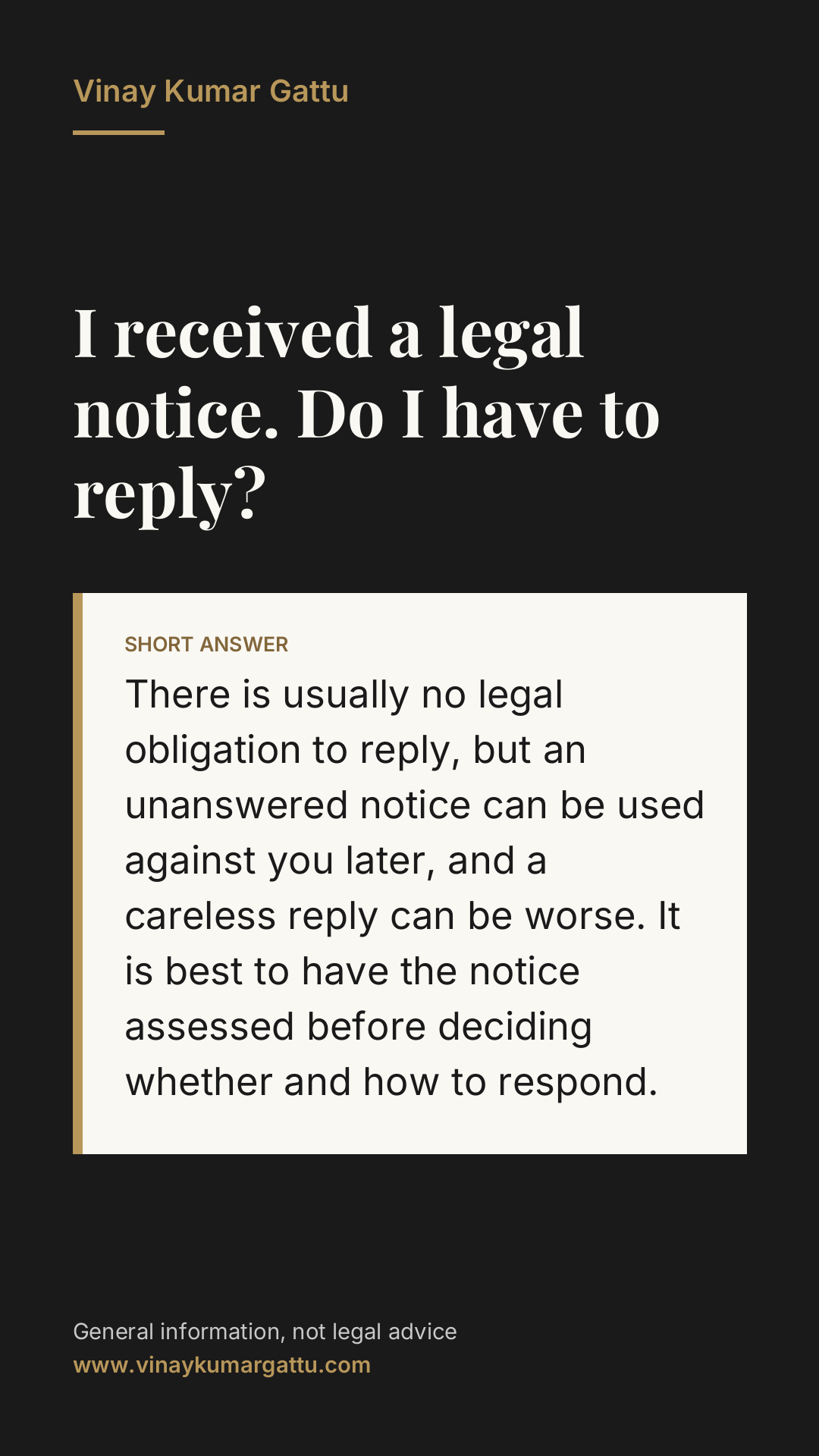
There is usually no legal obligation to reply, but an unanswered notice can be used against you later, and a careless reply can be worse. It is best to have the notice assessed before deciding whether and how to respond.
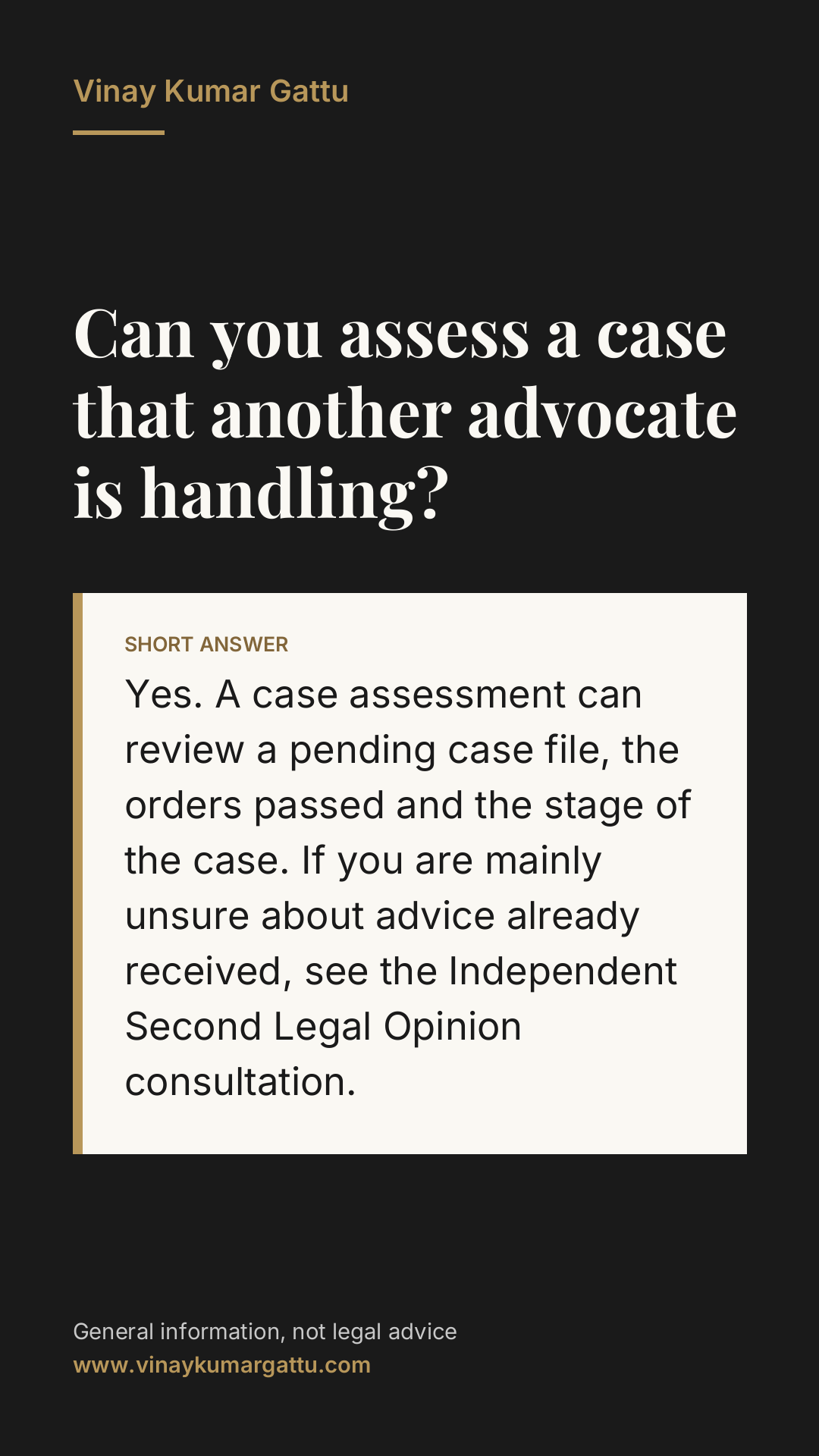
Can you assess a case that another advocate is handling?
Yes. A case assessment can review a pending case file, the orders passed and the stage of the case. If you are mainly unsure about advice already received, see the Independent Second Legal Opinion consultation.
No honest assessment can promise a result. What you get is a clear view of your position, the risks, the realistic outcomes and the steps that give you the best chance.
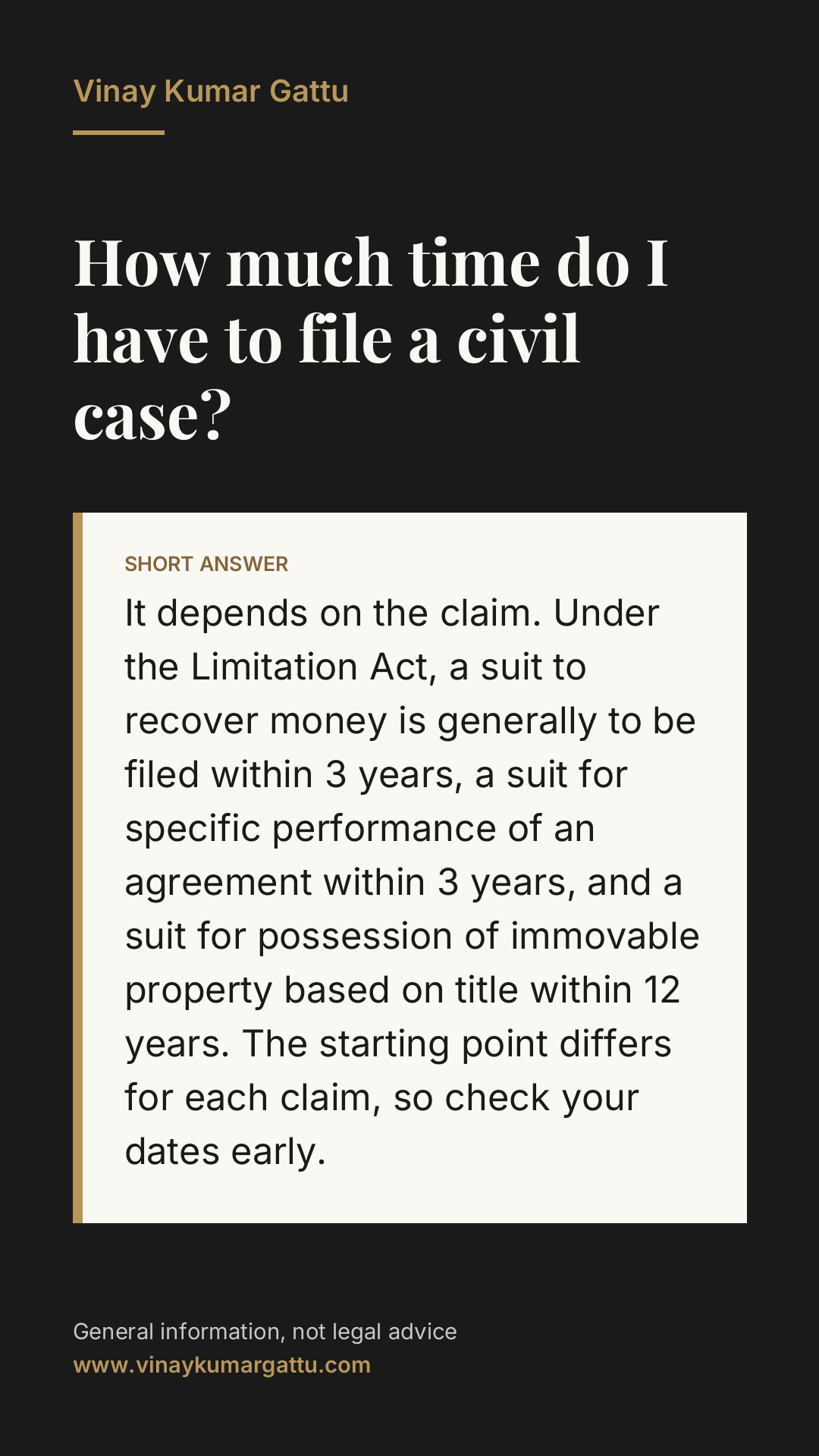
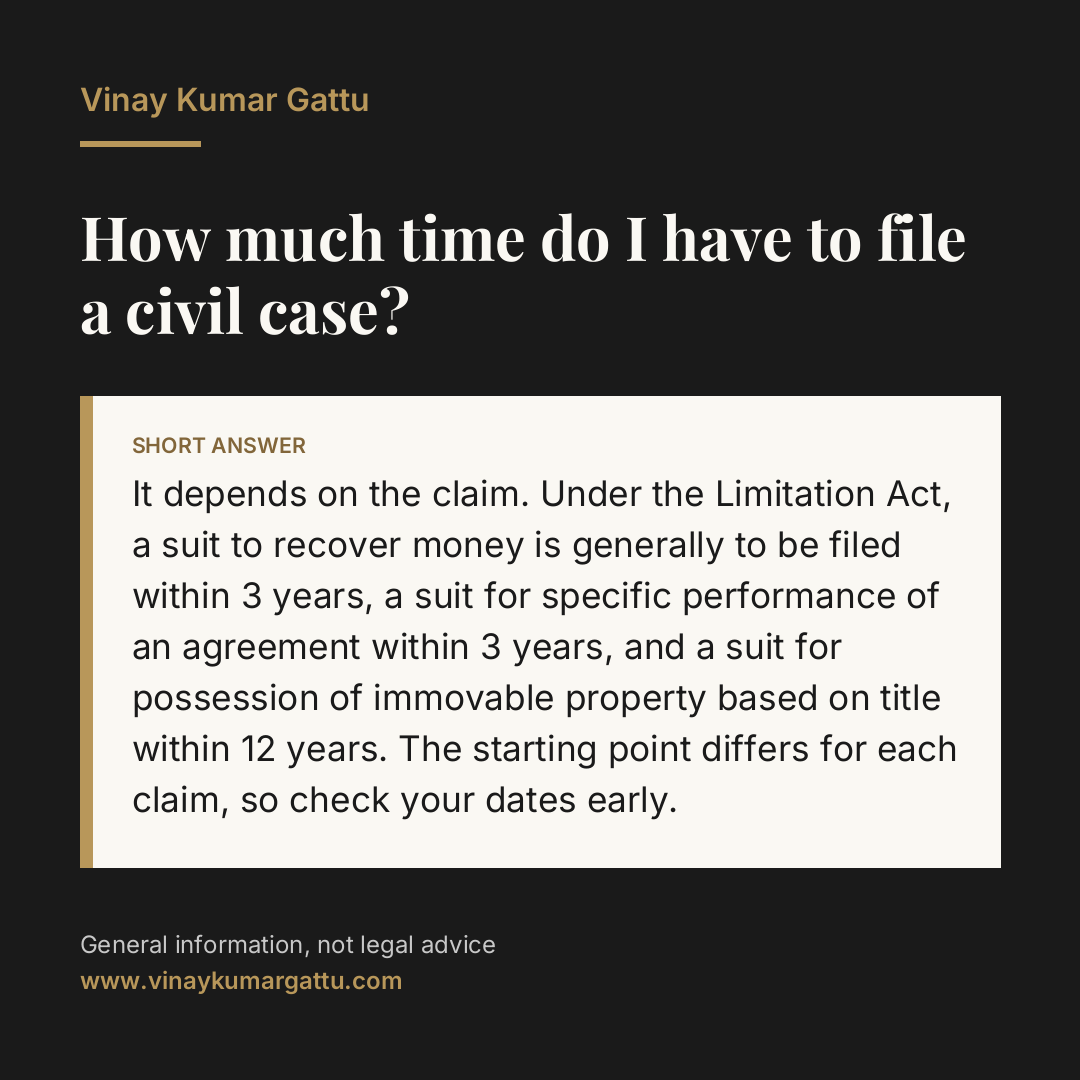
It depends on the claim. Under the Limitation Act, a suit to recover money is generally to be filed within 3 years, a suit for specific performance of an agreement within 3 years, and a suit for possession of immovable property based on title within 12 years. The starting point differs for each claim, so check your dates early.
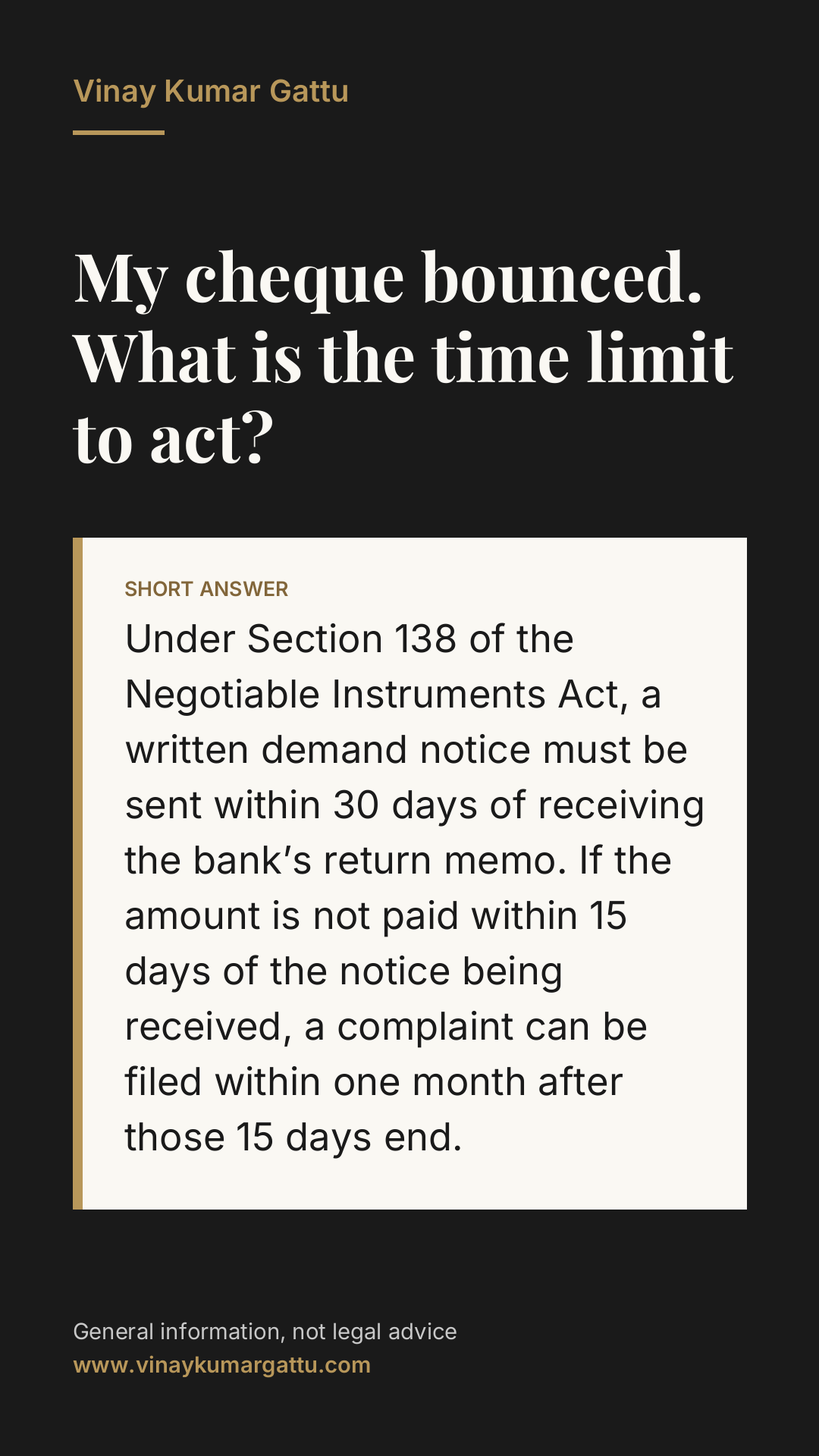
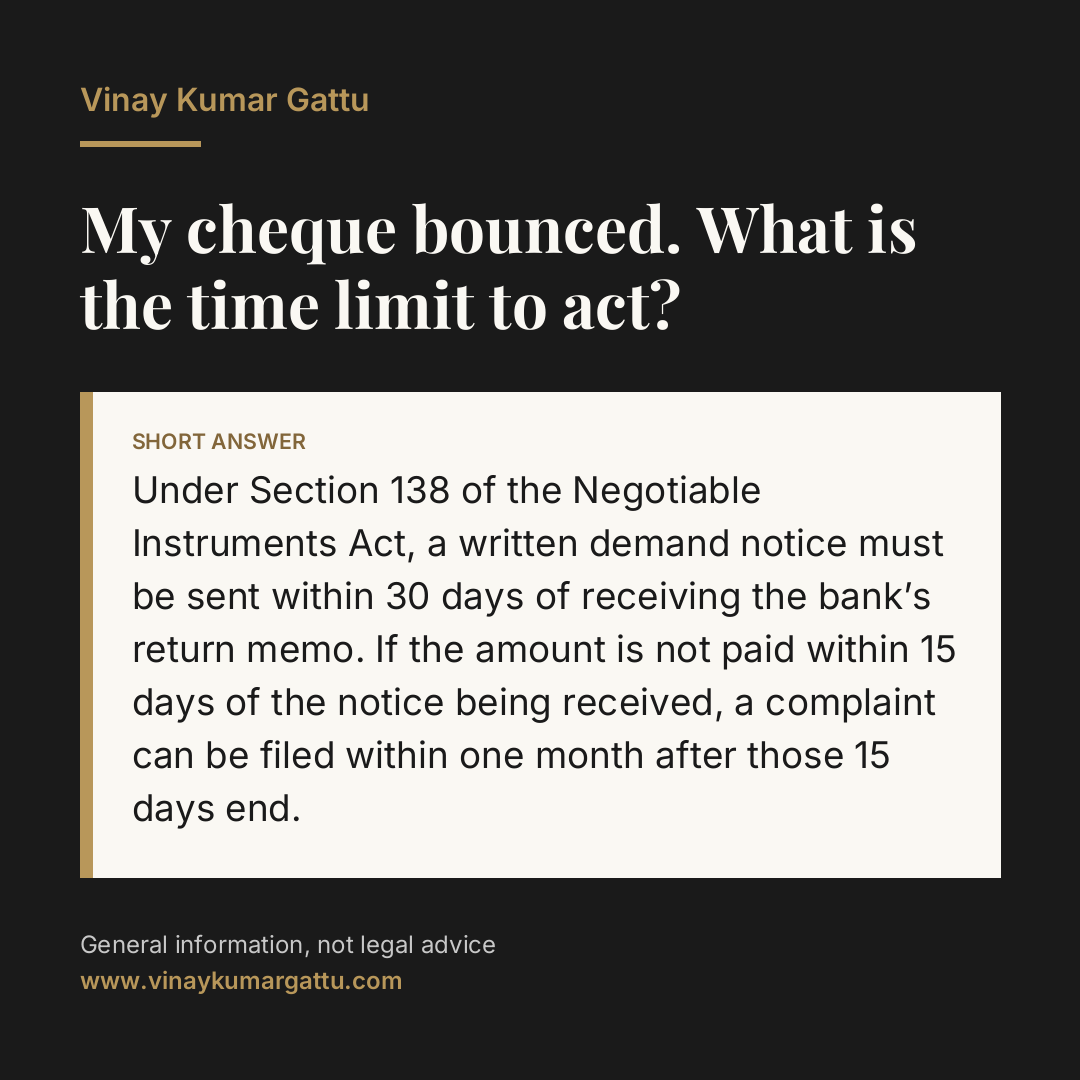
Under Section 138 of the Negotiable Instruments Act, a written demand notice must be sent within 30 days of receiving the bank’s return memo. If the amount is not paid within 15 days of the notice being received, a complaint can be filed within one month after those 15 days end.
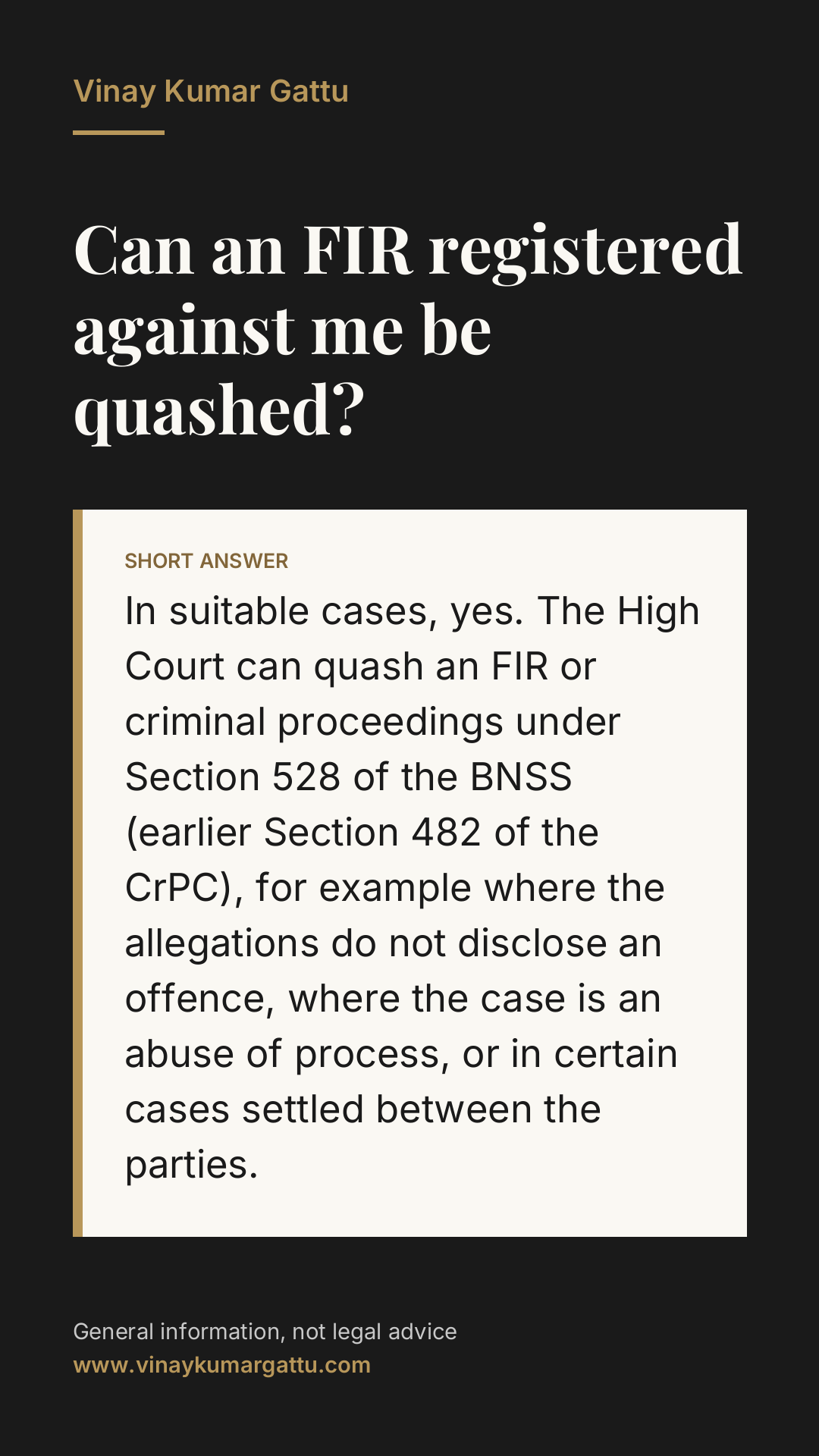
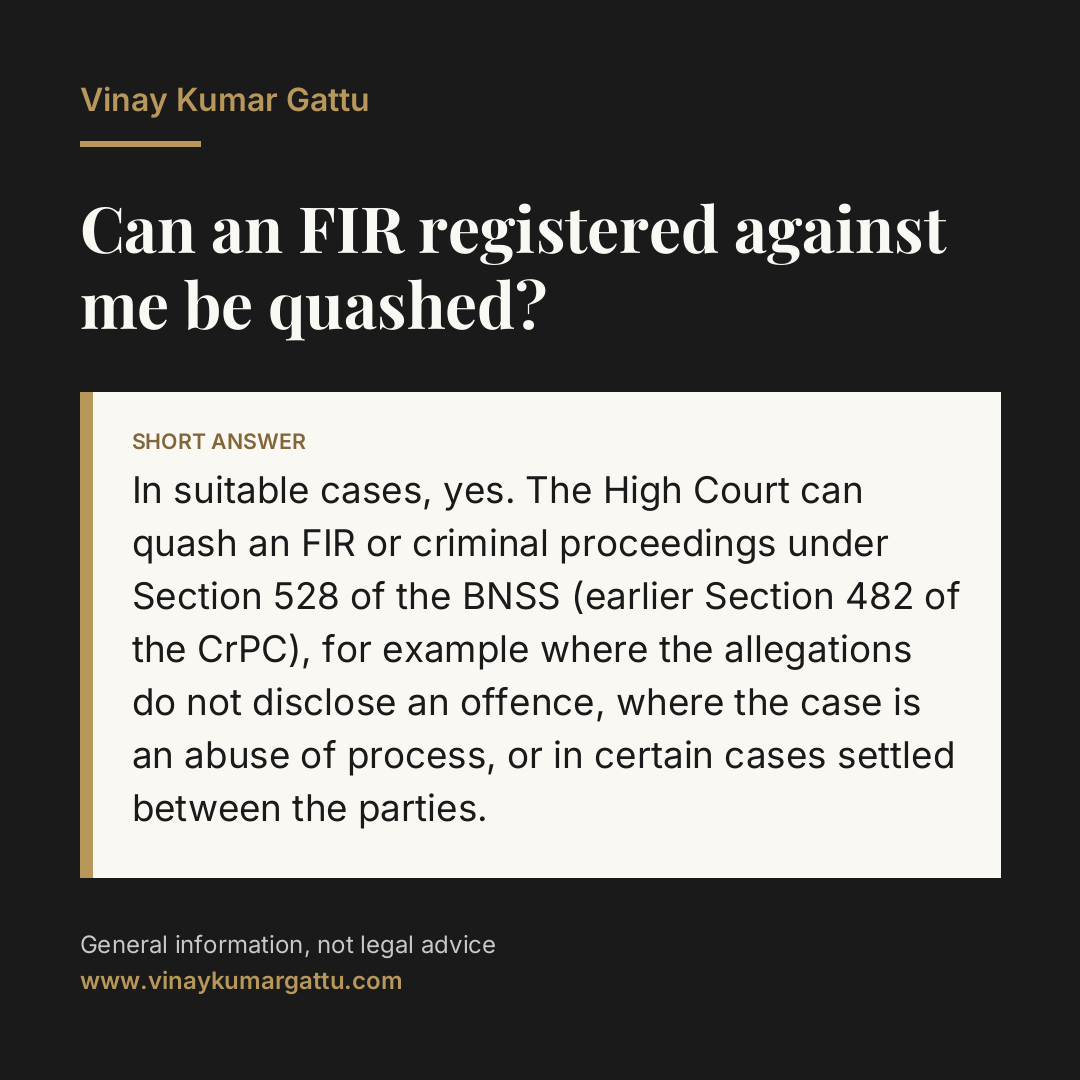
In suitable cases, yes. The High Court can quash an FIR or criminal proceedings under Section 528 of the BNSS (earlier Section 482 of the CrPC), for example where the allegations do not disclose an offence, where the case is an abuse of process, or in certain cases settled between the parties.
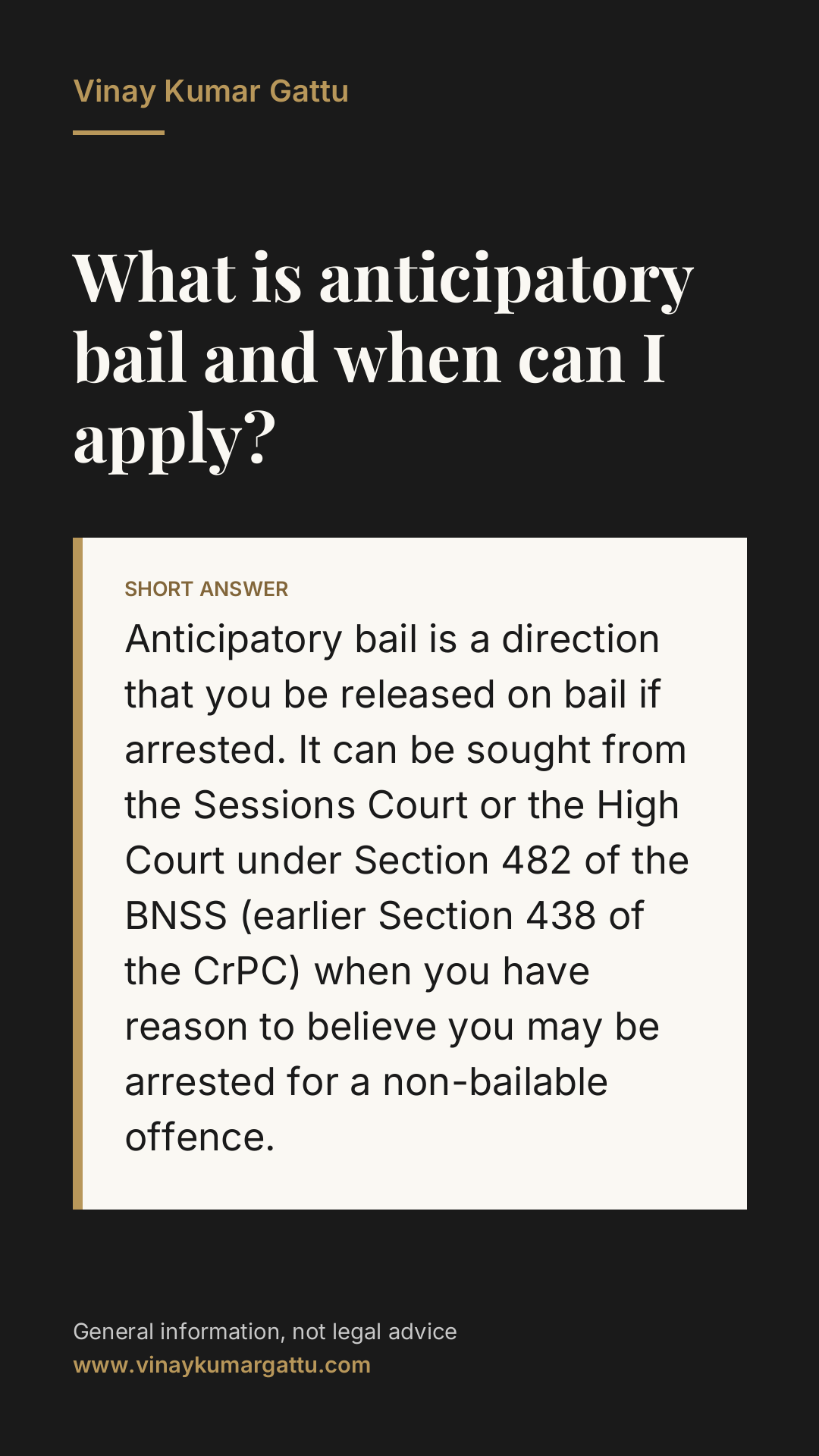
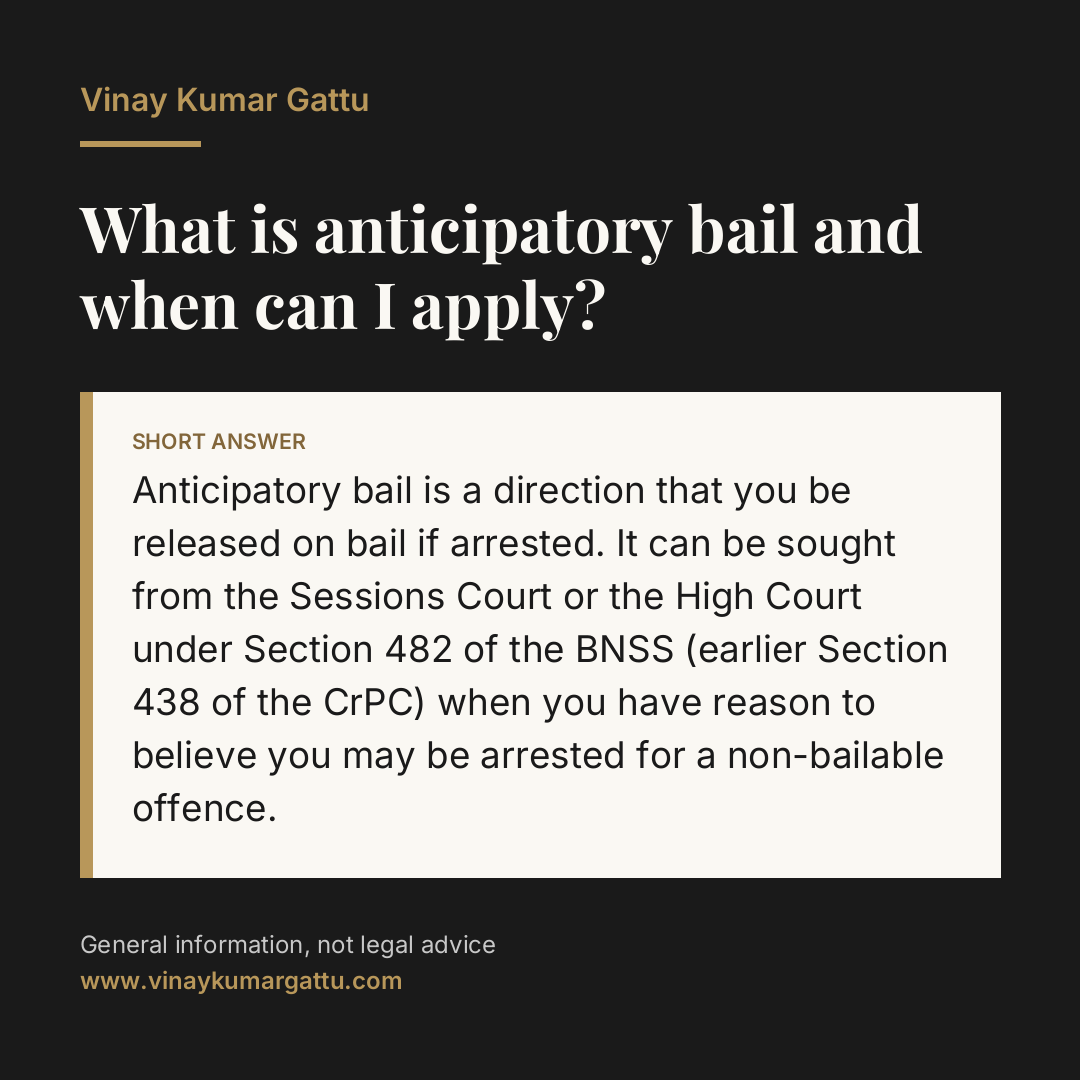
Anticipatory bail is a direction that you be released on bail if arrested. It can be sought from the Sessions Court or the High Court under Section 482 of the BNSS (earlier Section 438 of the CrPC) when you have reason to believe you may be arrested for a non-bailable offence.
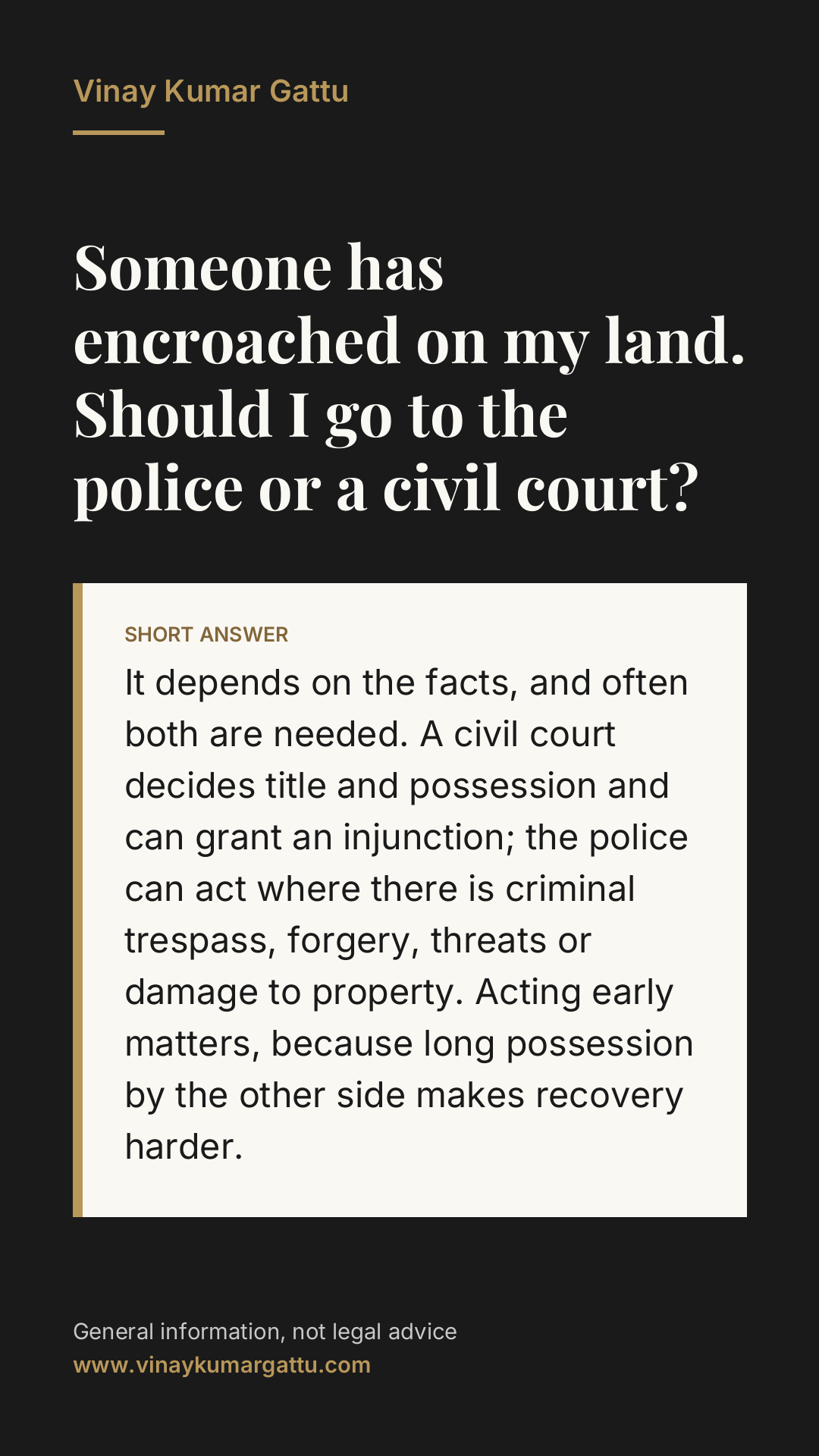
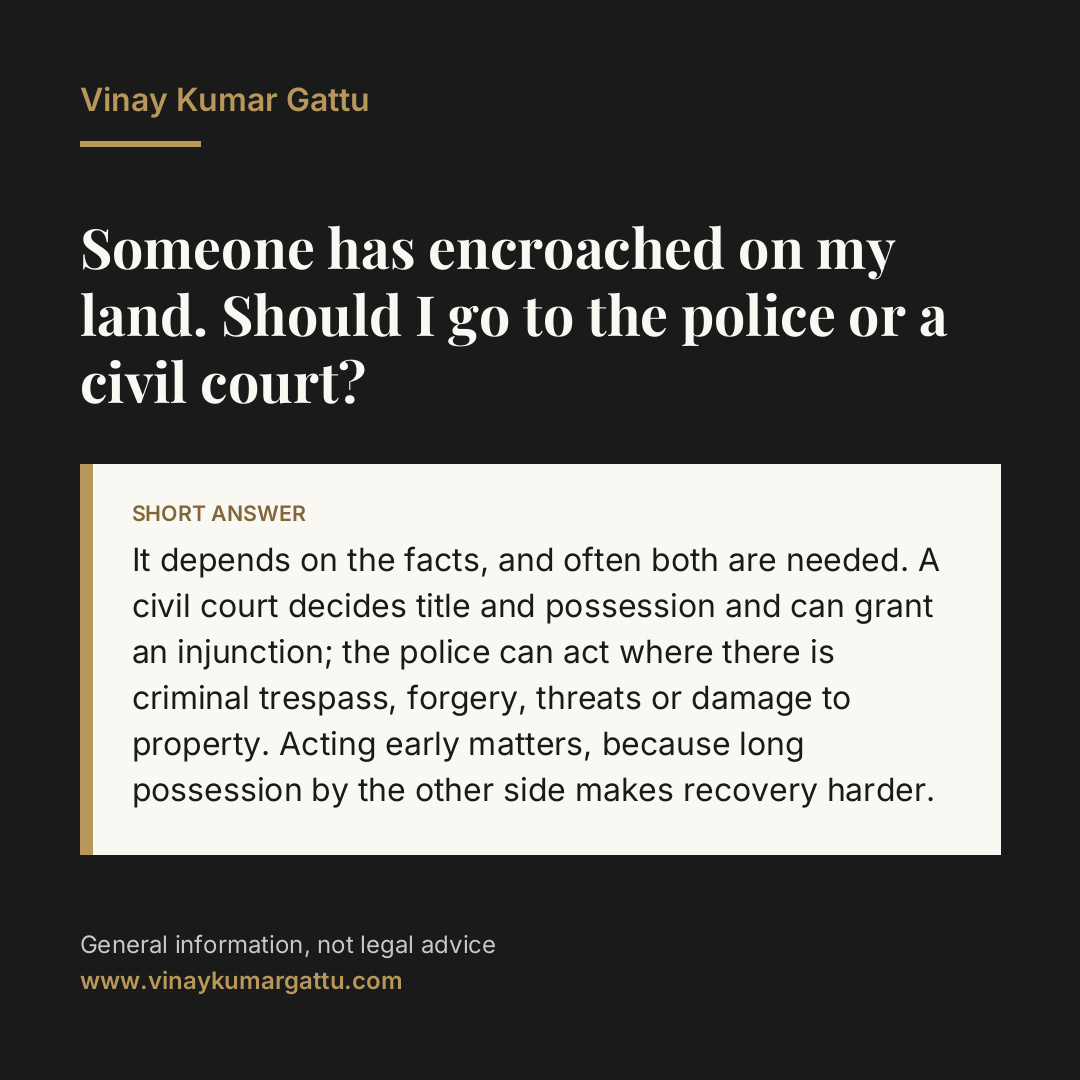
Someone has encroached on my land. Should I go to the police or a civil court?
It depends on the facts, and often both are needed. A civil court decides title and possession and can grant an injunction; the police can act where there is criminal trespass, forgery, threats or damage to property. Acting early matters, because long possession by the other side makes recovery harder.
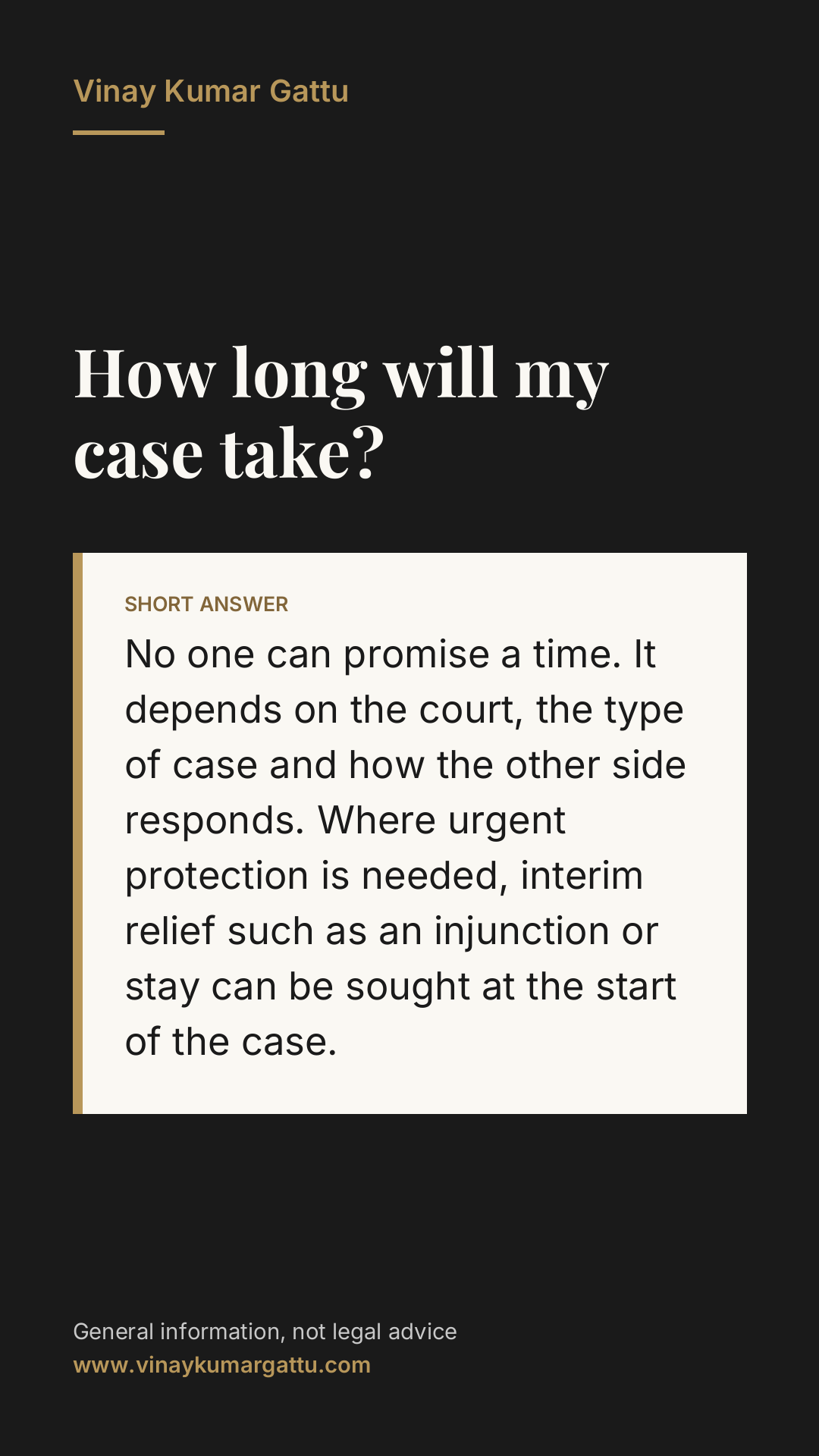
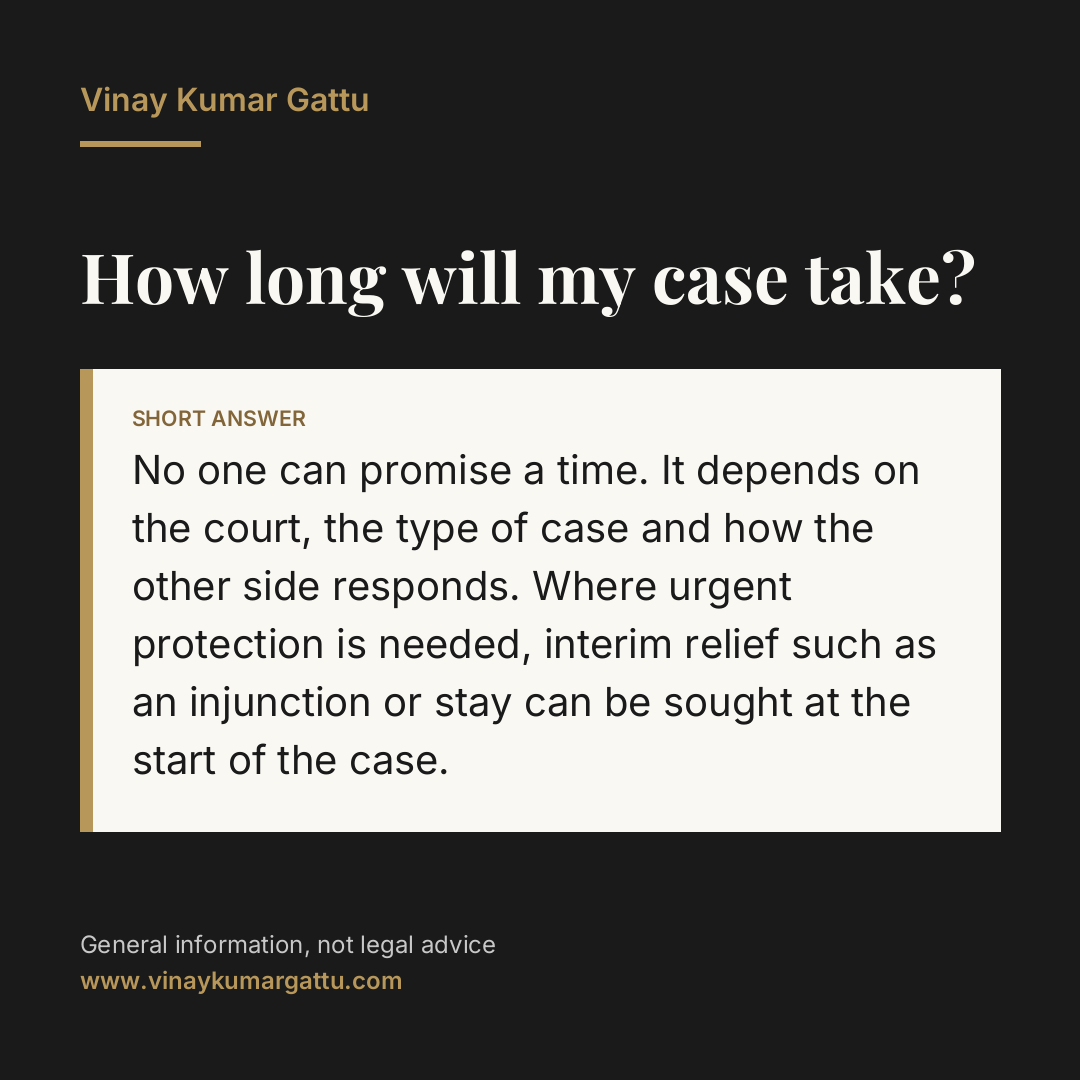
No one can promise a time. It depends on the court, the type of case and how the other side responds. Where urgent protection is needed, interim relief such as an injunction or stay can be sought at the start of the case.
This page gives general information about a consultation service; it is not legal advice.
Get the latest updates & legal knowledge
New articles, important court judgments and practical legal tips, explained in simple language and sent to you on WhatsApp.
Cookies on this website
This website uses the cookies it needs to work. With your permission, it also uses Google Analytics to understand how visitors use the site, and Google cookies for translating pages and playing YouTube videos. No advertising cookies. Privacy Policy
As per Bar Council of India rules, this website is for information only and is not an advertisement or solicitation. By continuing, you confirm you are visiting of your own accord. Disclaimer